
TL;DR:
- Water conservation can reduce commercial water use by up to 45 percent through various strategies.
- Combining water audits, fixture upgrades, reuse systems, and behavioral engagement maximizes savings.
- Leadership support and ongoing culture change are crucial for sustaining long-term water efficiency.
Water costs for commercial facilities have climbed steadily for years, and regulatory pressure around sustainability shows no sign of slowing. Facility managers and property owners are caught between tighter budgets and growing expectations for environmental responsibility. The good news is that water conservation plans can reduce commercial facility water use by up to 45%. This article breaks down the most proven and innovative strategies, from audits and fixture upgrades to smart irrigation, water reuse, and cultural engagement, so you can take concrete action and start seeing results.
Table of Contents
- Start with water audits and leak detection
- Upgrade to high-efficiency fixtures throughout
- Implement water reuse and non-potable strategies
- Adopt smart irrigation and cooling tower strategies
- Drive culture change with engagement and incentives
- Why the best water conservation strategies blend tech and culture
- Take your water conservation to the next level
- Frequently asked questions
Key Takeaways
| Point | Details |
|---|---|
| Audit for quick wins | Starting with a comprehensive audit targets leaks and sets your best water-saving priorities. |
| Upgrade fixtures | Switching to WaterSense-labeled fixtures delivers major usage and cost reductions with fast ROI. |
| Reuse and recycle | Rainwater and greywater reuse systems shrink your facility’s demand for potable water. |
| Smart tech matters | Advanced irrigation and cooling controls prevent overuse and wasted water outdoors and in systems. |
| Culture accelerates savings | Behavioral programs and visible engagement keep efficiency gains growing over time. |
Start with water audits and leak detection
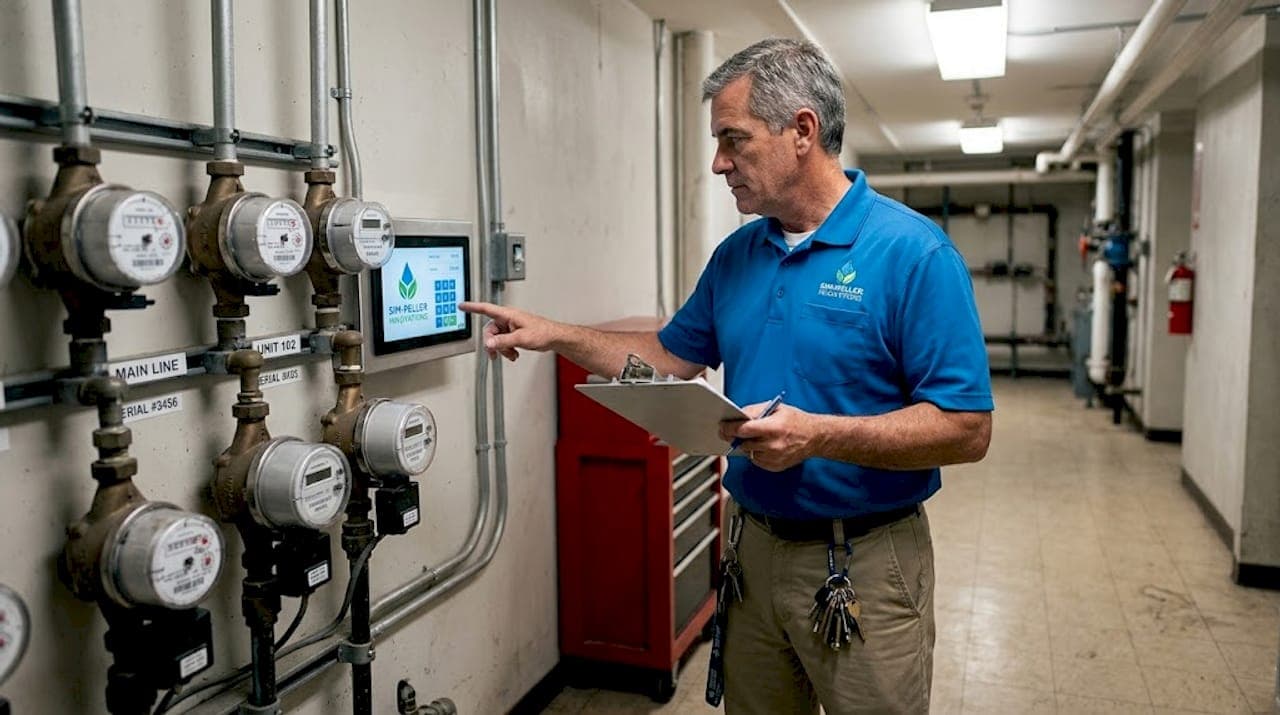
With the context of potential savings set, the first step is understanding your facility's actual water use. You cannot manage what you cannot measure, and a thorough water audit is the foundation of every successful conservation program.
A water audit maps where water flows throughout your building, how much each zone consumes, and where waste is hiding. Start by pulling 12 months of utility bills to identify seasonal patterns. Then walk the facility zone by zone: restrooms, kitchen or breakroom areas, cooling towers, mechanical rooms, and irrigation systems. Assign a baseline consumption figure to each zone so you can measure improvements later.
Federal facilities show that combining efficiency improvements with disciplined maintenance can save up to 40% on water costs. Commercial properties operate under similar conditions, which means the opportunity is real and repeatable. Good water monitoring best practices also form the backbone of ESG reporting, a growing requirement from investors and tenants alike.
Leak detection deserves its own spotlight. Leaks are silent budget killers. A single dripping faucet can waste thousands of gallons annually, and a running toilet can lose up to 200 gallons per day without anyone noticing. Across a large commercial facility, undetected leaks collectively waste a significant portion of your total water budget.
Here is a practical audit checklist you can start with this week:
- Pull 12 months of water bills and chart monthly usage trends.
- Identify your top three water-consuming zones by estimated usage.
- Inspect all faucets, toilets, and urinals for visible drips or running water.
- Check irrigation controllers and valves for overrun or leaks.
- Test cooling tower makeup water meters against expected evaporation rates.
- Review any submetering data or building management system logs.
- Document findings and rank repairs by estimated water savings and ease of fix.
IoT-based leak detection takes this a step further. Continuous sensors installed at key water entry points and high-use fixtures can flag anomalies in real time, alerting your operations team before a small drip becomes a burst pipe. This kind of cost-cutting water savings approach shifts your maintenance model from reactive to proactive, which has a measurable impact on both water bills and repair costs.
Pro Tip: After completing your audit, prioritize fixes by the ratio of savings to repair cost. A running toilet that costs $50 to fix but saves 70,000 gallons per year should jump to the top of the list.
Upgrade to high-efficiency fixtures throughout
Once you have nailed your baseline and fixed leaks, the next biggest opportunity is in fixture upgrades. Older restroom fixtures are among the highest water users in any commercial building, and replacing them with EPA WaterSense labeled products delivers fast, measurable returns.
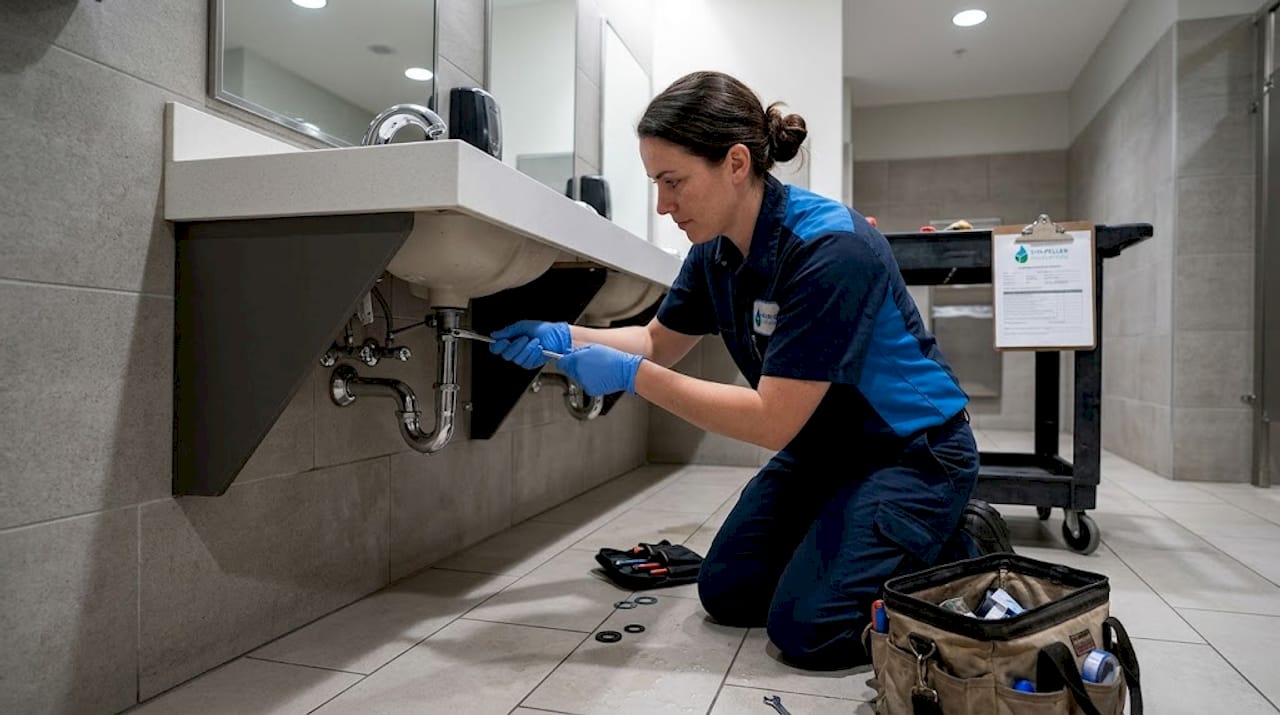
WaterSense is the EPA's voluntary labeling program that certifies products meeting strict efficiency and performance criteria. The numbers are striking. WaterSense labeled fixtures include low-flow toilets rated at 1.28 gallons per flush (GPF), ultra-low-flow urinals at just 0.125 GPF, and faucets flowing at 0.5 gallons per minute (GPM). Compare that to older standard fixtures, and the savings are immediate and substantial.
Here is a side-by-side comparison of conventional versus WaterSense fixtures:
| Fixture type | Standard usage | WaterSense rated | Savings per unit |
|---|---|---|---|
| Toilet | 3.5 GPF | 1.28 GPF | 63% less water per flush |
| Urinal | 1.0 GPF | 0.125 GPF | 87% less water per flush |
| Faucet | 2.2 GPM | 0.5 GPM | 77% less water per minute |
| Showerhead | 2.5 GPM | 2.0 GPM | 20% less water per minute |
For a large commercial building with hundreds of daily restroom users, those percentages translate into hundreds of thousands of gallons saved annually. Payback periods for fixture retrofits typically run 1 to 3 years, and many local utilities and water agencies offer rebates that shorten that timeline further. Some utilities even provide free fixture replacement programs for commercial customers, which makes the business case almost impossible to argue against.
Beyond restrooms, cooling towers are another major fixture-level target. Cooling towers account for 20 to 30% of total building water use in many climates. Upgrading to variable-speed drives on cooling tower fans, improving drift eliminators, and installing high-efficiency fill media can meaningfully cut makeup water demand.
Key upgrade priorities to consider:
- Replace all pre-1994 toilets with WaterSense certified models immediately.
- Swap out standard faucets for sensor-activated, low-flow aerators in all restrooms.
- Install waterless or ultra-low-flow urinals to slash urinal water use by up to 87%.
- Upgrade cooling tower components to reduce blowdown and evaporative losses.
- Add occupancy sensors in low-traffic restrooms to turn off sensor faucets entirely when rooms are unused.
Pro Tip: Pair WaterSense fixture upgrades with occupancy-based controls. In a conference center or office building where restrooms sit empty for hours, sensor-activated faucets that default to "off" can stack additional water savings tips on top of the efficiency gains from the fixtures themselves.
Implement water reuse and non-potable strategies
After updating fixtures, consider how to repurpose and recycle water flows within your property. This is where facilities can move from conservation into genuine resource recovery, shrinking their dependence on municipal supply and reducing wastewater discharge costs at the same time.
Rainwater harvesting and greywater reuse systems direct non-potable water toward applications like irrigation, toilet flushing, and cooling tower makeup, all of which require no drinking-quality water whatsoever. Harvested rainwater stored in cisterns can offset a significant portion of irrigation demand. Greywater collected from sinks and showers can be filtered and reused for toilet flushing, creating a closed-loop system that slashes potable water demand.
The impact at scale is dramatic. One Brooklyn, NY reuse system processes 400,000 gallons per day of wastewater for onsite reuse, reducing potable demand by 200,000 gallons per day. That kind of performance shifts the economics of commercial real estate entirely.
"Onsite water reuse is no longer an experimental technology. For large commercial facilities, it is becoming a competitive necessity, reducing utility costs and strengthening resilience against supply disruptions." A finding consistent with major water reuse programs across the U.S.
Here is a breakdown of the most practical reuse technologies for commercial facilities:
| Reuse technology | Best application | Key benefit |
|---|---|---|
| Rainwater harvesting | Irrigation, cooling tower makeup | Reduces stormwater runoff and municipal draw |
| Greywater recycling | Toilet flushing, irrigation | Cuts potable demand from sinks and showers |
| Blackwater treatment | Toilet flushing, irrigation (treated) | Near-complete onsite water independence |
| Condensate recovery | Cooling tower makeup, irrigation | Free, ultra-clean water from HVAC systems |
Regulatory hurdles are real but navigable. Many U.S. states have updated plumbing codes to permit greywater and rainwater systems in commercial buildings. A few still require case-by-case approval, but the regulatory tide is shifting. Working with a water engineer who knows your local jurisdiction speeds up the permitting process considerably.
Explore onsite water recycling strategies and understand how CRE water reuse savings can reshape your property's financial and ESG performance simultaneously.
Adopt smart irrigation and cooling tower strategies
Internal water reuse is powerful, but outdoor and cooling operations are where huge opportunities remain. These two systems often run on autopilot, wasting water on schedules that ignore actual conditions.
Smart irrigation uses weather data and soil moisture sensors to deliver water only when plants actually need it. A controller tied to a local weather station skips a scheduled run when rain is expected or has just fallen. Soil moisture sensors prevent overwatering by confirming the ground still holds sufficient moisture from the previous cycle. Smart irrigation systems that adjust based on weather and soil conditions can cut outdoor water use by 30 to 50% compared to time-based controllers.
Cooling towers demand equally careful attention. The key metric is cycles of concentration (COC), which describes how many times makeup water is concentrated before blowdown. Running at low COC wastes enormous volumes of water through unnecessary blowdown. Running too high risks scale buildup and corrosion that damages equipment. Automated total dissolved solids (TDS) monitoring prevents the overflow losses that plague manually managed systems, with documented cases of recovering 21% of water previously lost.
Smart strategies for irrigation and cooling include:
- Install weather-based irrigation controllers and replace timer-only systems immediately.
- Add soil moisture sensors to high-water-use landscaped areas.
- Select drought-tolerant native plants where possible to reduce baseline irrigation demand.
- Install automated TDS conductivity controllers on all cooling towers.
- Conduct cooling tower inspections quarterly and check for drift eliminator damage.
- Consider IoT for water management platforms that consolidate real-time cooling and irrigation data into a single dashboard.
- Use irrigation system optimization tools to fine-tune zone-by-zone performance.
Pro Tip: Blending smart technology with native or adaptive plant selection delivers outsized results. Technology optimizes the schedule; plant choice reduces how much water the schedule needs to deliver. The two together can cut irrigation demand by more than half in many commercial landscapes.
Drive culture change with engagement and incentives
Technology and system changes are only part of the equation. Lasting success means getting people on board, from the facilities team to the executives who set budget priorities.
Behavioral programs and signage yield an additional 5 to 10% in water savings on top of technical improvements, but only when senior management visibly champions the effort. Without buy-in from leadership, sustainability initiatives stall at the level of a poster on a restroom wall.
Effective engagement programs include:
- Water conservation signage placed at every sink, toilet, and hydration station.
- Staff training modules explaining what water costs the facility annually and how each person's behavior affects the bill.
- Monthly or quarterly performance dashboards shared with building occupants showing actual usage versus targets.
- Recognition programs for teams or departments that meet conservation goals.
- Performance-based water rewards that convert verified savings into financial incentives or credits.
"The facilities that sustain their water savings over years are not the ones with the best equipment. They are the ones where leadership treats water conservation as a core operational value, not a one-time project." A pattern seen consistently across high-performing commercial property portfolios.
Management buy-in accelerates everything. When a chief operating officer includes water conservation metrics in quarterly reviews, the entire organization treats it differently. Consider establishing a water stewardship committee with representatives from facilities, finance, and operations to maintain momentum between major upgrades.
Performance-based water rewards programs take engagement further by attaching measurable financial value to verified savings. These programs make water conservation tangible for building occupants who might otherwise ignore general calls to "save water." When saving water generates a visible reward, behavior shifts and stays shifted.
Why the best water conservation strategies blend tech and culture
There is a temptation to treat water conservation as an engineering problem with a technology solution. Buy the right sensors, install the right fixtures, and watch the numbers drop. That approach works, but only up to a point. The facilities that achieve and sustain the biggest savings are the ones that recognize technology reveals waste but people eliminate it.
Here is the counterintuitive lesson from years of facility engagement: small behavioral nudges often multiply the impact of technical upgrades rather than simply adding to them. A smart leak detection system that no one monitors is a sunk cost. The same system connected to a trained facilities team that acts on alerts within hours becomes a major savings engine.
Measurement and feedback loops are the missing link in most programs. Facilities that share water consumption data openly with building occupants and operations staff create accountability that no sensor alone can generate. We have seen innovative water scarcity approaches consistently show that transparency drives action. Quick wins from fixture upgrades fade within two to three years if there is no ongoing culture to protect them. The real competitive advantage belongs to facilities that treat water efficiency as a continuous practice rather than a one-time project.
Take your water conservation to the next level
Ready to put these strategies into action? At Simpeller, we connect facility managers with the tools, data, and frameworks needed to turn water conservation from a goal into a measurable, ongoing performance metric. Our plug-and-play IoT sensors and AI-driven platform make invisible water waste visible across your entire facility, from cooling towers to restroom fixtures. Every verified saving is tracked and can be converted into real value including renewable energy credits and ESG reporting assets. Whether you are beginning with your first audit or scaling a facility-wide water reuse program, Simpeller provides the technology and strategic support to get you there. Start turning every drop into measurable impact today.
Frequently asked questions
What is the typical payback period for water-efficient fixtures in commercial buildings?
Most commercial water fixture retrofits pay back within 1 to 3 years through lower water bills, and utility rebates or EPA incentive programs can accelerate that timeline further.
How much water can a robust water conservation program save in a typical commercial facility?
A well-designed program can reduce water use by up to 45% in commercial properties by combining audits, fixture upgrades, reuse systems, and behavioral engagement.
What are the main sources of water use in most commercial buildings?
Restrooms account for about 70% of total usage in most commercial buildings, with cooling towers contributing 20 to 30% and irrigation making up the remainder depending on property type and climate.
What are the most innovative non-potable water reuse methods?
The most effective methods include rainwater harvesting and greywater recycling for irrigation, toilet flushing, and cooling tower makeup, all of which eliminate the need for drinking-quality water in applications that do not require it.
How can facility managers motivate staff to save water?
Engagement tools like signage, targeted training, and rewards programs drive 5 to 10% additional savings beyond what technical upgrades alone achieve, especially when senior leadership actively participates and models conservation behavior.