
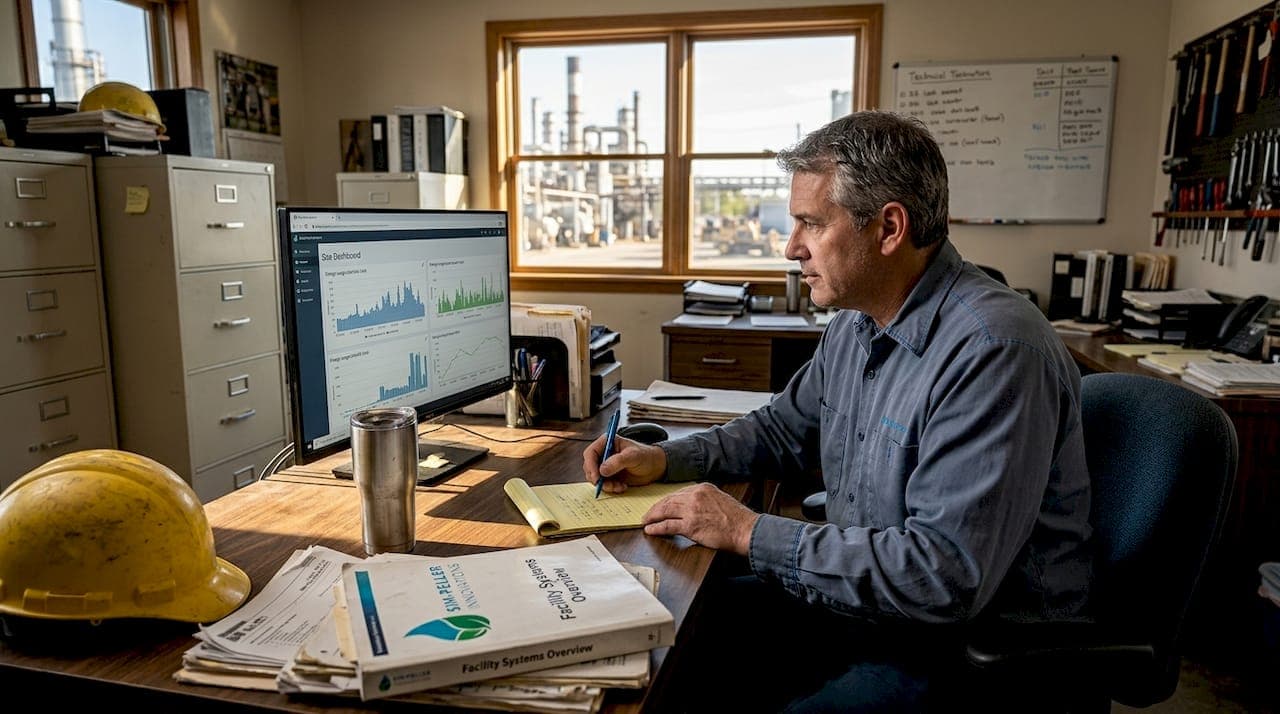
TL;DR:
- System-level audits are essential for identifying the most effective energy-saving devices.
- Variable frequency drives offer proven, high-impact energy reductions in motor-driven systems.
- Smart sensors and controls provide significant savings, especially in complex, multi-zone environments.
Choosing the right energy-saving devices for a commercial or industrial facility isn't a matter of browsing a catalog and picking the newest model. Facility managers face real pressure to cut operational costs, meet sustainability targets, and satisfy increasingly strict ESRS2 efficiency standards, all while keeping operations running without disruption. The gap between a device's promised performance and its actual results in your specific environment can be enormous. This guide cuts through the noise by focusing on devices with documented, measurable outcomes in real facilities, so you can build a shortlist grounded in evidence rather than marketing claims.
Table of Contents
- How to evaluate energy-saving devices for your facility
- Variable frequency drives (VFDs): Motoring down energy use
- Smart building sensors and controls: Intelligence for savings
- Water-saving devices: Multiplying impact across resources
- Quick comparison: What device fits your facility best?
- Why system thinking beats quick fixes for energy savings
- Connect actions to results with smarter savings
- Frequently asked questions
Key Takeaways
| Point | Details |
|---|---|
| Prioritize proven solutions | Start with devices like VFDs and smart controls that have demonstrated savings in audits and real facilities. |
| Think system, not single device | Layering devices within a holistic strategy drives bigger and longer-lasting reductions in energy waste. |
| Water and energy are linked | Water-saving devices also cut energy costs, multiplying the impact of facility upgrades. |
| Data quality drives returns | Analytics platforms and AI require good sensor data and monitoring for optimal results. |
How to evaluate energy-saving devices for your facility
Before you commit budget to any device, the most important step is understanding your facility's energy profile at the system level. System-level audits yield bigger savings than focusing on single devices, because they reveal how energy flows across interconnected systems rather than isolating one pump or one lighting circuit. A compressor running at full speed when demand is low, for example, wastes far more energy than a single inefficient light fixture.
Use this checklist when evaluating any device for your shortlist:
- Energy savings potential: What percentage reduction is documented in facilities similar to yours in size, sector, and process type?
- Installation and maintenance ease: Does the device require significant downtime, specialized contractors, or ongoing calibration?
- Proven results in similar facilities: Are there verifiable case studies, not just manufacturer data sheets?
- Integration with current systems: Will it communicate with your existing building management system or monitoring platform?
- Payback period: Does the projected savings timeline align with your capital planning cycle?
For multi-site operators, data-powered platforms can multiply the value of individual devices, but only when data quality is high and consistent across locations. Reviewing resource management trends for 2026 shows that facilities investing in integrated monitoring see compounding returns over time. The EPA energy management guide also provides sector-specific benchmarks that sharpen your evaluation criteria.
Pro Tip: Start with devices that have measured success in your specific industry vertical. A device that performs brilliantly in office buildings may deliver underwhelming results in a food processing plant with very different load profiles.
With a clear decision framework, let's examine devices with track records of delivering results.
Variable frequency drives (VFDs): Motoring down energy use
Variable frequency drives are arguably the single most proven energy-saving technology in industrial and commercial facilities. A VFD controls the speed of an electric motor by adjusting the frequency of the electrical supply, matching motor output precisely to actual system demand. When a pump or fan runs at 80% speed instead of 100%, energy consumption drops dramatically, because motor power draw scales with the cube of speed.
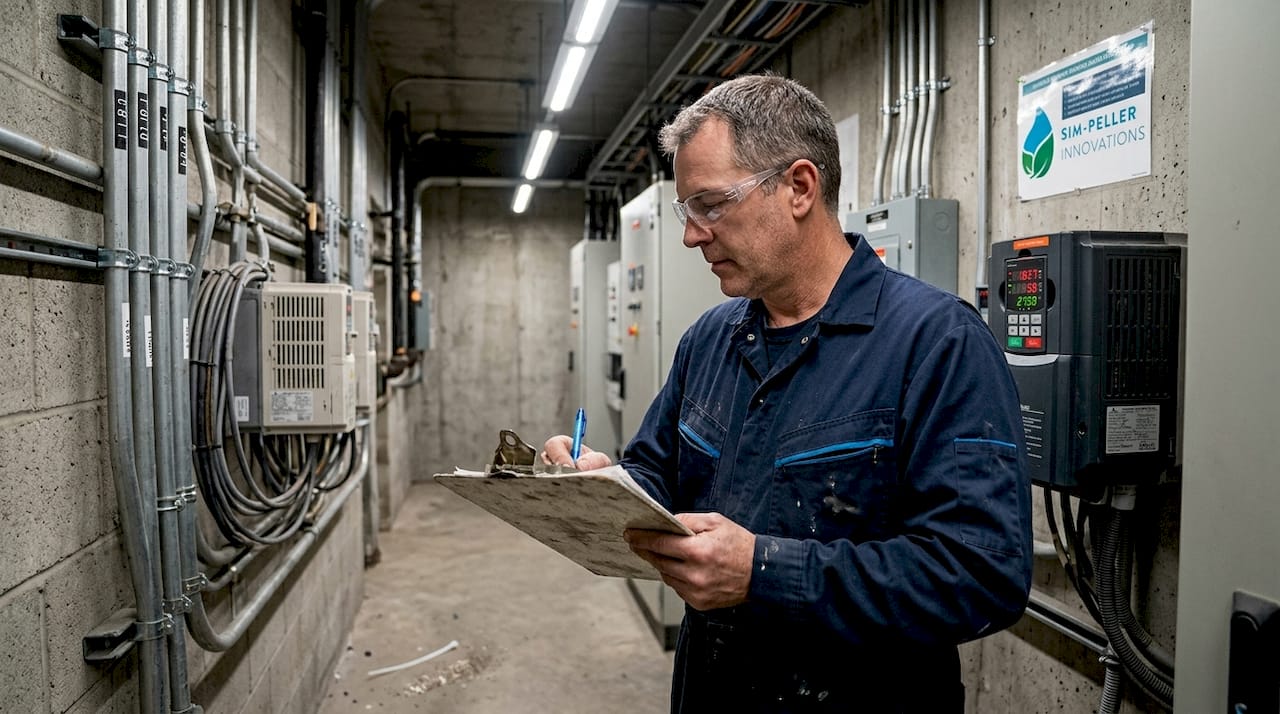
The numbers are hard to argue with. VFDs can save up to 19% at startup and 20% or more in ongoing operations, making them the most consistently validated device across energy audits in industrial settings. In pumping-intensive environments, savings of 52% have been documented in specific case studies where motors previously ran at fixed speed regardless of demand.
Facilities that benefit most from VFDs include:
- HVAC-heavy buildings: Chillers, air handling units, and cooling towers all run motor-driven systems that rarely need full-speed operation continuously.
- Industrial pumping systems: Water treatment, chemical processing, and manufacturing lines with variable flow requirements.
- Compressed air systems: Compressors are among the largest energy consumers in industrial plants, and VFDs can match output to real-time demand.
"In audits across multiple industrial sectors, VFDs consistently rank as the highest-impact, fastest-payback energy technology available to facility operators."
Pairing VFDs with energy waste monitoring is where the real compounding benefit emerges. Without ongoing performance verification, VFDs can drift from optimal settings or mask developing mechanical issues. Monitoring closes that loop. For facilities with significant water use, combining VFDs with a water savings guide approach amplifies total resource savings.
Pro Tip: Pair VFDs with a continuous monitoring layer so you catch performance degradation early and verify savings are sustained, not just realized at installation.
Smart building sensors and controls: Intelligence for savings
Beyond motor systems, real-time intelligence can uncover hidden savings across lighting, HVAC zoning, and process environments. Smart sensors and automated controls work by collecting granular data on occupancy, temperature, humidity, and equipment status, then triggering adaptive responses without human intervention.
Common technologies in this category include:
- Occupancy sensors: Automatically reduce lighting and HVAC output in unoccupied zones, cutting waste in warehouses, offices, and common areas.
- Smart thermostats and zone controllers: Learn usage patterns and pre-condition spaces efficiently rather than maintaining constant setpoints.
- Adaptive lighting systems: Dim or switch off based on daylight levels and occupancy, delivering savings of 30% to 50% in well-designed installations.
The critical caveat is that results vary significantly. AI energy platforms excel in multi-site facilities but depend on data quality. A sensor network feeding incomplete or inconsistent data into an AI platform will produce unreliable recommendations, and acting on bad recommendations costs money rather than saving it.
Savings scale most effectively in complex, multi-zone environments where manual management is impractical. A single-site facility with simple, predictable load patterns may see modest returns from smart controls compared to a multi-building campus with shifting occupancy patterns. Exploring AI and IoT in water management shows how the same data infrastructure can serve both energy and water efficiency goals simultaneously.
Pro Tip: Pilot new sensors in high-variance areas first, such as common rooms, loading docks, or process zones with irregular schedules. These locations offer the fastest visible return and help you calibrate expectations before scaling.
Water-saving devices: Multiplying impact across resources
Energy savings aren't limited to electricity. Water innovation amplifies resource efficiency gains in ways that many facility managers underestimate. Every liter of water your facility pumps, heats, or treats carries an embedded energy cost. Reducing water consumption directly shrinks the energy bill tied to those processes.
In real-world facility settings, pump and process upgrades have led to savings of 22% and 52% in documented cases across packaging manufacturers and frozen food plants. These results came from combining low-flow process valves, smart leak detection, and process optimization kits rather than relying on any single device.
Key device types and their typical outcomes:
| Device type | Typical water savings | Typical energy savings |
|---|---|---|
| Low-flow process valves | 15% to 30% | 10% to 20% |
| Smart leak detection sensors | 5% to 25% | 3% to 15% |
| Process optimization kits | 20% to 52% | 15% to 30% |
| Greywater reuse systems | 30% to 50% | 10% to 25% |
The dual-impact nature of water-saving devices makes them particularly attractive for facilities pursuing ESG reporting targets, because they generate verified savings across two resource streams simultaneously. Learning how to cut water waste at the process level is a practical starting point. For facilities exploring longer-term sustainability positioning, blue-carbon innovation frameworks show how verified savings can translate into measurable climate value.
Quick comparison: What device fits your facility best?
To wrap up your shortlist, here's how the devices stack up for different scenarios.
| Device | Savings potential | Integration ease | Best-fit facility type |
|---|---|---|---|
| Variable frequency drives | 19% to 52% | Moderate | Industrial, HVAC-heavy, pumping |
| Smart sensors and controls | 10% to 50% | Moderate to complex | Multi-site, office, mixed-use |
| Water-saving devices | 15% to 52% | Low to moderate | Manufacturing, food processing, labs |
| Greywater reuse systems | 30% to 50% | Complex | Large commercial, industrial |
Use this decision sequence to narrow your starting point:
- Audit your largest energy draws first. Motor-driven systems consuming over 50% of your electricity bill are the highest-priority candidates for VFDs.
- Map your occupancy variability. Facilities with highly variable occupancy patterns will see the fastest returns from smart sensors and adaptive controls.
- Quantify your water-energy link. If your facility heats, pumps, or treats significant volumes of water, water-saving devices deliver compounding returns.
- Assess your data infrastructure. AI-driven platforms require clean, consistent data inputs. If your monitoring is fragmented, invest in data quality before layering AI.
- Sequence for compounding gains. Start with the highest-impact, fastest-payback device, then reinvest verified savings into the next layer. Reviewing a water monitoring workflow guide can help you structure that sequencing effectively.
Why system thinking beats quick fixes for energy savings
Here's what most energy device guides won't tell you: the device itself rarely determines long-term success. Facilities that chase the latest technology without a structured program often see strong first-year results followed by gradual performance decay. The VFD gets installed, the savings are celebrated, and then nobody checks whether it's still calibrated correctly two years later.
Expert analysis consistently favors ISO 50001 integration for sustained gains, because the standard forces continuous measurement, target-setting, and review cycles that keep savings from eroding. Devices are inputs to that system, not the system itself.
The facilities we see achieving compounding efficiency gains share a common pattern. They layer devices within a structured improvement program, use real-time data to verify performance continuously, and treat each verified saving as a foundation for the next investment. A sustainability strategy built around verified performance turns efficiency from a one-time project into an ongoing operational advantage. The device is just the starting point.
Connect actions to results with smarter savings
Implementing the right mix of energy-saving technologies is significantly easier when you have expert guidance and integrated management tools working alongside your team. At Simpeller, we help facility managers and sustainability officers track, verify, and maximize savings through our IoT sensor platform and AI-driven analytics. Rather than managing devices in isolation, our approach connects every efficiency gain to measurable outcomes, from operational cost reduction to ESG reporting and carbon accounting. When verified savings are tokenized into real value, one-off device installations become part of a cohesive, scalable efficiency strategy that grows with your facility's ambitions.
Frequently asked questions
What are the most effective energy-saving devices for large facilities?
VFDs, smart platforms, and water-saving devices consistently deliver the highest savings in multi-site commercial and industrial environments, particularly when layered within a structured energy management program.
How much energy savings can be expected after installing a VFD?
Most audits show savings of 19% at startup and 20% or more during normal operations when VFDs are correctly sized and matched to actual motor load.
Do water-saving devices help achieve energy goals?
Yes, because reducing water use also lowers the energy required for pumping, heating, and treating water, making water-saving upgrades a dual-impact investment for most facilities.
Does integrating devices with AI platforms always increase savings?
AI platforms perform best with reliable, high-quality data inputs. In facilities with fragmented or inconsistent monitoring, AI recommendations can be unreliable until the underlying data infrastructure is strengthened.