
TL;DR:
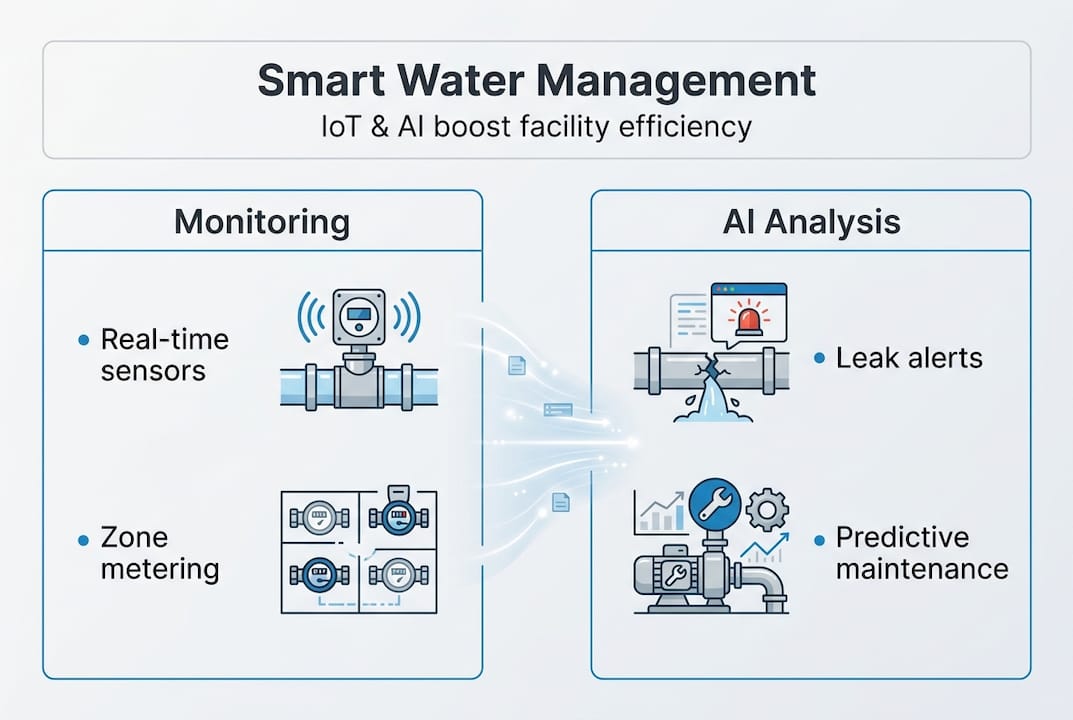
- IoT sensors and AI analytics enable real-time water monitoring and predictive leak detection.
- Conducting a water audit and installing submeters helps establish a reliable usage baseline.
- Smart water management improves operational resilience, supports ESG goals, and qualifies for rebates.
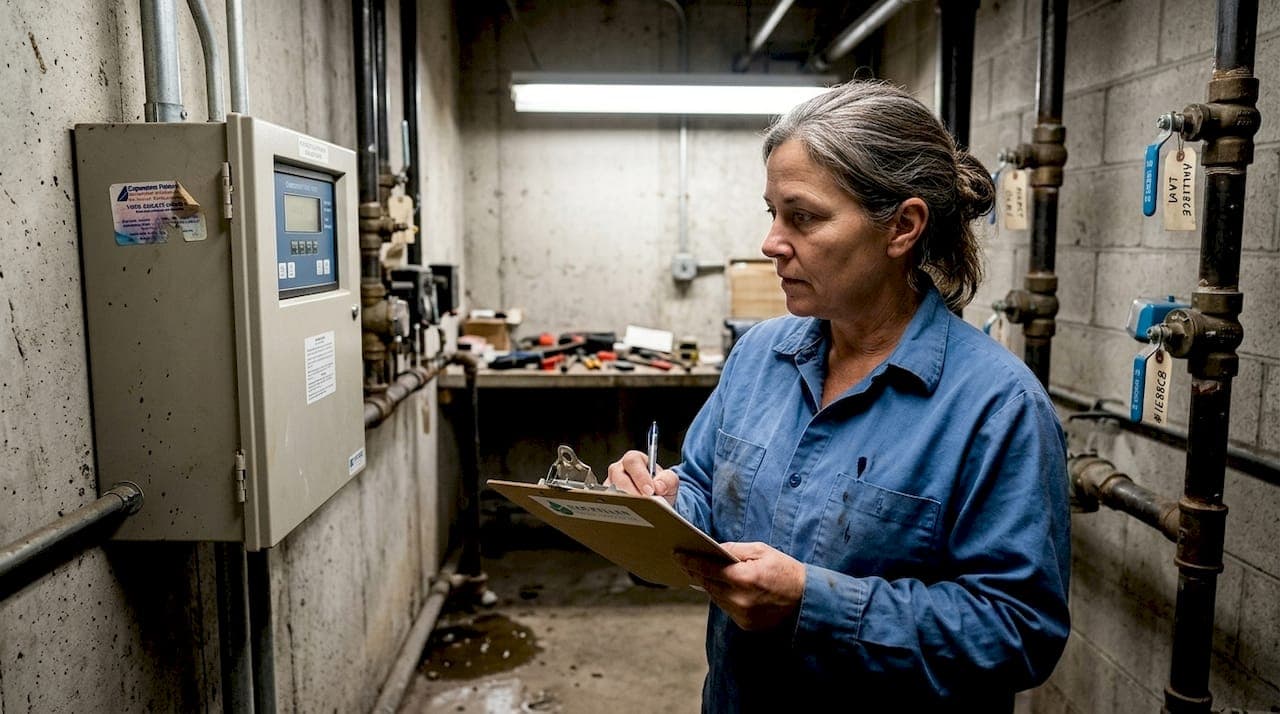
A burst pipe discovered on a Monday morning. A cooling tower running at double its expected flow rate for weeks without anyone noticing. Water bills that climb quietly until they become a budget crisis. These are not edge cases — they are the daily reality for facility managers who rely on manual checks and monthly meter reads. IoT sensors and AI analytics are changing that picture fast, giving operations teams real-time visibility, predictive alerts, and verified savings. This guide walks you through every stage: auditing your baseline, deploying smart monitoring, applying AI-driven maintenance, and capturing measurable results your stakeholders will notice.
Table of Contents
- Assessing your facility's water usage and readiness
- Implementing smart monitoring: Sensors, IoT, and zone control
- Leveraging AI for predictive maintenance and leak detection
- Verifying impact: Benchmarking, reporting, and rebates
- The real value of smart water management: Beyond compliance
- Next steps: Power up your facility's water efficiency
- Frequently asked questions
Key Takeaways
| Point | Details |
|---|---|
| Baseline is essential | Tracking 90 days of water usage and setting correct baselines is foundational for improvement. |
| Smart tech delivers results | IoT and AI tools enable real-time leak detection and predictive maintenance, cutting losses up to 30%. |
| Benchmark and report | Use segment-specific benchmarks to verify improvements and unlock rebates or incentives. |
| Ongoing engagement matters | The best tech succeeds with continuous monitoring, training, and management support. |
Assessing your facility's water usage and readiness
After identifying why efficient water management matters, you need to understand your current position. A water audit is the starting point, and it does not need to be complicated. The goal is to map where water enters your building, where it is consumed, and where it disappears without contributing to operations.
Water audit tool checklist:
- Utility bills from the past 12 months (minimum)
- Building blueprints showing plumbing layouts
- Current meter locations and submeter inventory
- Maintenance logs for fixtures, pumps, and cooling systems
- Occupancy schedules and seasonal usage patterns
- Inspection tools: pressure gauges, flow meters, dye tablets for toilet leak testing
Once you have the data, baseline usage over 90 days is key for accuracy, and scheduling preventive maintenance (PM) for backflow devices and water heaters ensures your baseline reflects normal operating conditions, not anomalies caused by deferred maintenance. Backflow prevention devices need annual inspection. Water heaters benefit from monthly visual checks and a full service annually.
Submetering is where real insight begins. Separate meters for restrooms, cooling towers, and irrigation allow you to isolate each zone's consumption. Submetering zones improves anomaly isolation, and 90 or more days of data gives AI systems enough history to establish what "normal" looks like before flagging deviations.
| Audit area | Tool needed | Priority |
|---|---|---|
| Restrooms | Dye tablets, flow meter | High |
| Cooling towers | Flow meter, water quality test | High |
| Irrigation | Zone timer review, soil sensors | Medium |
| Kitchen/cafeteria | Sub-meter, pressure gauge | Medium |
| Mechanical rooms | Pressure gauge, visual inspection | High |
Pro Tip: Before installing any sensors, walk every mechanical room with your maintenance team and document every valve, pump, and meter location. Gaps in physical knowledge are the most common reason smart monitoring projects stall at deployment.
For a broader view of water savings strategies and how they apply to commercial settings, it helps to see how other facilities have structured their audits before moving to digital tools. Facilities dealing with supply constraints can also benefit from reviewing water scarcity solutions that address both operational and infrastructure challenges.
Implementing smart monitoring: Sensors, IoT, and zone control
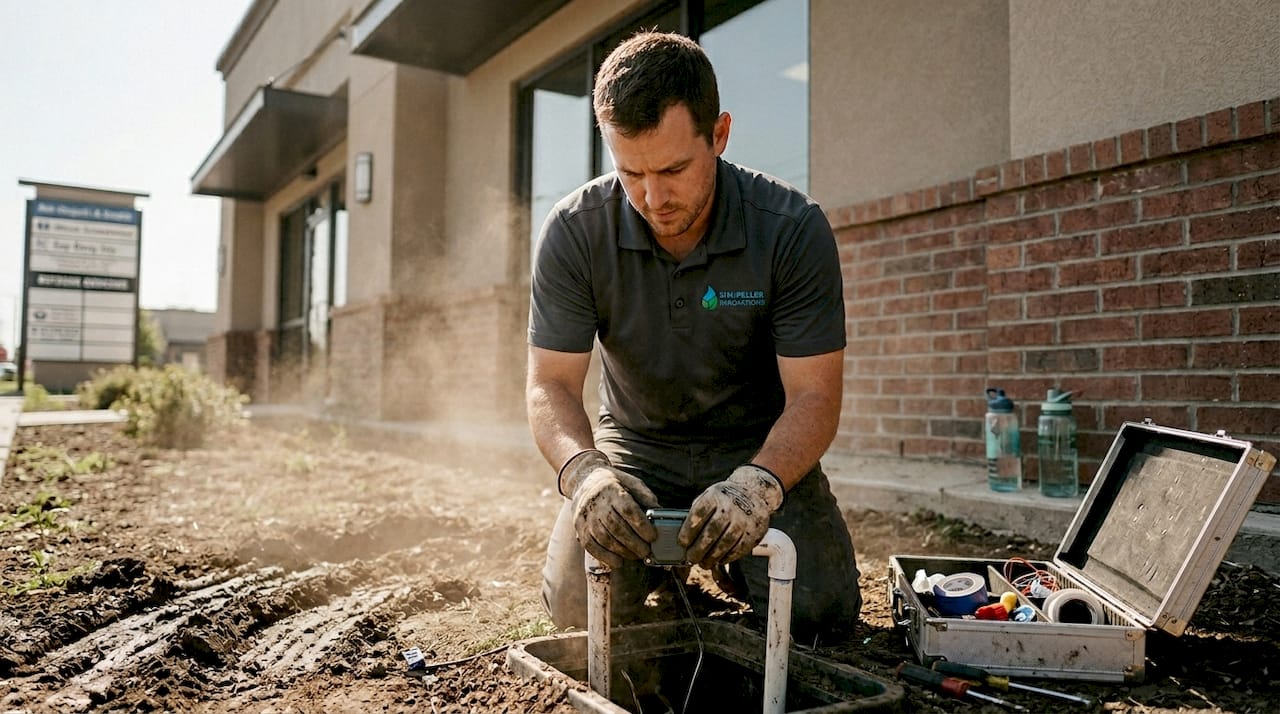
Once your usage baseline is set, it is time to digitize data collection for real-time insights. Manual meter reads give you a monthly snapshot. IoT sensors give you a continuous feed, and that difference in resolution changes everything about how you respond to problems.
Step-by-step deployment process:
- Select sensors by function. Flow sensors for mains and submeters, pressure transducers for distribution lines, water quality sensors for cooling and process water, and ultrasonic leak detectors for high-risk joints.
- Plan your IoT network architecture. Decide between cellular, LoRaWAN, or building-integrated Wi-Fi based on your facility's layout and existing infrastructure.
- Prioritize zones by risk and cost impact. Cooling towers and irrigation systems typically account for 40 to 60 percent of commercial water use, making them the highest-value starting points.
- Install edge computing devices. Local processing reduces latency and allows real-time alerts even when cloud connectivity is interrupted.
- Integrate with your building management system (BMS). Data should flow into a single dashboard, not sit in isolated sensor apps.
- Set alert thresholds. Define what constitutes an anomaly for each zone based on your 90-day baseline before going live.
Real-time sensors support flow, pressure, and quality monitoring, and AI systems built on top of that data detect leaks with up to 94% accuracy. That level of precision is not achievable with monthly manual reads.
| Feature | Traditional monitoring | IoT/AI-driven monitoring |
|---|---|---|
| Response time | Days to weeks | Minutes to hours |
| Data resolution | Monthly averages | Continuous, real-time |
| Leak detection accuracy | Low (visual only) | Up to 94% |
| Cost impact tracking | Estimated | Verified and granular |
| Scalability | Manual effort required | Automated across zones |
Pro Tip: Start your pilot with cooling towers or irrigation before rolling out building-wide. These zones show the fastest ROI and give your team confidence in the technology before tackling more complex plumbing networks. For a detailed look at structuring your IoT water monitoring workflow, the process from sensor selection to dashboard integration is well worth reviewing. Facilities pursuing broader sustainability goals will also find value in how smart water monitoring supports sustainable architecture decisions. And if your facility is ready to close the loop on consumption, onsite water recycling offers a practical path to reducing demand at the source.
Leveraging AI for predictive maintenance and leak detection
With smart data flowing in, the next leap is using AI to shift from reactive to predictive maintenance. This is where the investment in sensors and submetering pays off at scale. AI does not just flag problems — it learns the rhythm of your facility and identifies deviations before they become failures.
AI systems process high-frequency flow data, typically sampled every few seconds, and build statistical models of normal behavior for each zone and time period. When readings deviate from those models, alerts fire automatically. The types of anomalies that trigger alerts include:
- Pressure drops: Sudden or gradual loss of pressure indicating pipe stress, partial blockage, or active leakage
- Flow spikes: Unexpected increases in consumption outside of occupancy hours, often the first sign of a running fixture or valve failure
- Sensor drift: Gradual shift in readings that suggests a sensor is failing or has been physically disturbed
- Temperature anomalies: In water heater circuits, unexpected temperature changes can indicate scaling or element failure
- Backflow events: Pressure reversals that suggest backflow prevention devices need immediate inspection
AI anomaly detection reduces water losses by 20 to 30 percent in facilities that deploy it consistently, and leak detection accuracy reaches 94% when models are properly trained on facility-specific baselines.
"Predictive maintenance is not about having more data — it is about having the right model to interpret what that data means for your specific building. A model trained on a hotel behaves differently than one trained on a manufacturing plant."
This is why periodic AI model retraining matters. As your facility changes — new equipment, renovations, occupancy shifts — the model's baseline needs to be updated. A quarterly review of model performance, comparing predicted versus actual anomalies, keeps detection accuracy high. Alerts should feed directly into your work order system so maintenance teams receive actionable tasks, not raw sensor data. Connecting AI outputs to smart water management workflows ensures nothing falls through the cracks. For facilities exploring how water reuse cuts costs, AI-driven monitoring also validates reuse system performance over time.
Verifying impact: Benchmarking, reporting, and rebates
With smart maintenance in place, results must be verified and opportunities for recognition or savings captured. Data collection is only valuable when it translates into decisions, reports, and financial returns.
Track three categories of data consistently: usage volume by zone, cost per unit of water consumed, and environmental metrics such as carbon equivalent of water heating energy. Monthly reports comparing current performance to your 90-day baseline show whether interventions are working. Quarterly reports against industry benchmarks position your facility within its peer group.
| Facility type | Water use benchmark | 25th percentile | 75th percentile |
|---|---|---|---|
| Office building | 15-25 gal/person/day | 12 gal | 30 gal |
| Hotel | 100-175 gal/occupied room | 90 gal | 200 gal |
| Beverage production | 1.2-1.8 L water per L product | 1.0 L | 2.2 L |
| Hospital | 150-250 gal/bed/day | 130 gal | 280 gal |
Benchmarks for water use vary by facility type, and smart monitoring reduces your Water Use Intensity (WUI), the ratio of water consumed to building area or production output, faster than manual programs alone.
Steps to report results and apply for rebates:
- Document baseline WUI before any interventions are made
- Record all sensor-verified savings with timestamps and zone-level detail
- Cross-reference savings against WaterSense program criteria for eligible fixtures and systems
- Contact your utility's demand management team with verified data to apply for rebates
- Submit annual reports to local sustainability programs or ESG disclosure frameworks
- Retain submeter data for at least three years to support audit requests
Pro Tip: Report savings by submeter zone rather than building total. Granular reporting not only strengthens rebate applications but also helps you identify which zones still have untapped efficiency potential. Revisiting your facility water savings strategy annually ensures you are capturing every available incentive.
The real value of smart water management: Beyond compliance
Moving from results and metrics, it is worth rethinking what smart water management means for the future of building operations. For too long, water management in commercial facilities meant waiting for a leak to appear on a bill or a maintenance request to surface a problem. That reactive posture is expensive, and it is avoidable.
The facilities that are pulling ahead are not just cutting water bills. They are building operational resilience. When a sensor catches a slow leak before it damages a ceiling, you avoid a repair bill, a tenant complaint, and a potential insurance claim. That is not just savings — that is reputation protection.
AI and IoT tools also create a documented record of stewardship that supports ESG reporting, tenant retention, and asset valuation. Investors and tenants increasingly factor sustainability performance into their decisions. A building with verified, real-time water data tells a different story than one with estimated annual figures.
The uncomfortable truth is that even the best technology requires cultural buy-in to deliver results. Sensors do not save water — people acting on sensor data do. Facility teams need clear protocols, regular training, and visible ROI tracking to stay engaged. Exploring facility sustainability initiatives that connect operational data to broader value creation helps build that internal case. The technology is ready. The question is whether your organization is structured to use it.
Next steps: Power up your facility's water efficiency
The path from manual meter reads to AI-driven water management is shorter than most facility managers expect. Auditing your baseline, deploying IoT sensors in high-impact zones, and connecting AI analytics to your maintenance workflow can begin delivering verified savings within a single quarter. The tools exist. The benchmarks are clear. The rebates are available.
Simpeller's platform is built for exactly this transition. Our plug-and-play smartsink IoT devices and AI-driven analytics give you real-time visibility across every zone, verified savings data for ESG reporting, and the ability to convert efficiency gains into measurable value. Visit Simpeller to see how commercial facilities are turning water data into operational advantage and climate impact today.
Frequently asked questions
What is the first step in facility water management?
Start by conducting a water audit and establishing a 90-day usage baseline to understand your facility's current consumption patterns before deploying any technology.
How does IoT improve leak detection?
IoT sensors provide continuous flow and pressure monitoring, and AI analyzes those patterns to detect leaks at 94% accuracy, reducing water losses by 20 to 30 percent compared to manual inspection programs.
What benchmarks should I use for commercial water management?
Benchmarks vary by facility type, ranging from 15 to 25 gallons per person per day for offices to 1.2 to 1.8 liters of water per liter of product for beverage facilities, with percentile breakdowns helping you assess where your building stands.
Can these solutions help qualify for rebates?
Yes, smart monitoring that meets WaterSense program criteria and produces verified usage data helps facilities qualify for utility rebates and local water efficiency incentive programs.