
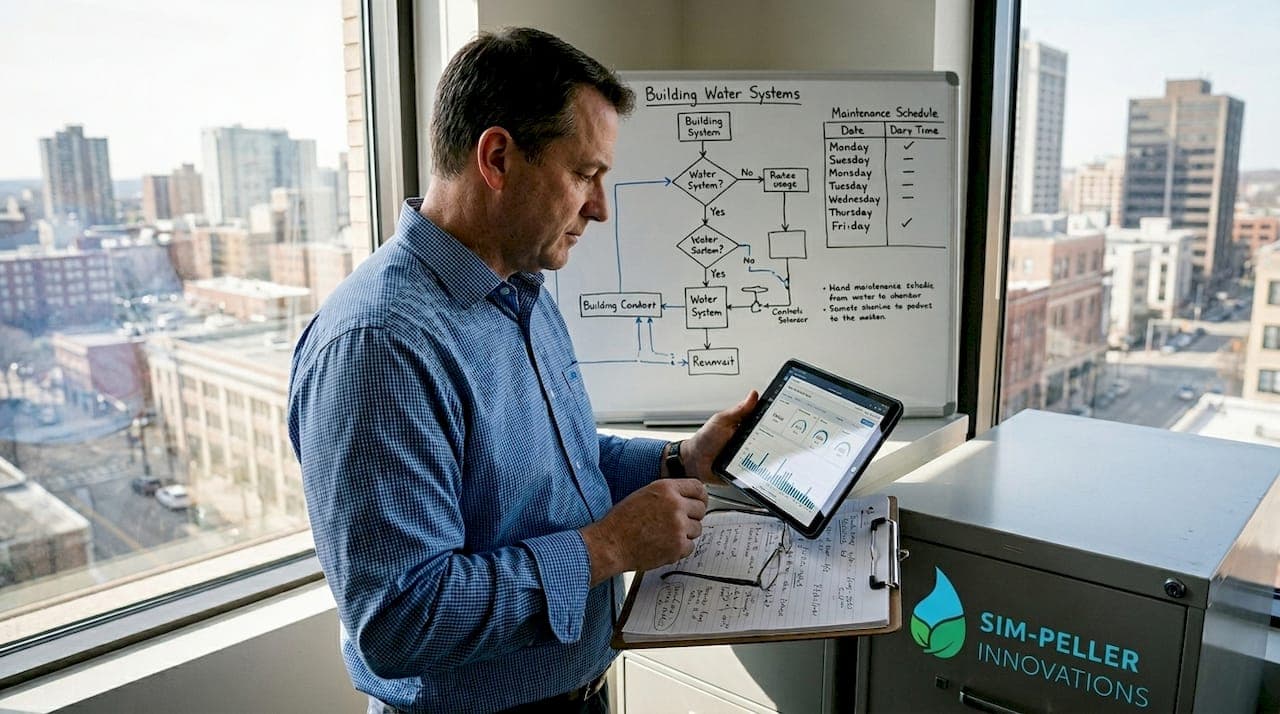
Water efficiency sounds straightforward: use less, spend less. But the reality inside commercial facilities and industrial operations is far more complicated. Improving a pump here or installing a low-flow fixture there rarely moves the needle on your annual water bill in any meaningful way. What actually drives lasting results is a systems-level approach that connects data, technology, and organizational behavior into one coherent strategy. This article breaks down what smart water management really means, how it works on the ground, where it delivers measurable ROI, and why the biggest pitfalls are rarely the ones you expect.
Table of Contents
- Defining smart water management
- How smart water management works
- Benefits and ROI of smart water solutions
- Critical challenges and common pitfalls
- Smart water management in action: Real-world examples
- A practitioner's take: Technology is just the beginning
- Ready to future-proof your water strategy?
- Frequently asked questions
Key Takeaways
| Point | Details |
|---|---|
| Smart management defined | It combines technology, data, and leadership for advanced water efficiency. |
| ROI can be rapid | Many projects earn back their investment within months thanks to cost, energy, and ESG gains. |
| Integration is crucial | Bridging new tech with old systems and teams is as important as the technology itself. |
| Behavior matters | True sustainability comes from policies and people, not just digital tools. |
Defining smart water management
The term "smart water management" gets used loosely, so let's be precise. For commercial and industrial operators, smart water management is the integration of digital technology, real-time data, and automated controls to continuously monitor, analyze, and optimize water use across every process and system in a facility.
This is fundamentally different from traditional water management, which relies on manual meter reads, periodic audits, and siloed departmental reporting. Traditional approaches tell you what happened last month. Smart systems tell you what is happening right now and what is likely to happen next.
The core components of a smart water management system include:
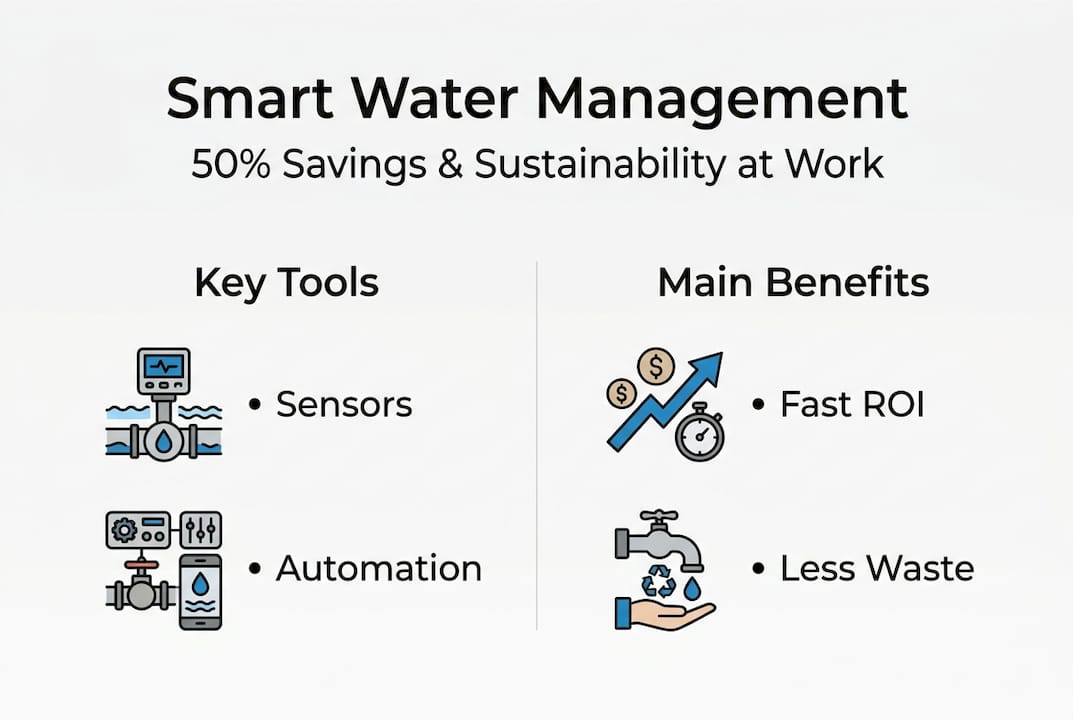
- IoT sensors and smart meters: Installed at key points across pipes, tanks, cooling towers, and process lines to capture continuous flow, pressure, and quality data.
- AI and machine learning analytics: AI, ML, and IoT are central methodologies for pattern recognition, anomaly detection, and predictive forecasting.
- Automation and control systems: Actuators and programmable logic controllers that can respond to data signals without waiting for human intervention.
- Legacy system integration: Connecting new digital layers to existing SCADA (supervisory control and data acquisition) infrastructure and building management systems.
- Governance frameworks: Policies, roles, and accountability structures that ensure data is acted upon, not just collected.
That last point matters more than most guides acknowledge. Technology is the enabler, but governance is what turns sensor data into reduced consumption. Without clear ownership and decision-making protocols, even the most sophisticated platform becomes shelf software.
Smart water management also extends into demand-side management, which means actively shaping how and when water is used rather than simply reacting to waste after it occurs. This includes onsite water recycling programs that reduce freshwater draw by treating and reusing process water, greywater, or cooling tower blowdown within the facility itself.
The shift from reactive to proactive is what separates smart management from simple efficiency upgrades. And for facility managers under pressure to hit sustainability targets while controlling operating costs, that shift is not optional anymore.
How smart water management works
With the basics established, let's break down how smart water management actually functions on the ground.
A fully operational smart water system follows a continuous process loop:
- Data collection: IoT sensors measure flow rates, pressure, temperature, and water quality at multiple points across the facility in real time.
- Data transmission: Readings are sent via secure networks (cellular, LoRaWAN, or existing facility Wi-Fi) to a centralized cloud or edge computing platform.
- AI-driven analysis: Algorithms process incoming data streams, flagging anomalies, identifying usage patterns, and generating forecasts. Forecasting and anomaly detection are core functions that integrate directly with legacy hardware.
- Automated or guided intervention: The system either triggers automated responses (closing a valve, adjusting pump speed) or sends alerts to operations staff for manual action.
- Reporting and optimization: Aggregated data feeds into dashboards and ESG reports, enabling continuous improvement cycles.
Integration with SCADA systems is particularly important for industrial sites. Most large facilities already have SCADA infrastructure managing pumps, valves, and treatment systems. Smart water platforms layer on top of this, adding analytics and connectivity without requiring a full system replacement.
| Function | Traditional approach | Smart water approach |
|---|---|---|
| Leak detection | Monthly meter check | Real-time pressure anomaly alert |
| Maintenance scheduling | Fixed calendar intervals | Predictive, condition-based triggers |
| Water quality monitoring | Manual lab sampling | Continuous inline sensor data |
| Usage reporting | Quarterly manual audit | Live dashboard with trend analysis |
Consider a manufacturing plant running three shifts. A small pipe joint failure at 2 a.m. on a Sunday would go undetected until Monday's walk-through under a traditional setup. A smart system flags the pressure drop within minutes, sends an alert, and logs the incident for maintenance review. That single catch can save thousands of gallons and prevent equipment damage.
Exploring water reuse strategies alongside real-time monitoring creates even stronger outcomes, since you are not just catching waste but actively redirecting recovered water back into productive use.
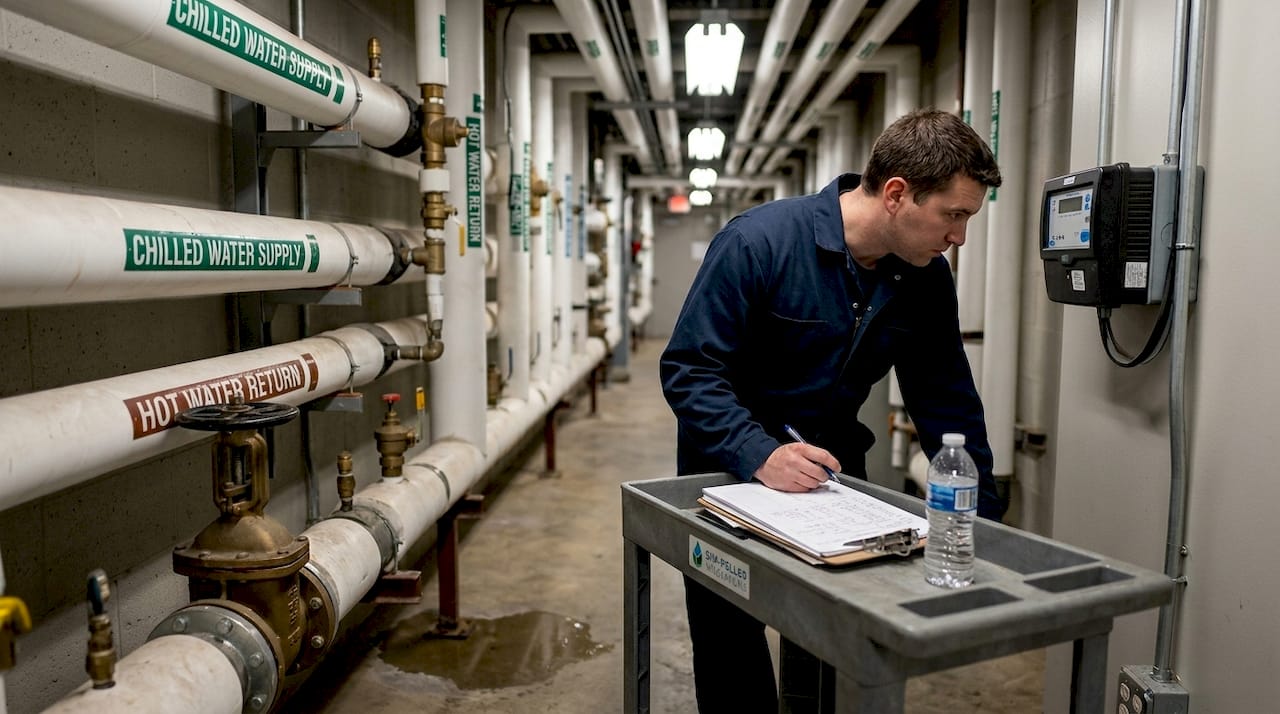
Pro Tip: Validate your sensor data against physical meter readings at least quarterly. Sensor drift is real, and a miscalibrated device can create dangerous blind spots in your consumption picture.
Benefits and ROI of smart water solutions
Understanding how these systems operate, the next logical question is: does it pay off? Let's review the benefits and ROI.
The financial case is strong and increasingly well-documented. Industrial wastewater reuse projects have demonstrated 96% BOD (biological oxygen demand) removal, ROI within five months, reverse osmosis optimization delivering 70% energy savings, and irrigation programs cutting water use by 52% while boosting profit margins by 22%.
Those are not outliers. They reflect what happens when monitoring, automation, and reuse are combined systematically rather than applied as isolated fixes.
| Benefit category | Typical impact range |
|---|---|
| Water cost reduction | 30% to 50% |
| Energy savings (pumping, heating) | 20% to 70% |
| Maintenance cost reduction | 15% to 35% |
| ROI payback period | 5 to 18 months |
Key organizational benefits extend well beyond the water bill:
- Regulatory compliance: Automated reporting simplifies permit documentation and reduces audit risk.
- ESG performance: Verified water reduction data strengthens sustainability disclosures and investor reporting.
- Operational resilience: Predictive maintenance reduces unplanned downtime caused by water system failures.
- Brand and tenant value: In commercial real estate, green building credentials attract quality tenants and support premium positioning.
- Carbon accounting: Lower water use means lower energy use for pumping and treatment, which feeds directly into Scope 2 emissions reductions.
For facility managers, the conversation with finance leadership becomes much easier when you can show a five-month payback period alongside documented ESG gains. Cutting water costs by 50% is not a stretch target when the right combination of monitoring, reuse, and behavioral change is in place.
The sustainability and financial benefits are not in tension. In most cases, the projects that deliver the fastest ROI are also the ones with the strongest environmental outcomes.
Critical challenges and common pitfalls
No transformative tech comes without hurdles. Here's what can go wrong and how to mitigate those pitfalls.
The most frequently cited barriers to smart water adoption include high upfront capital costs, fragmented communication protocols between old and new equipment, and the sheer complexity of integrating modern platforms with decades-old infrastructure. Common implementation failures include legacy integration breakdowns, data silos, cybersecurity vulnerabilities, and scalability gaps that leave smaller facilities underserved.
Cybersecurity deserves special attention. Connecting operational technology (pumps, valves, treatment systems) to the internet creates attack surfaces that did not exist before. A breach in a water system is not just a data problem; it can be a physical safety issue.
There is also a subtler risk that most guides skip entirely. The Jeavons paradox describes how efficiency gains can paradoxically increase total resource use when they make that resource cheaper or more available. In water management, this means a facility that cuts its cost per liter through smart monitoring might simply expand operations or relax conservation habits, ending up using more water overall.
"Technology alone does not solve resource problems. Without governance structures and behavioral accountability, efficiency tools can become a license to consume more."
Addressing these pitfalls requires strategies that go beyond the technology layer:
- Social and behavioral programs: Staff training, consumption targets, and visible dashboards that make water use personal and accountable.
- Governance structures: Clear ownership of water KPIs at the department and leadership level.
- Phased implementation: Start with high-impact, lower-cost monitoring pilots before committing to full-scale deployment.
- Vendor-agnostic integration planning: Avoid lock-in by mapping integration challenges and solutions before procurement, not after.
- Cybersecurity protocols: Segment operational networks, enforce access controls, and audit connectivity regularly.
Pro Tip: Cross-departmental buy-in is not a soft goal; it is a hard requirement. Projects that live only in the facilities team rarely survive budget cycles. Get operations, finance, and sustainability leadership aligned from day one.
Smart water management in action: Real-world examples
What does all this look like when executed well? Let's examine concrete case studies.
| Sector | Before | After | ROI period |
|---|---|---|---|
| Industrial manufacturing | Hauling wastewater offsite monthly | Onsite reuse, 96% BOD removal | 5 months |
| Commercial real estate | Manual quarterly audits | Real-time leak alerts, 40% cost reduction | 9 months |
| Campus facilities | Fixed irrigation schedules | Sensor-driven irrigation, 52% water saved | 12 months |
Industrial applications consistently show rapid ROI, significant water and energy reduction, and measurable profit improvements when implementation is structured correctly.
A typical end-to-end rollout follows these steps:
- Baseline audit: Map all water inputs, outputs, and loss points across the facility to establish a credible starting point.
- Sensor deployment: Install IoT meters and quality sensors at the highest-impact nodes identified in the audit.
- Platform integration: Connect sensor data to an analytics platform and integrate with existing SCADA or building management systems.
- Alert and response protocol setup: Define thresholds, escalation paths, and automated responses before going live.
- Staff training and governance alignment: Ensure every team that touches water systems understands the new tools and their role in acting on data.
- Continuous optimization: Use monthly performance reviews to refine thresholds, identify new savings opportunities, and update ESG reporting.
What surprises most facility managers is step five. The technology installs faster than the organizational change takes hold. Teams accustomed to reacting to problems need time and support to shift into a proactive monitoring mindset. Exploring CRE water reuse case studies can help leadership teams calibrate realistic expectations before committing to a full deployment.
A practitioner's take: Technology is just the beginning
Here is what most guides won't tell you: the facilities that struggle most with smart water management are rarely the ones with the worst technology. They are the ones with the best technology and the weakest organizational alignment.
We have seen this pattern repeatedly. A facility invests in a sophisticated IoT platform, sensors go in, dashboards light up, and then nothing changes. Why? Because no one owns the data. No one has authority to act on an alert at 2 a.m. No one's performance review includes a water KPI.
Technology fixes alone do not solve water problems without governance and human factors working in parallel. The most durable savings come from facilities where leadership has made water accountability a cultural norm, not a technology project.
This means aligning incentives, training teams across departments, and making consumption data visible to the people who can actually influence it. Balancing technology and behavior is where the real competitive advantage lives, and it is the piece most vendors won't sell you because it requires internal commitment, not a purchase order.
Pro Tip: Make stakeholder engagement a non-negotiable part of your water governance plan. A well-informed operations team will outperform a poorly governed smart system every time.
Ready to future-proof your water strategy?
Smart water management is not a single product or a one-time installation. It is an ongoing capability that connects data, technology, and organizational discipline into measurable, verifiable results. Simpeller's IoT-enabled platform and smartsink devices make that capability accessible for commercial and industrial facilities at any stage of their water journey. Whether you are looking to run a pilot program, get a custom consumption assessment, or build a full water reuse and ESG reporting strategy, Simpeller smart solutions give you the tools to track every liter, verify every saving, and convert efficiency gains into real financial and climate value. Start with a conversation.
Frequently asked questions
How does smart water management help cut costs in commercial buildings?
Real-time monitoring, AI-driven analytics, and automated leak detection allow facilities to reduce water bills by 50% while also trimming energy and maintenance expenditures significantly.
What is the Jeavons paradox in water management?
The Jeavons paradox occurs when efficiency improvements make a resource cheaper to use, which then encourages greater overall consumption rather than net savings.
What technical challenges slow down smart water adoption?
The primary barriers are high upfront capital costs, legacy system integration complexity, and cybersecurity risks that emerge when operational technology connects to modern networks.
Are ROI and sustainability goals compatible in smart water projects?
Yes. Industrial reuse projects consistently achieve payback within 5 to 12 months while simultaneously meeting rigorous ESG performance targets.