
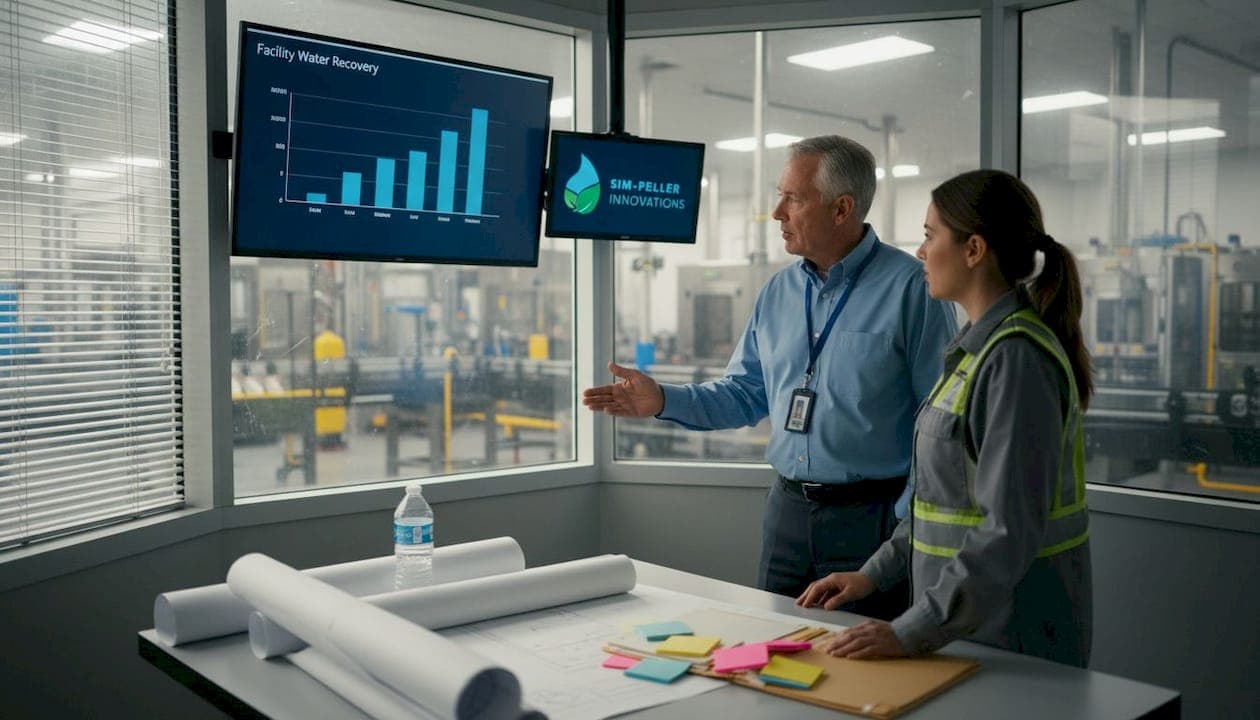
Advanced water‑efficiency tech is spreading fast across industry and commerce, yet global water stress keeps worsening. Technology alone doesn’t cut usage; even Intel, which achieved 98% water recovery rate, which dwarfs most facilities, still wrestles with rising costs, tighter regulations and supply risks. This article examines the real drivers of water scarcity, proven reuse tactics, and the governance‑and‑operational nuances that set top performers apart.
Table of Contents
-
Core water reuse strategies for industrial and commercial leaders
-
Empirical outcomes and benchmarks: What top performers achieve
-
Navigating tradeoffs: Governance, paradoxes, and integrated approaches
-
Why most water scarcity strategies are missing the mark—and what actually works
Key Takeaways
| Point | Details |
|---|---|
| Context matters most | The right solution blends new technology with governance and tailored strategies for each operation. |
| Benchmark for results | Top performers achieve up to 98% recovery and payback within 5–7 years with current best practices. |
| Avoid the efficiency trap | Focusing only on efficiency can backfire, so align policy and implementation with sustainability goals. |
| Integrated planning wins | Lasting water resilience is built from technical, operational, and policy integration. |
The true scope of water scarcity challenges
Water scarcity isn’t just an environmental headline. For commercial and industrial leaders, it translates directly into operational risk, cost volatility, and mounting ESG accountability. Facilities in water-stressed regions face curtailment orders, escalating tariffs, and supply chain disruptions that can halt production. At the same time, institutional investors and regulators are scrutinising water disclosures with the same intensity once reserved for carbon.
The scale of demand growth makes this urgent. Global water demand is projected to reach 430 million cubic meters per day by 2040, an eightfold increase from current reuse levels. Industrial and agricultural sectors will drive most of that growth, and the infrastructure to support it simply doesn’t exist yet.
The business impacts are specific and measurable:
-
Production downtime from water curtailments in drought-prone regions
-
Rising utility costs as municipal suppliers pass infrastructure investment onto commercial users
-
Regulatory compliance costs tied to discharge quality standards and abstraction limits
-
ESG reporting gaps that expose organizations to investor scrutiny and reputational risk
-
Supply chain fragility when water-intensive suppliers face their own scarcity pressures
What makes this harder is a phenomenon researchers call the efficiency paradox in water management. When a facility installs more efficient equipment, it often reduces per-unit consumption. But lower costs and improved reliability can encourage expanded production, which drives total consumption back up or higher. The math that looks good on a project proposal doesn’t always hold at the facility or regional level.
| Sector | Primary water use | Key scarcity risk |
|---|---|---|
| Semiconductor manufacturing | Ultra-pure process water | Supply disruption, quality standards |
| Food and beverage | Cleaning, cooling, ingredient | Regulatory discharge limits |
| Pulp and paper | Fiber processing, cooling | High volume, effluent compliance |
| Commercial real estate | HVAC, sanitation, irrigation | Tariff escalation, ESG disclosure |
| Pharmaceuticals | Process water, sterilization | Purity requirements, audit exposure |
Context-specific solutions matter enormously here. A strategy that works for a semiconductor fab in Arizona won’t map cleanly onto a food processing plant in the Midwest. Understanding your facility’s water balance, local regulatory environment, and sector-specific quality requirements is the starting point, not an afterthought. Water reuse cuts CRE water costs significantly when strategies are matched to actual operational conditions rather than applied generically.
“The path is often blocked not by a lack of technology, but by a lack of clarity about where water is actually going and why.”
Core water reuse strategies for industrial and commercial leaders
Now that we’re clear on the global and operational challenge, let’s break down the toolkit of evidenced water reuse strategies. The most effective programs don’t start with technology selection. They start with a water balance assessment, mapping every intake, use point, and discharge stream across the facility. Without that map, you’re optimizing in the dark.
Industrial reuse methodologies include water balance analysis, reduce-reuse-reclaim prioritization, source segregation, cascading use, closed-loop recycling, and fit-for-purpose treatment using technologies like MBR, UF, RO, CCRO, electrocoagulation, and EDI. Each approach serves a different quality requirement and volume profile.
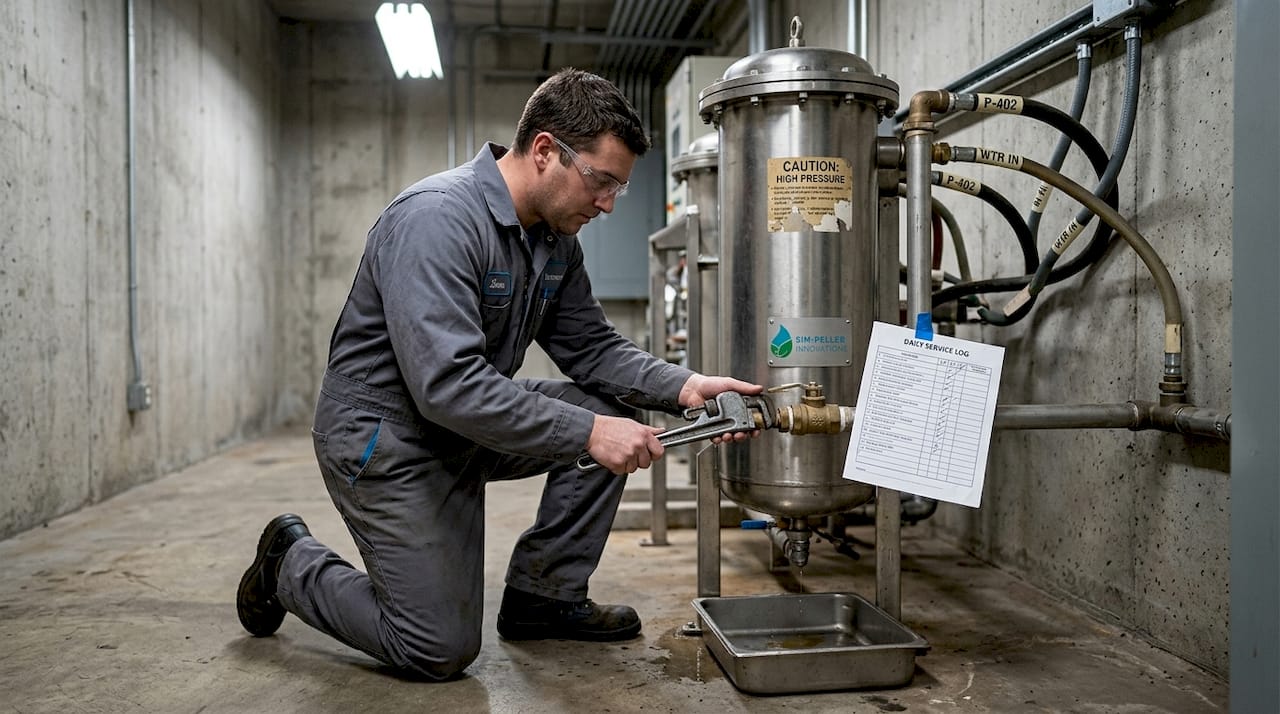
Here’s how the core treatment technologies compare:
| Technology | Best application | Recovery rate | Key limitation |
|---|---|---|---|
| MBR (membrane bioreactor) | Wastewater to process reuse | 85-95% | Higher energy use |
| UF (ultrafiltration) | Pre-treatment, cooling water | 90-95% | Doesn’t remove dissolved solids |
| RO (reverse osmosis) | High-purity reuse | 75-85% | Brine disposal required |
| CCRO (closed-circuit RO) | Brine minimization | 90-98% | Higher capital cost |
| EDI (electrodeionization) | Ultra-pure water production | 95%+ | Requires pre-treated feed |
A practical reuse plan follows a clear sequence:
-
Conduct a water balance audit to identify high-volume, low-quality discharge streams suitable for reuse
-
Prioritize reduction first before investing in treatment, eliminating waste at the source
-
Segregate water streams by quality to avoid treating clean water alongside contaminated streams
-
Apply cascading use where higher-quality water flows through progressively less demanding applications
-
Select fit-for-purpose treatment matched to the actual quality gap between available source water and required process water
-
Close the loop where technically and economically feasible, targeting zero liquid discharge in high-stress contexts
Pro Tip: Membrane fouling is the single most common reason reuse projects underperform. Specifying advanced membranes with anti-fouling coatings and building automated cleaning cycles into the design from day one will protect your recovery rates and extend membrane life significantly. Don’t treat it as an afterthought during commissioning.
For facilities ready to move from assessment to implementation, an onsite water recycling guide can help frame the technical and financial case for internal stakeholders. Cutting water costs with reuse requires aligning engineering decisions with financial modeling from the start.
Empirical outcomes and benchmarks: What top performers achieve
Understanding the main solutions is essential, but what do top-tier results look like in the real world? Published benchmarks matter because they give planning teams a defensible basis for capital requests and help set realistic performance targets.
The data from leading implementations is striking. Recovery rates of 85 to 98% are achievable across sectors, with Intel reaching 98% water recovery and 96% brine return in its semiconductor operations. ChemAqua’s paperboard cooling program generated $1,800 per day in savings, totaling $2.3 million over five years. Aquacycl’s bioelectrochemical treatment system delivered a five-month ROI with ongoing savings of $50,000 per month.
These aren’t outliers reserved for companies with unlimited capital budgets. They reflect disciplined application of fit-for-purpose treatment, rigorous monitoring, and a clear understanding of where value is created in the water cycle.
| Case | Sector | Recovery/savings | ROI timeline |
|---|---|---|---|
| Intel | Semiconductor | 98% water recovery | Ongoing |
| ChemAqua | Paperboard/cooling | $1,800/day savings | 5-year cumulative |
| Aquacycl | Industrial wastewater | $50,000/month savings | 5 months |
| GWRS | Municipal/industrial | 300M gallons/day replenishment | Long-term infrastructure |
Sector variation is real and worth planning for. Semiconductor facilities face the most demanding purity requirements, which drives higher capital costs but also higher recovery potential. Pulp and paper operations deal with high volumes and complex organic loads, making biological pre-treatment essential before membrane systems. Heavy industry often finds the greatest ROI in cooling tower optimization and condensate recovery, where the investment is modest and the payback is fast.
Key performance indicators worth tracking across any reuse program:
-
Water recovery rate as a percentage of total intake
-
Cost per cubic meter of reclaimed water versus municipal supply
-
Energy intensity of treatment per unit of water recovered
-
Discharge volume reduction as a compliance and cost metric
-
Verified savings tied to ESG reporting frameworks
Tracking water recovery achievements with verified, sensor-level data transforms these metrics from estimates into auditable records that support both financial reporting and ESG disclosure.
Navigating tradeoffs: Governance, paradoxes, and integrated approaches
High performance is motivating, but lasting solutions depend on navigating complex tradeoffs. Here’s what executives need to know before committing to a strategy.
The efficiency paradox is more than an academic curiosity. When better technology reduces the marginal cost of water use, it can incentivize expanded operations or relaxed conservation behaviors. Supply augmentation through reuse, if not paired with demand governance, can actually worsen regional shortages by enabling growth that would otherwise have been constrained. This is why context-specific governance matters as much as technology selection.
Centralized versus decentralized reuse is another decision point with real consequences. Centralized systems offer economies of scale and consistent quality control, but they require significant infrastructure investment and create single points of failure. Decentralized systems are more flexible and resilient, and they can be deployed incrementally as budget allows. For most commercial and industrial facilities, a hybrid approach works best, with onsite treatment handling high-volume, lower-quality reuse streams and centralized systems managing peak loads or high-purity requirements.
Nature-based solutions deserve more attention in industrial planning than they typically receive. Constructed wetlands, bioretention systems, and managed aquifer recharge can complement engineered treatment at lower cost and with co-benefits for biodiversity and community relations. Integrating these into a broader water management strategy often improves overall resilience.
“Governance that focuses on depletion rather than withdrawal is the shift that separates genuinely sustainable operations from those that are simply efficient on paper.”
The World Bank urges programmatic investments of $340 billion to unlock the full potential of water reuse globally, with a specific emphasis on shifting from withdrawal-based metrics to depletion-based accounting. That framing matters for executives too. Measuring how much water your facility returns to the local cycle, not just how much it draws, is the metric that will increasingly define regulatory compliance and ESG credibility.
Pro Tip: The most common governance misstep is treating water reuse as a facilities management issue rather than a strategic one. When reuse programs are owned at the executive level and tied to financial and ESG targets, implementation quality and accountability both improve substantially. Assign ownership accordingly.
For facilities working through the governance and technical dimensions together, an onsite recycling and governance framework can help structure the decision-making process.
Why most water scarcity strategies are missing the mark—and what actually works
Most organizations approach water scarcity by chasing marginal efficiency gains in existing systems. That’s understandable, but it consistently underdelivers. The facilities achieving savings of $1,000 or more per day with ROI timelines of five to seven years aren’t doing so by tweaking existing infrastructure. They’re redesigning how water moves through their operations from the start.
Fit-for-purpose treatment and decentralized reuse outperform one-size-fits-all approaches because they match the solution to the actual quality and volume gap, rather than applying maximum treatment to every stream. Addressing fouling and scaling proactively, rather than reactively, protects recovery rates and prevents the performance degradation that erodes financial returns over time.
Real progress comes from blending technical, operational, and governance change simultaneously. Technology without operational discipline produces inconsistent results. Governance without technical credibility stalls at the planning stage. The organizations that move fastest are those that treat water reuse and ESG impact as integrated business strategy, not separate workstreams.
Take the next step: Unlocking value with proven water reuse
Armed with this perspective, here’s how you can translate insight into impact. Simpeller’s IoT-enabled platform and smartsink sensor devices make the invisible visible, tracking water flows, identifying waste, and converting verified efficiency gains into measurable financial and ESG value. Whether you’re building the case for a first reuse project or scaling an existing program, the tools exist to move from estimation to evidence.
Explore water reuse solutions designed for commercial and industrial operations that need verified performance data to support ROI modeling, ESG reporting, and regulatory compliance. The gap between potential and realized savings is almost always a measurement and accountability problem. We help you close it.
Frequently asked questions
What are the most effective water scarcity solutions for commercial operations?
Top solutions combine fit-for-purpose treatment, advanced membrane technology, and prioritized reduction and reuse strategies tailored to each facility’s specific water quality and volume profile.
How much water can be recovered using current best practices?
Industries achieve 85 to 98% water recovery with advanced systems, with leading semiconductor operations like Intel reaching the top of that range through closed-circuit reverse osmosis and rigorous monitoring.
Is there a downside to focusing solely on efficiency measures?
Yes. The efficiency paradox shows that better technology can increase total consumption if lower costs incentivize expanded production, making demand governance as important as technical efficiency.
What typical ROI can be expected from investing in water reuse?
Water reuse projects commonly deliver returns within 5 to 7 years, with high-performing cases like ChemAqua generating $1,800 per day in savings and Aquacycl achieving full payback in just five months.