
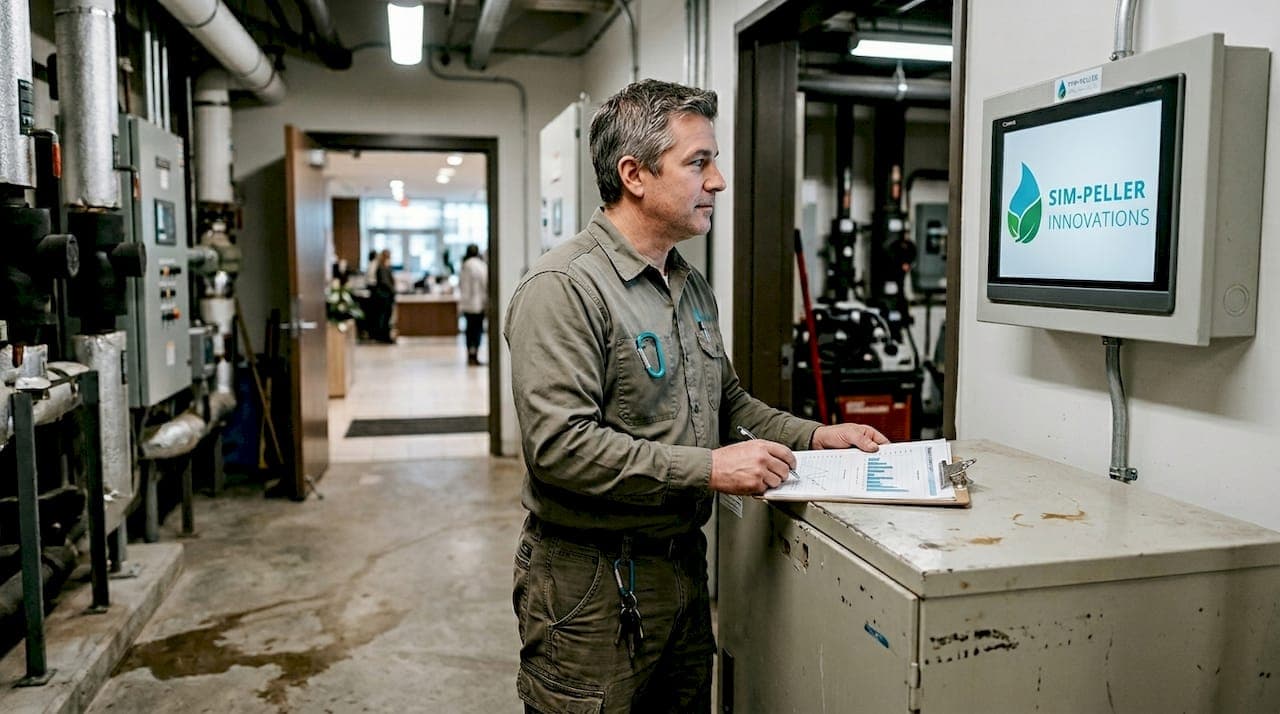
Architects routinely specify low-flow fixtures, drought-tolerant landscaping, and efficient irrigation as the foundation of water-conscious design. But these choices only go so far without a feedback loop. The real gap in most sustainable projects is the absence of continuous, data-driven water monitoring that reveals what is actually happening inside walls, pipes, and mechanical systems. Water monitoring enables architects to track consumption, detect leaks, and verify the efficiency of sustainable features long after the ribbon is cut. This guide explains why monitoring is the missing link, how the technology works, and how you can embed it into every project phase.
Table of Contents
- Why water monitoring matters for sustainable buildings
- How water monitoring works: Key systems and technologies
- Uncovering waste and saving water: The power of analysis
- From detection to action: Strategies for architects
- Why most sustainable projects underperform: The human factor in water monitoring
- Take your next project further with integrated water monitoring
- Frequently asked questions
Key Takeaways
| Point | Details |
|---|---|
| Monitoring is essential | Water monitoring bridges design intent and real-world performance for sustainable buildings. |
| Smart tech empowers action | IoT and analytics provide real-time alerts and insights that prevent waste and support lifelong savings. |
| Sub-metering drives results | Granular tracking pinpoints inefficiencies in both commercial and residential projects, supporting audits and tenant accountability. |
| Early integration pays off | Embedding monitoring systems in design makes sustainability targets easier to achieve and verify. |
Why water monitoring matters for sustainable buildings
Design intent and operational reality rarely match. A building can be specified to use 40% less water than baseline, yet post-occupancy audits frequently reveal that actual consumption drifts far above projections. The reason is almost always the same: without measurement, there is no management.
Water monitoring closes that loop. It connects what was designed to what is actually delivered, giving architects and building owners verifiable performance data. This matters enormously for green building certifications. LEED, BREEAM, and WELL all require documented evidence of water performance, and commercial water audits are increasingly expected as part of compliance packages. Monitoring transforms that process from a one-time snapshot into a continuous record.
Real-time alerts are another critical advantage. When a pipe joint fails at 2 a.m. or an irrigation controller malfunctions over a holiday weekend, a monitored building catches it within minutes. An unmonitored building catches it on the next utility bill, weeks later, after thousands of gallons have been lost.
Smart systems provide real-time monitoring of water levels, quality, and flow, and they integrate with building management systems (BMS) to trigger anomaly alerts automatically. That integration is key. When water data feeds directly into the BMS alongside HVAC, lighting, and energy data, facility managers gain a unified operational picture rather than siloed reports.
Key benefits of water monitoring in sustainable buildings:
- Supports LEED, BREEAM, and WELL certification documentation
- Enables proactive leak detection before damage escalates
- Validates the performance of onsite water recycling systems
- Improves occupant comfort by maintaining consistent pressure and quality
- Reduces lifecycle operating costs through early intervention
- Provides auditable data for ESG and carbon reporting
By the numbers: Low-flow fixtures combined with active monitoring can save up to 700 gallons of water per person per year. At commercial scale, that translates into significant reductions in utility costs and measurable progress toward sustainability targets.
With the need for deep sustainability clear, let's see what water monitoring looks like in real projects.
How water monitoring works: Key systems and technologies
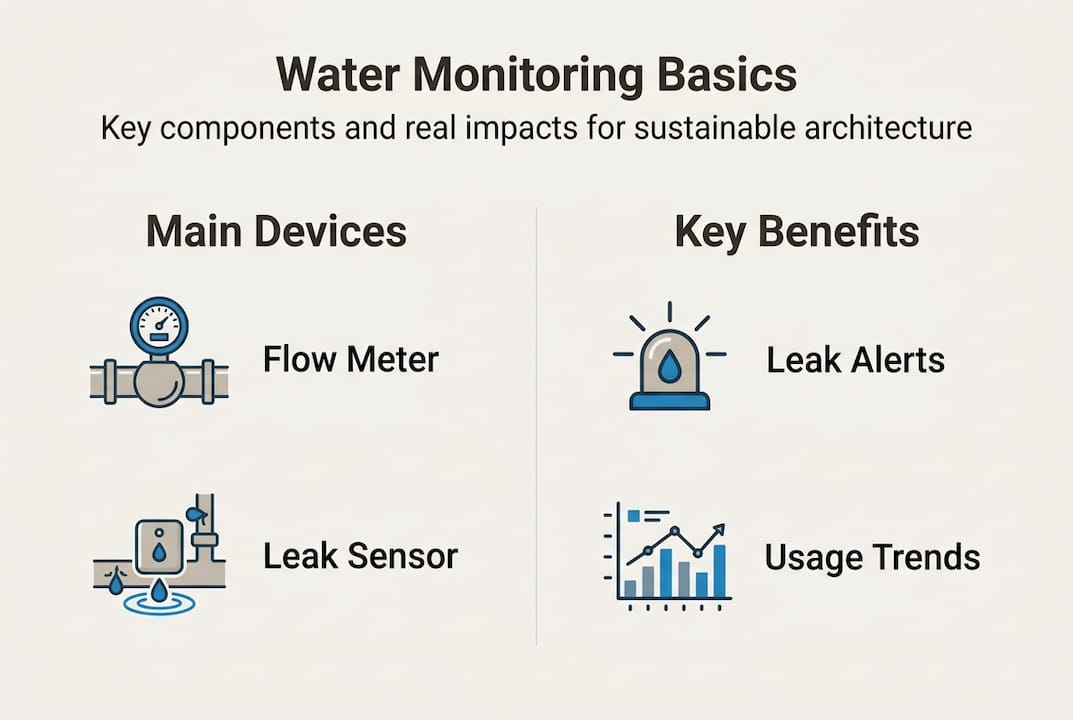
To deploy these benefits, you need to understand the tools and technology involved. Water monitoring is not a single product. It is a layered system of sensors, data infrastructure, and analytics platforms working together.
At the hardware level, the core components include flow meters, pressure sensors, leak detectors, and sub-meters. Flow meters measure volume moving through a pipe at any given moment. Pressure sensors flag drops that indicate leaks or blockages. Leak detectors, often acoustic or moisture-based, identify failures at specific points. Sub-meters break consumption down by zone, floor, or end use, which is essential for multi-tenant buildings and detailed auditing.
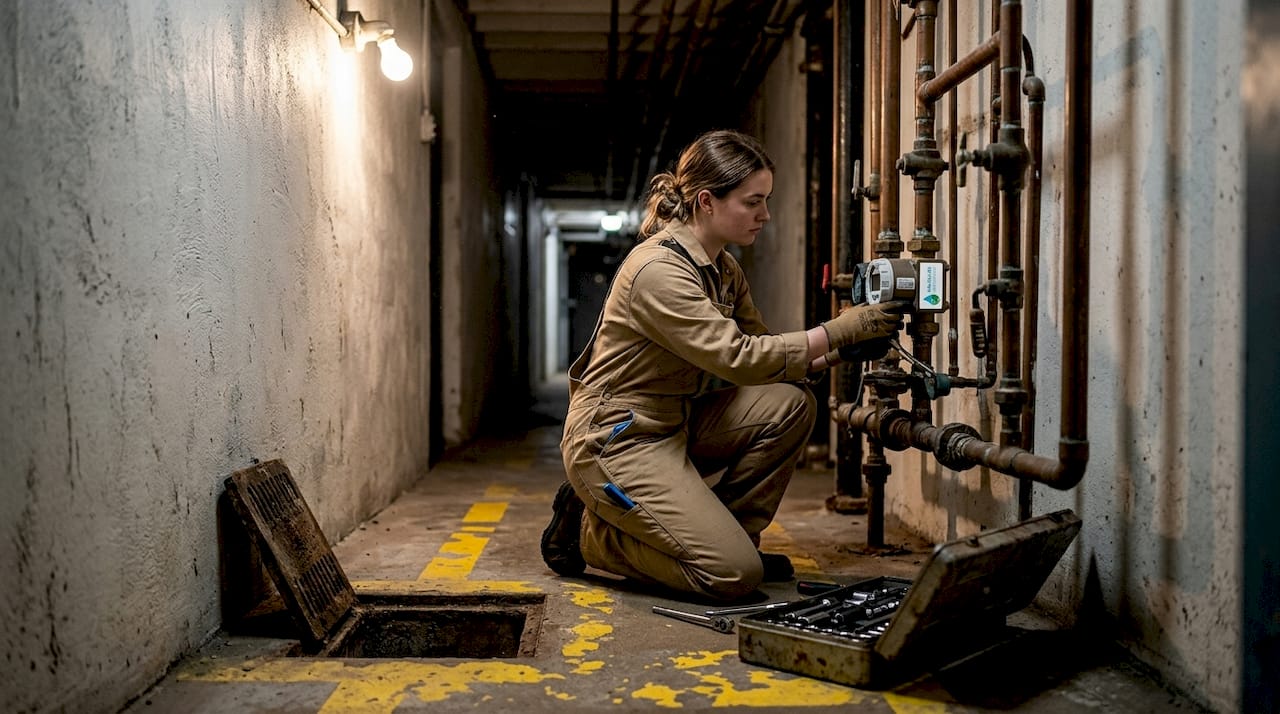
Sensor-based systems track flow, pressure, and leaks, and smart irrigation controllers adjust schedules based on real-time weather data, preventing overwatering automatically.
Typical vs. advanced water monitoring systems:
| Feature | Conventional system | IoT-integrated system |
|---|---|---|
| Data collection | Manual reads | Continuous, automated |
| Leak detection | Reactive (bill-based) | Real-time alerts |
| BMS integration | None | Full integration |
| Reporting | Periodic | Live dashboard |
| Predictive capability | None | AI-driven analytics |
| Certification support | Limited | Automated documentation |
The shift from conventional to IoT-integrated is not incremental. It changes the entire operational model from reactive to predictive, which is where the real value sits.
Steps to deploy a water monitoring system:
- Define monitoring goals during schematic design: certification targets, leak thresholds, sub-metering zones.
- Select sensor types based on building use, water sources, and BMS compatibility.
- Design conduit and data pathways into the building infrastructure early, before walls close.
- Commission the system alongside other building systems, not as an afterthought.
- Establish baseline data during the first 90 days of occupancy.
- Set alert thresholds and assign response protocols to facilities teams.
- Review analytics quarterly to identify drift, seasonal patterns, and optimization opportunities.
Pro Tip: Specifying smart water monitoring solutions during schematic design rather than construction documents saves significant coordination cost and ensures data conduits are built in, not retrofitted.
Uncovering waste and saving water: The power of analysis
Once data is flowing, here is how analysis reveals the real opportunities and risks.
In commercial buildings, toilets and cooling towers are consistently the largest water consumers, often accounting for more than 60% of total use. In residential projects, indoor water use dominates, with the average family using around 300 gallons per day, roughly 70% of it indoors.
Typical water use breakdown by building type:
| End use | Office building | Retail building | Residential |
|---|---|---|---|
| Toilets/restrooms | 36% | 28% | 27% |
| Cooling/HVAC | 28% | 22% | 5% |
| Irrigation | 10% | 18% | 30% |
| Drinking/kitchen | 8% | 15% | 18% |
| Other/miscellaneous | 18% | 17% | 20% |
These averages hide significant variation. A poorly calibrated cooling tower can consume two to three times its expected water volume. Granular sub-metering makes those anomalies visible immediately rather than buried in a monthly utility total.
Hidden inefficiencies that monitoring consistently exposes:
- Cooling tower blowdown cycles running more frequently than necessary
- Irrigation systems operating during or after rainfall events
- Undetected pipe leaks in concealed spaces or below slabs
- Restroom fixtures with worn seals consuming excess volume overnight
- Hot water recirculation loops running continuously without occupancy logic
The cost of a drip: A single dripping faucet wastes up to 3,000 gallons per year. A slow toilet leak can waste 200 gallons per day. Across a multi-floor commercial building, undetected leaks can represent 10 to 15% of total water spend, all invisible without monitoring.
The Kendeda Building saves 158,000 gallons of potable water per year through active monitoring and water reuse systems. That result was not achieved through fixture selection alone. It required continuous data collection and operational response to what the data revealed.
Following water audit best practices alongside live monitoring creates a powerful combination: the audit establishes the baseline, and monitoring tracks every deviation from it going forward.
From detection to action: Strategies for architects
Turning insight into action starts with what architects specify and design.
Architects hold significant influence over whether a building's water monitoring system is effective or merely nominal. Specifying sub-metering zones, designing accessible sensor locations, and requiring BMS integration in the project brief are all decisions made long before a contractor sets foot on site.
Granular sub-metering and IoT enable predictive maintenance, not just reactive fixes. That distinction matters for lifecycle cost modeling. A building that catches a failing pump seal through pressure data avoids a much larger repair and potential water damage claim.
Steps to embed monitoring from design to operation:
- Include monitoring requirements in the project sustainability brief at the outset.
- Specify sub-metering zones aligned with certification requirements and tenant boundaries.
- Design sensor access points into mechanical rooms, risers, and irrigation systems.
- Require BMS integration as a standard deliverable, not an optional add-on.
- Coordinate data handoff protocols between the construction team and facilities management before practical completion.
- Schedule a 12-month post-occupancy review to compare monitored data against design targets.
For multi-tenant commercial properties, monitoring also creates accountability. When tenants can see their own consumption data, behavior shifts. Usage drops not because of mandates but because visibility changes habits.
Variable climates add another layer of complexity. Buildings in regions with seasonal extremes need monitoring systems that adjust baselines automatically, so that a summer irrigation spike does not trigger false alarms while a genuine leak goes unnoticed.
Integrating water recycling integration with monitoring amplifies both systems. Recycled water volumes can be tracked, verified, and reported, turning operational savings into documented ESG outcomes.
Pro Tip: Plan the data handoff to facilities management as a formal project deliverable. A monitoring system without trained operators and clear escalation protocols delivers a fraction of its potential value.
The financial case is straightforward. Monitoring reduces water spend, lowers the risk of water damage, supports certification that increases asset value, and provides the verified data that ESG reporting increasingly demands.
Why most sustainable projects underperform: The human factor in water monitoring
Here is an uncomfortable truth that the industry rarely discusses openly: most sustainable buildings underperform not because the technology failed, but because nobody was watching.
IoT sensors and AI analytics are genuinely powerful. But they require ongoing stewardship. Alert thresholds need to be calibrated. Dashboards need to be reviewed. Facilities teams need to understand what the data means and what to do when something looks wrong. Without that human layer, even the most sophisticated monitoring system becomes background noise.
The culture of a building matters as much as its specification. A one-time certification is a snapshot. Actual performance is a daily practice. The projects that consistently deliver on their sustainability promises are the ones where ownership, management, and occupants treat water data as operational intelligence rather than compliance paperwork.
Architects can influence this by designing for operational simplicity, specifying systems with intuitive interfaces, and building data handoff into the project close-out process. The technology is ready. The question is whether the people and processes around it are too.
Take your next project further with integrated water monitoring
Looking for the next steps to implement these strategies in practice? Simpeller's plug-and-play IoT platform makes integrated water monitoring accessible for commercial and residential projects of any scale. Our smartsink devices and AI-driven analytics surface invisible waste, verify efficiency gains, and generate the documented performance data your clients need for ESG reporting and certification. Whether you are specifying systems for a new build or retrofitting an existing asset, we connect monitoring to measurable outcomes. Explore how onsite recycling solutions and smart monitoring work together to slash consumption and build a verifiable sustainability record.
Frequently asked questions
What types of water monitoring should architects prioritize in residential projects?
Focus on sub-metering, leak detection, and integration with smart home systems to track indoor water use and prevent waste. With the average family using around 300 gallons per day and 70% of that indoors, sub-metering is the fastest way to identify where savings are possible.
How does sub-metering help commercial buildings save water?
Sub-metering reveals usage patterns by area or tenant, making it easier to spot inefficiencies and encourage accountability. Audits paired with sub-metering are particularly effective in multi-tenant buildings where consumption responsibility is shared.
What is an example of using water monitoring for certification?
Many green building certifications require data-based validation. BREEAM's Wat 03 auto shut-off requirement, for instance, is directly supported by continuous monitoring that documents system response and compliance over time.
Can water monitoring reduce operating costs?
Yes, it detects leaks and inefficiencies in real time, enabling repairs and optimizations that lower water and energy bills. Low-flow fixtures plus monitoring save up to 700 gallons per person per year, translating into measurable cost reductions at building scale.