

TL;DR:
- Sustainable property management reduces costs, attracts tenants, and protects long-term asset value.
- Focus on energy and water monitoring for quick, high-impact savings within 12 to 18 months.
- Use smart technology and KPIs to measure progress and drive continuous sustainability improvements.
Most property owners assume sustainability is a premium they can't afford. That assumption is costing them money. The right sustainable property management strategies don't just reduce environmental impact; they slash operating expenses, attract quality tenants, and protect long-term asset value. Sustainable property management cuts costs and increases long-term asset value when applied with intention. This guide walks through every major strategy, from defining the fundamentals to deploying smart technology and tracking results, so you can move from reactive management to a model that pays for itself.
Table of Contents
- Understanding sustainable property management
- Core pillars of sustainable building operations
- Implementing smart technology for impact
- Measuring success: KPIs, reporting, and continuous improvement
- A fresh perspective on building sustainability
- Take the next step toward sustainability
- Frequently asked questions
Key Takeaways
| Point | Details |
|---|---|
| Sustainability reduces costs | Smart property management lowers expenses and boosts building value. |
| Focus on energy and water first | Upgrades in these areas bring the fastest, most measurable returns. |
| Use technology for impact | Smart sensors and automation drive lasting sustainability gains. |
| Track, report, improve | Consistent KPI monitoring ensures continued progress and compliance. |
Understanding sustainable property management
Sustainable property management means operating a commercial building in a way that reduces resource consumption, lowers costs, and minimizes environmental harm over the long term. It's not about retrofitting everything at once or chasing certifications. It's about making deliberate decisions that align operational efficiency with environmental responsibility.
Why does this matter for commercial buildings specifically? Three forces are pushing property managers toward sustainability right now.
- Regulatory pressure: Frameworks like ESRS2 are making sustainability reporting mandatory for many commercial operators, and that trend is accelerating in 2026.
- Economic incentive: Buildings that run efficiently carry lower operating costs, which directly improves net operating income.
- Tenant demand: Occupiers, especially corporate tenants, are prioritizing green-certified spaces to meet their own ESG commitments.
The biggest myth is that going green requires massive upfront capital. In reality, many improvements pay back within 12 to 36 months. Sustainable buildings command higher occupancy rates and lower operating costs, which means the investment case is often stronger than managers expect.
Another common misconception is complexity. Sustainable management doesn't require a full-time environmental officer. It requires a clear framework, the right energy-saving devices, and consistent tracking. Buildings that follow this approach regularly achieve up to 30% in operational savings, a number that compounds over time as efficiency improvements build on each other.
The path forward starts with understanding that sustainability is a business strategy, not a charity exercise. Every dollar saved on water, energy, or waste is a dollar that strengthens your building's financial position.
Core pillars of sustainable building operations
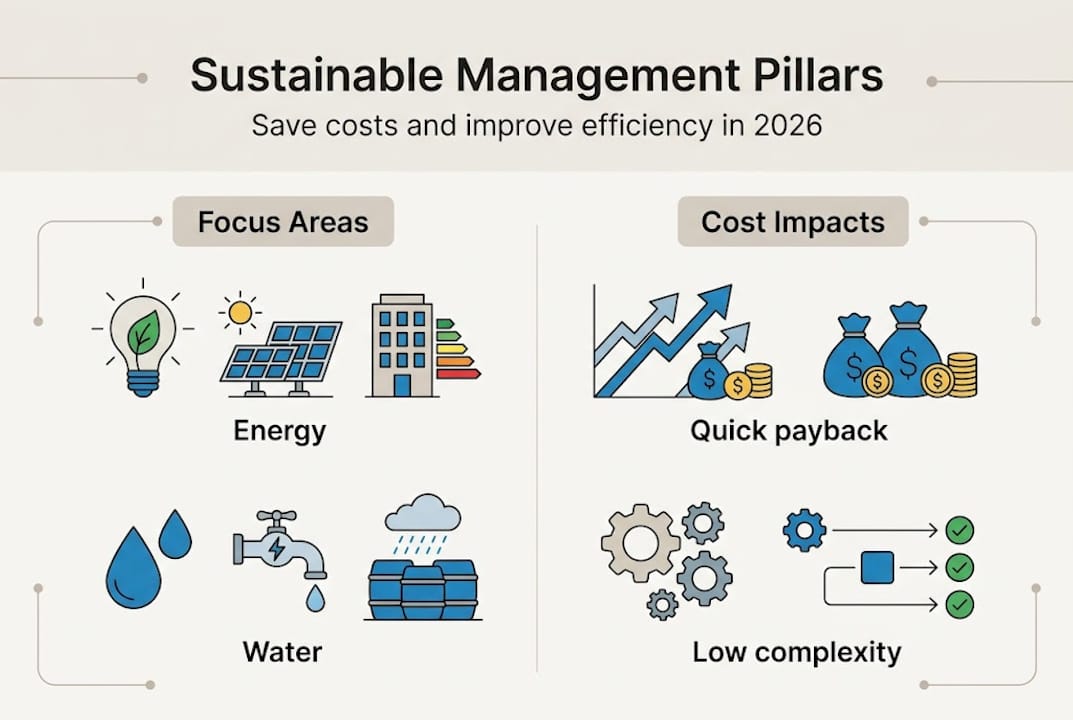
With the definition clear, the next step is identifying where to focus. Sustainable commercial building operations rest on four core pillars: energy, water, indoor environmental quality (IEQ), and waste management. Each pillar has a different cost-to-impact ratio, which matters when you're deciding where to start.
| Pillar | Impact on costs | Complexity to implement | Payback window |
|---|---|---|---|
| Energy management | Very high | Medium | 12 to 24 months |
| Water management | High | Low to medium | 6 to 18 months |
| Waste diversion | Medium | Low | 3 to 12 months |
| Indoor environmental quality | Medium to high | Medium | 18 to 36 months |
Water management and energy monitoring are two of the most cost-effective starting points, which is why they consistently appear at the top of any prioritization framework for commercial buildings.
Here's a practical sequence for prioritizing upgrades:
- Audit current consumption. Get a baseline for energy use intensity, water consumption per square meter, and waste volumes before making any changes.
- Target quick wins first. Lighting upgrades, leak detection, and occupancy-based controls deliver fast ROI with minimal disruption.
- Upgrade core systems. HVAC optimization, water recycling, and smart metering follow once quick wins are generating savings.
- Address IEQ and waste. Better ventilation, air quality monitoring, and structured waste diversion programs round out the framework.
- Report and refine. Use data from each phase to guide the next round of investments.
Explore water savings strategies and energy waste monitoring as your first two focus areas. They offer the clearest data trails and the fastest returns.
Pro Tip: Don't try to tackle all four pillars simultaneously. Buildings that start with water and energy monitoring generate early savings that fund the next phase of upgrades, creating a self-reinforcing cycle of improvement.
Implementing smart technology for impact
Knowing the pillars is one thing. Measuring and managing them in real time is where technology earns its place. Building automation and IoT-based monitoring have moved from luxury to necessity for competitive commercial properties.
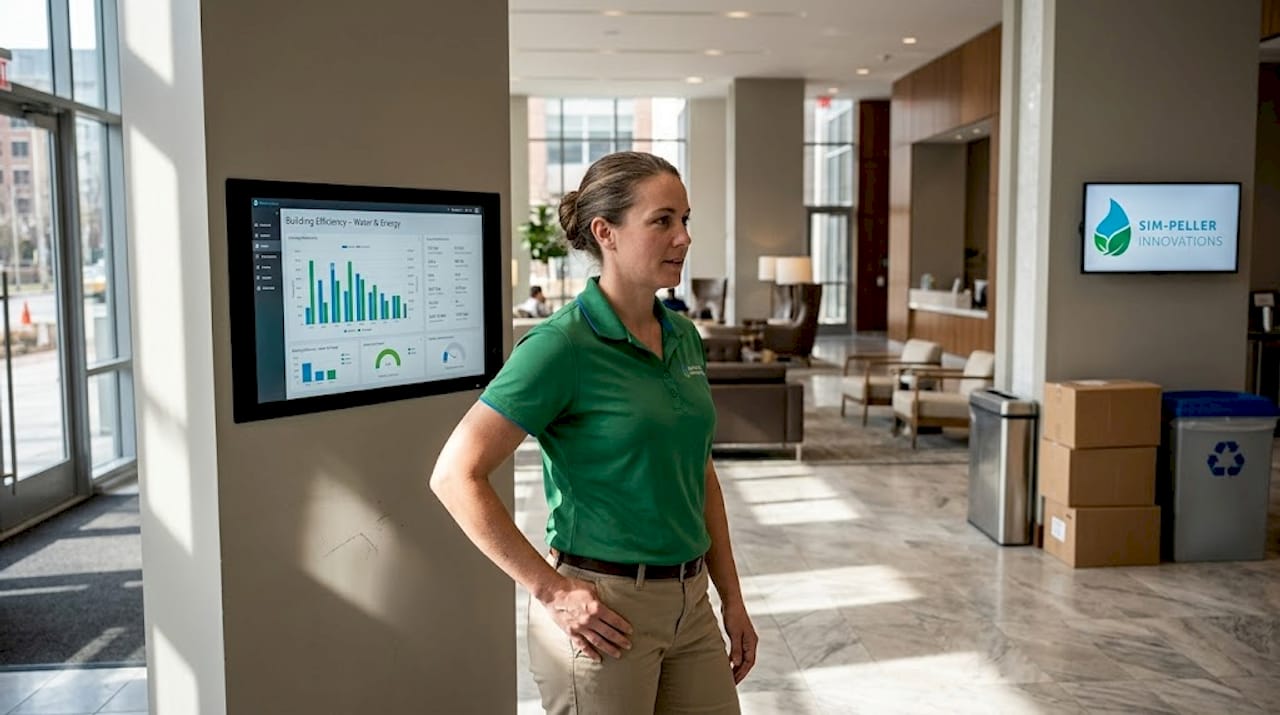
IoT-based water monitoring delivers fast, data-driven savings and transparency that manual inspections simply can't match. Sensors detect leaks within minutes, not weeks. AI dashboards surface patterns that reveal where waste is happening and why.
Here's how common technologies compare on investment and payback:
| Technology | Typical investment | Expected payback |
|---|---|---|
| Smart metering (energy) | Low to medium | 12 to 18 months |
| IoT water sensors | Low | 6 to 12 months |
| AI building management platform | Medium | 18 to 30 months |
| Automated HVAC controls | Medium to high | 24 to 36 months |
Stay current with resource management trends to understand which technologies are delivering the strongest results for facility managers in 2026.
The top three ways smart technology drives sustainability and cost savings are:
- Leak and waste detection: Real-time alerts stop small problems before they become expensive repairs or compliance issues.
- Consumption benchmarking: Comparing your building's performance against similar properties reveals gaps and opportunities that aren't visible from invoices alone.
- Automated reporting: Platforms that pull live data reduce the manual burden of sustainability reporting and improve accuracy for ESG disclosures.
For deeper context on how energy monitoring insights translate to measurable savings, the data consistently shows that visibility is the first step to reduction.
Pro Tip: Integrate water and energy monitoring on a single platform rather than managing them separately. Combined dashboards reveal correlations between water and energy use that isolated tools miss, and they make reporting far more efficient.
Learn how smart water management fits into a broader building efficiency strategy for a complete picture of what's possible.
Measuring success: KPIs, reporting, and continuous improvement
With solutions in place, the work shifts to tracking what's actually changing. Without measurement, sustainability efforts are just intentions. With the right KPIs, they become verified performance improvements that you can report, act on, and build from.
The essential KPIs for commercial sustainable property management are:
- Energy use intensity (EUI): Total energy consumed per square foot per year. This is the single most important benchmark for energy performance.
- Water use per occupant or per square meter: Tracks efficiency gains from water management upgrades.
- Waste diversion rate: The percentage of waste diverted from landfill through recycling or reuse programs.
- Cost savings per quarter: Translates efficiency gains into financial terms that resonate with stakeholders and investors.
- Occupancy and tenant retention rates: Indirect indicators of how sustainability improvements affect building attractiveness.
Tracking key sustainability KPIs helps property managers verify ROI and meet compliance requirements, particularly as ESRS2 and similar frameworks tighten reporting expectations.
Here's a simple process for setting up sustainability reporting:
- Define your baseline using 12 months of historical data for each KPI.
- Set realistic improvement targets for the next 12 months, grounded in your audit findings.
- Choose a reporting cadence, monthly for internal reviews, quarterly for stakeholder updates.
- Assign clear ownership for data collection and report preparation.
- Review targets annually and adjust based on what the data shows.
Understanding ESRS2 sustainability requirements is increasingly important for commercial property managers operating in regulated markets. The framework is shaping how buildings disclose environmental performance, and early adopters are building a compliance advantage.
"Continuous improvement in sustainability isn't about reaching a finish line. It's about building systems that make the next improvement easier than the last."
Use ongoing waste monitoring as a feedback loop that keeps your reporting accurate and your improvement cycle moving forward.
A fresh perspective on building sustainability
Here's what most sustainability guides won't tell you: perfection is not the goal, and chasing it is one of the fastest ways to stall progress entirely.
Property managers who wait for the ideal budget, the perfect technology stack, or full organizational buy-in before acting are the ones who make the least progress. The buildings that consistently improve their sustainability performance are the ones that start with something small and visible, a leak detection sensor, a lighting upgrade, a basic energy dashboard, and build from there.
Small early wins do something important beyond saving money. They create proof. When a facility manager can show that a $3,000 IoT water sensor prevented $18,000 in water waste in a single quarter, the conversation about the next investment becomes much easier.
Incremental progress also reduces risk. A phased approach lets you test, learn, and adjust without betting the entire capital budget on a single initiative. Practical energy-saving solutions are a good starting point precisely because they deliver fast, visible results that build momentum for larger changes.
Sustainability in commercial property management is a direction, not a destination. The buildings winning in 2026 are the ones that keep moving.
Take the next step toward sustainability
Putting these strategies into practice requires more than good intentions. It requires the right tools, real-time data, and a platform that turns efficiency gains into measurable, reportable value. That's exactly what Simpeller was built to deliver. Our plug-and-play IoT sensors and AI-driven platform make water and energy waste visible, so you can act on it fast. We help commercial property owners and managers cut costs, strengthen ESG reporting, and convert verified savings into tangible rewards. Whether you're just starting your sustainability journey or scaling an existing program, explore Simpeller's solutions to see how technology-driven efficiency can work for your properties.
Frequently asked questions
What is sustainable property management?
Sustainable property management uses strategies and technologies to reduce resource use, costs, and environmental impact in commercial buildings. Sustainable buildings command higher occupancy and stronger asset value over time.
What are the fastest ways to make a property more sustainable?
Start with energy and water monitoring tools, optimize waste diversion, and engage occupants for fast and measurable improvements. Water management is a highly cost-effective starting point for most commercial buildings.
How do I measure the ROI of sustainability upgrades?
Track key performance indicators like energy and water use reduction, cost savings, and occupancy rates using modern reporting tools. KPIs and reporting help verify ROI and support compliance with emerging regulatory frameworks.
Are there regulations for sustainable property management?
Yes, frameworks like ESRS2 are shaping reporting and efficiency standards for commercial buildings. ESRS2 drives sustainability compliance and is becoming a baseline expectation for commercial operators in regulated markets.