
TL;DR:
- Conduct a water audit to establish baseline usage and identify leaks and inefficiencies.
- Prioritize high-impact areas like restrooms, cooling towers, processes, and landscaping for upgrades.
- Use technology such as smart meters and IoT sensors for ongoing leak detection and water management.
Hidden water waste is one of the most expensive operational blind spots in large facilities. A single undetected leak in a restroom or cooling tower can silently drain tens of thousands of dollars from an annual budget before anyone notices. Across commercial and industrial sites, water inefficiency adds up fast, inflating utility bills, straining maintenance budgets, and undermining ESG commitments. The good news is that a structured, evidence-based water efficiency checklist gives facility managers and sustainability officers a reliable roadmap to find waste, prioritize fixes, and track measurable savings over time.
Table of Contents
- Start with a water efficiency audit
- Identify priority areas: Restrooms, cooling towers, process water, and landscaping
- Operations and maintenance actions: Quick wins and low-cost upgrades
- Technology and tracking: Upgrades, smart tools, and ongoing management
- Why most water checklists fail—and how to fix them with tech and teamwork
- Ready to streamline water efficiency? See how Simpeller can help
- Frequently asked questions
Key Takeaways
| Point | Details |
|---|---|
| Start with an audit | Benchmark your water use before prioritizing upgrades or investments. |
| Target top use areas | Focus your checklist efforts on restrooms, cooling, processes, and landscaping for the greatest impact. |
| Leverage O&M actions | Immediate, low-cost fixes like repairing leaks and installing aerators yield fast savings. |
| Use technology for tracking | Smart meters and submeters create a feedback loop for measuring progress and detecting issues. |
| Review and improve | Make your checklist a living document, updated with staff feedback and technology advancements. |
Start with a water efficiency audit
With water costs rising and sustainability expectations increasing, getting a clear picture of your current use is step one. You cannot manage what you cannot measure. Before spending a dollar on upgrades, you need a reliable baseline that tells you exactly where water flows in your facility, how much is used in each system, and where the biggest losses are hiding.
A baseline establishes your starting point. It gives you data to compare against after improvements, which is critical for both internal accountability and ESG reporting. Skipping this step means guessing, and guessing leads to misallocated resources and missed savings.
Here is how to structure an effective facility audit:
- Pull utility bills for the last 12 to 24 months. Look for seasonal spikes, unusual consumption patterns, or consistent high usage that does not match facility activity. This quick analysis often reveals obvious problem periods.
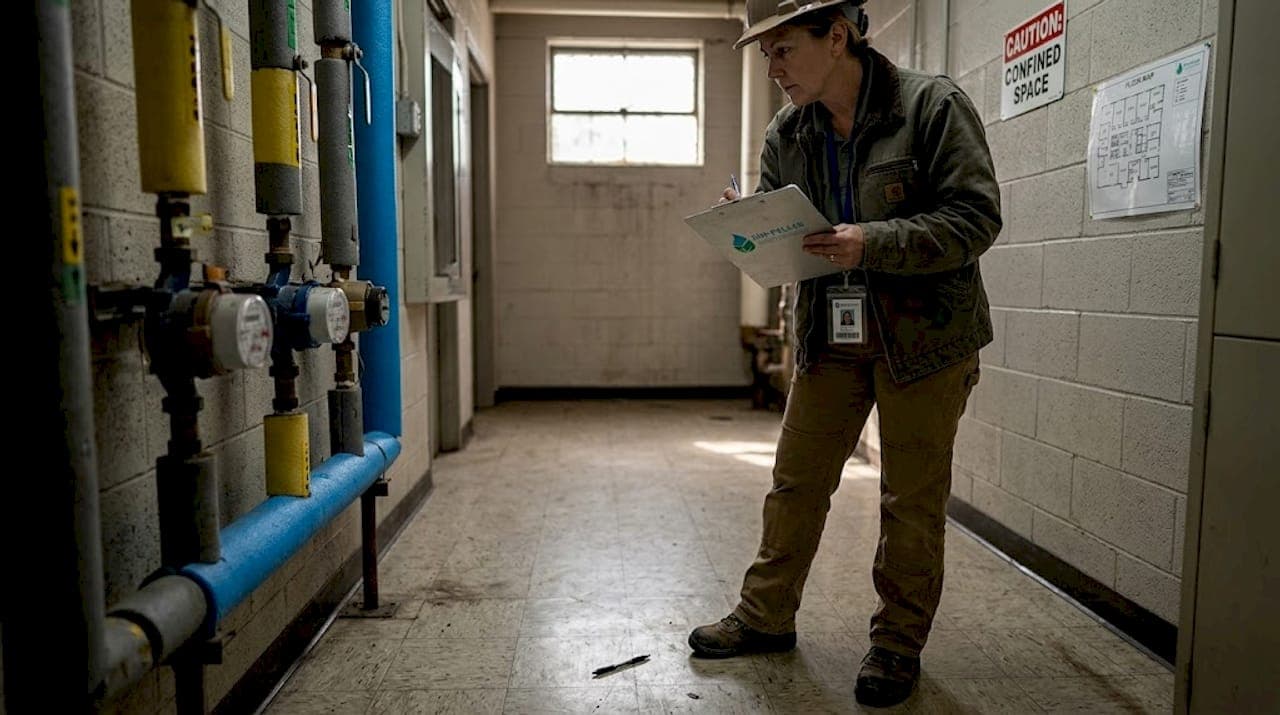
- Conduct a physical walk-through with a checklist. Visit every water-using system: restrooms, mechanical rooms, cooling towers, kitchens, irrigation controllers, and process areas. Note the age of fixtures, signs of leaks or corrosion, and any equipment running continuously.
- Install smart meters and submeters where gaps exist. Submeters and water monitoring allow you to isolate consumption by system or floor, making it possible to pinpoint exactly which area is driving excess use rather than relying on a single building-wide meter.
- Log findings in a digital tool. Spreadsheet-based tracking is better than nothing, but purpose-built facility management software or IoT platforms make it far easier to sort findings by priority and assign ownership to each action item.
- Categorize opportunities as quick wins versus long-term projects. Quick wins include fixing leaking faucets, adjusting irrigation schedules, and posting water-saving signage. Long-term projects include fixture replacements, greywater systems, or cooling tower optimization.
The EPA provides a Simple Water Assessment Checklist for commercial and institutional facilities to identify water-saving projects and best management practices quickly, giving you a proven starting framework rather than building from scratch.
"A water audit is not a one-time event. It is the foundation of an ongoing efficiency program. The most effective facilities audit annually and update their targets based on what they find."
Pro Tip: When walking your facility, bring a dye tablet kit to test for silent toilet leaks. A leaking flapper valve can waste up to 200 gallons per day without any visible sign, and these water efficiency audit steps are often the fastest way to recover immediate savings.
A well-executed audit typically uncovers 15 to 30 percent of water use that can be reduced or eliminated with minimal capital. That makes it the highest-return first step in any enterprise water strategy.
Identify priority areas: Restrooms, cooling towers, process water, and landscaping
Once you know where water is being used, target high-impact areas using the following priorities and benchmarks. Not all systems carry equal weight. Focusing your checklist on the areas with the highest consumption and the greatest potential for reduction delivers the fastest results.
Restrooms are consistently among the top water users in commercial facilities, often accounting for 25 to 30 percent of total use. The gap between older and newer fixture performance is significant. Pre-1994 toilets use 3.5 to 7.0 gallons per flush, while WaterSense-certified toilets use 1.28 gallons per flush or less. Urinals should be at or below 0.5 gallons per flush, and faucets should not exceed 1.5 gallons per minute in private restrooms or 0.5 gallons per minute in high-traffic public restrooms. Many enterprise facilities still operate pre-1992 fixtures, which means the upgrade opportunity is enormous.
Checklist actions for restrooms:
- Audit all toilets, urinals, and faucets for flow rates and flush volumes
- Replace non-compliant fixtures with WaterSense-labeled models
- Install aerators and auto-shutoff sensors on faucets
- Check supply lines, flappers, and fill valves for silent leaks monthly
- Add water-saving signage at all handwashing stations
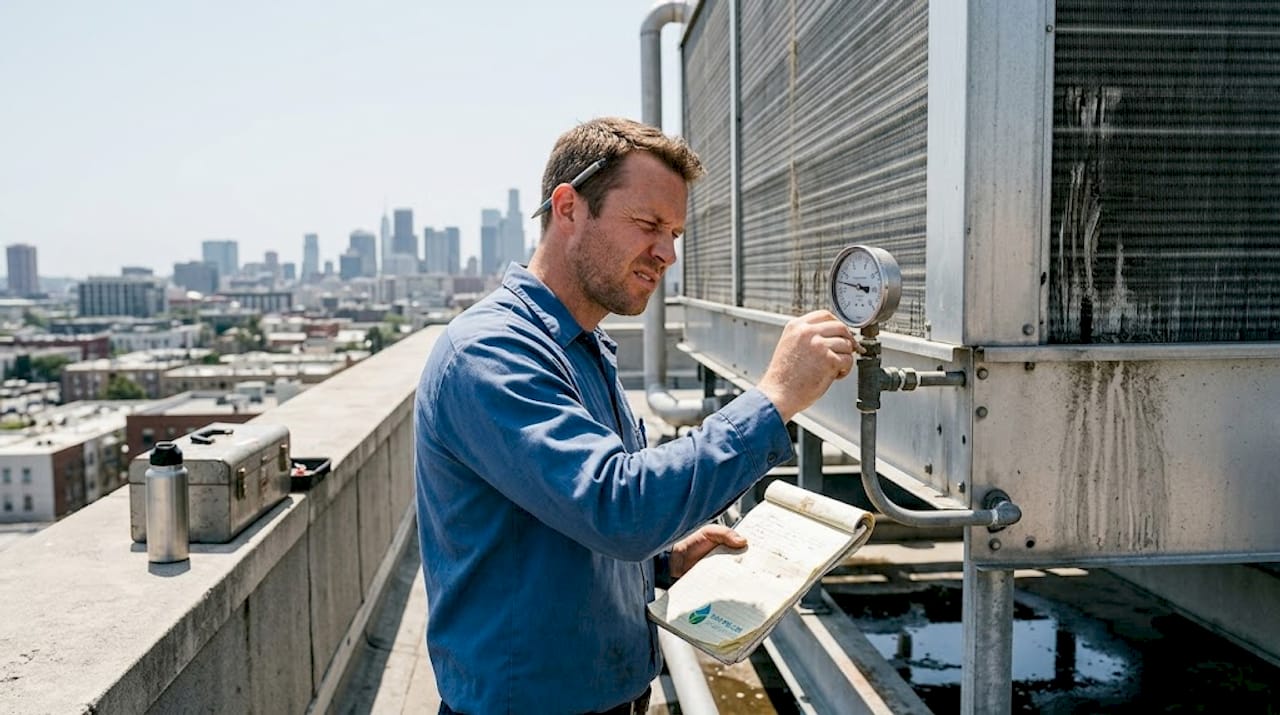
Cooling towers are major water consumers in facilities with centralized HVAC or industrial processes. The primary savings opportunities involve controlling blow-down cycles, maximizing cycles of concentration, and capturing condensate for reuse. Matching conductivity controls to your local water quality keeps blow-down at the minimum necessary level without risking scale or biological buildup.
Process water is often the most overlooked category. Many production and cleaning processes use potable water where lower-quality water would suffice. Implement dry clean-up methods before wet wash-down, reuse rinse water in staged systems, and match water quality to actual process requirements. This approach can cut process water use by 20 to 40 percent in many industrial environments.
Landscaping should shift toward drip irrigation and native or drought-tolerant plants as part of a broader onsite water recycling strategy. Overhead sprinklers applied during peak sun hours lose significant water to evaporation. Smart irrigation controllers that adjust schedules based on weather data and soil moisture sensors reduce outdoor use substantially.
Pro Tip: Use your baseline data to rank these four categories by consumption volume before prioritizing upgrades. If cooling towers account for 45 percent of your water bill, that is where your checklist efforts will generate the fastest return per dollar spent. A targeted water savings guide can help you model the expected payback for each area.
Operations and maintenance actions: Quick wins and low-cost upgrades
With the largest opportunities mapped, a focused operations and maintenance checklist lets you start saving immediately without major investments. The biggest mistake facility teams make is jumping straight to capital projects while low-cost fixes continue to drain water every single day.
The EPA's Operations and Maintenance Water Waste Checklist for commercial and institutional facilities is designed specifically for this purpose. It covers no-cost and low-cost actions that generate fast returns. The key insight from decades of facility management practice is that operations and maintenance changes consistently deliver better short-term ROI than technology investment alone.
High-priority O&M actions:
- Fix all leaks first. A single dripping faucet wastes around 3,000 gallons per year. A running toilet can waste 200 gallons per day. Across a large facility, unresolved leaks add up to a staggering annual waste.
- Install faucet aerators. Aerators cost under five dollars each and can cut faucet flow by 30 to 50 percent instantly.
- Add flow restrictors to showers and process hoses. Many industrial hoses run at far higher pressures than tasks require.
- Educate and engage staff. Behavioral change is free. Posting water-saving reminders near sinks, using training sessions to explain water costs, and assigning area ownership drives consistent attention to waste.
- Upgrade fixtures as budget allows. Prioritize energy-saving devices and WaterSense-labeled fixtures in the highest-traffic areas first, as these deliver the fastest payback.
| Action | Estimated cost | Typical annual savings |
|---|---|---|
| Fix running toilets | $10 to $50 per unit | Up to $200 per unit |
| Install faucet aerators | $3 to $8 per faucet | 30 to 50% flow reduction |
| Add irrigation smart controller | $150 to $500 | 20 to 40% outdoor water use |
| Replace pre-1994 toilet | $150 to $400 per unit | Up to $110 per unit per year |
| Repair pipe leaks | Variable | Immediate consumption drop |
The contrast between low-cost O&M first versus capital technology investment for long-term gains is important to understand. Quick wins build momentum, demonstrate savings to leadership, and fund the business case for larger retrofits. Skipping directly to smart systems without addressing basic O&M issues means paying for technology to manage avoidable waste.
Pro Tip: Assign each item on your O&M checklist to a named team member with a completion deadline. Anonymous checklists are never finished. Accountability is the single most powerful driver of consistent follow-through on water efficiency programs. Pairing accountability structures with smart water management essentials makes the overall program far more durable.
Technology and tracking: Upgrades, smart tools, and ongoing management
To ensure ongoing improvements and meet evolving regulations, technology-driven tracking and upgrades are essential. Operations and maintenance fixes create savings. Technology locks them in, scales them across your portfolio, and makes them verifiable for ESG reporting.
The lifecycle of a mature water efficiency program moves through clear stages: audit and baseline, O&M improvements, fixture retrofits, water reuse systems, landscape optimization, and continuous monitoring. Each stage builds on the last, and IoT-driven water management is what allows facilities to move from reactive to proactive water stewardship.
Manual tracking versus digital tracking:
| Capability | Manual tracking | Digital or IoT tracking |
|---|---|---|
| Leak detection speed | Days to weeks | Real-time alerts |
| Data accuracy | Human error risk | Automated and consistent |
| Reporting for ESG | Labor-intensive | Automated dashboards |
| Cost of setup | Low upfront | Moderate upfront |
| Long-term labor cost | High | Low |
| Actionability | Retrospective | Proactive |
Here is a practical technology integration sequence:
- Start with submeters on high-use systems. Cooling towers, restroom clusters, and process lines all benefit from isolated monitoring. This tells you not just how much water the building uses, but exactly where it goes.
- Connect meters to a building management system (BMS). A BMS aggregates data from across your facility, making it visible in a single dashboard and enabling automated alerts when consumption exceeds expected thresholds.
- Layer in IoT sensors for real-time leak detection. Acoustic sensors, flow sensors, and pressure monitors can detect anomalies before they become expensive failures.
- Implement greywater or condensate reuse where feasible. Water reuse technology captures water from cooling tower blow-down, HVAC condensate, and handwashing drains for non-potable reuse in toilets and irrigation.
- Validate all savings with meter data. As PRIDE Industries recommends, the full cycle includes baselining water use, setting percent-reduction goals, fixing leaks, educating staff, upgrading fixtures, optimizing cooling towers, and monitoring results through submeters on an ongoing basis.
"Technology should make every drop of water accountable. When your BMS flags a 3 a.m. spike in water use, you catch the leak before it floods a server room. That is the difference between reactive facility management and true operational excellence."
The EPA's recommended approach follows the same logic: start with audits and baselines, prioritize O&M improvements, then advance to retrofits, reuse systems, and landscape optimization, tracking everything through submeters and building management systems. This staged approach keeps risk low and keeps return on investment clearly visible at each phase.
Why most water checklists fail—and how to fix them with tech and teamwork
Now that you have seen a comprehensive, modern checklist, it is worth addressing why so many water efficiency programs underperform. The honest answer is that most checklists are static documents. They get completed once, filed away, and never revisited until a consultant arrives for the next audit. By then, three years of new leaks and fixture degradation have erased every gain.
The second failure mode is ignoring human behavior. Technology does not save water. People using technology correctly save water. Without ongoing staff training, area ownership assignments, and regular reviews tied to real performance data, even the best IoT system becomes background noise.
The third failure point is treating compliance and savings as the same goal. ESRS2 compliance insights show that regulatory reporting requirements are driving more investment in water tracking, but compliance data and optimization data are only the same thing when your monitoring is genuinely continuous and granular. Facilities that install basic meters to satisfy reporting requirements often miss the operational intelligence that drives real cost reductions.
The fix is straightforward: pair your checklist with a scheduled review cadence, assign named owners to every action item, and integrate your tracking technology with regular team performance reviews. Checklists work when they are living documents, not archived PDFs.
Ready to streamline water efficiency? See how Simpeller can help
Understanding best practices is just the beginning. Putting these actions in motion delivers lasting savings. Simpeller's IoT-enabled platform and smartsink devices automate the hardest parts of water efficiency programs: continuous monitoring, leak detection, and verified savings reporting. Instead of manual walk-throughs and spreadsheet tracking, facility managers get real-time dashboards that flag waste the moment it appears. Verified efficiency gains are converted into measurable value, supporting transparent ESG reporting and creating a clear record of your sustainability performance. If you are ready to move from checklist to results, explore water efficiency solutions tailored to enterprise facilities and request a customized water management plan for your site.
Frequently asked questions
What is the first step in creating a water efficiency checklist for my facility?
Begin with a facility-wide water audit to establish baseline use and identify high-priority areas for improvement. The EPA's Water Assessment Checklist for commercial and institutional facilities is a reliable starting framework.
What benchmarks should I use for restroom fixture upgrades?
Upgrade to WaterSense-certified toilets at 1.28 gallons per flush or less, urinals at 0.5 gallons per flush or less, and faucets at 1.5 gallons per minute for private and 0.5 gallons per minute for public restrooms.
How can smart technology help enterprise water efficiency?
Smart meters, submeters, and IoT-enabled systems provide real-time tracking that detects leaks early and optimizes water use across all major systems. The EPA recommends integrating submeters and building management systems as a core part of any ongoing water efficiency program.
How often should a facility review or update its water efficiency checklist?
Review your checklist at least annually or whenever there are significant facility changes, regulatory updates, or new sustainability targets set by your organization.
What is a simple low-cost action with immediate savings?
Fixing leaks in restrooms and process areas yields fast reductions in both water use and costs. The EPA's O&M Water Waste Checklist identifies these repairs as the highest-priority no-cost and low-cost actions for commercial and institutional facilities.