
TL;DR:
- Water conservation in hotels can be achieved through fixtures, programs, and detailed audits.
- Combining fixture upgrades, landscaping, recycling, and monitoring yields 30-40% water savings.
- Strategic, coordinated efforts outperform isolated solutions regardless of hotel size or star rating.
Hotels and resorts sit at a fascinating crossroads: guests expect long, indulgent showers and lush green grounds, yet the water bill quietly climbs with every occupied room. The disconnect is real, and it's costing properties far more than money. Low-flow fixtures like dual-flush toilets and efficient showerheads already cut guest-room water use by 20 to 30% without a single complaint from travelers. The question isn't whether conservation is worth pursuing. It's whether your property is moving fast enough, and targeting the right areas, to capture the full financial and reputational benefit.
Table of Contents
- Identify your water footprint: Track, measure, and prioritize
- Upgrade fixtures and guest programs for lasting results
- Implement smart irrigation and landscaping solutions
- Advance to water recycling and integrated monitoring
- Our take: Why stacking strategies beats silver bullets
- Ready to unlock big water savings?
- Frequently asked questions
Key Takeaways
| Point | Details |
|---|---|
| Track major water uses | Start by auditing indoor and outdoor usage to focus your efforts for the biggest financial and environmental returns. |
| Upgrade and engage | Implement low-flow fixtures and guest laundry programs to quickly cut water usage without sacrificing guest satisfaction. |
| Go smart outdoors | Switch to drip irrigation and xeriscaping to reduce landscape water use by up to 70% in dry regions. |
| Invest in recycling | Greywater reuse and IoT monitoring can add 20-40% more savings with fast payback and better ESG scores. |
Identify your water footprint: Track, measure, and prioritize
Understanding exactly where your property uses water is the critical first step before picking solutions. You cannot cut what you cannot see, and in hospitality, water hides in plain sight across dozens of systems operating simultaneously around the clock.
The major sources of water use in hotels and resorts include:
- Guest rooms (showers, faucets, toilets): typically 30 to 40% of total consumption
- Commercial laundry: often 15 to 20% of total use, frequently underestimated
- Kitchen and food service: dishwashers, prep stations, ice machines
- Cooling towers and HVAC systems: 10 to 25% depending on climate and building age
- Landscaping and pool maintenance: highly variable but can exceed 30% in warm, dry climates
Cooling towers and laundry together often account for 15 to 25% of a property's total water use, yet they rank among the most overlooked areas in standard conservation reviews. Cooling towers in particular lose significant water through evaporation, drift, and blowdown, and optimizing their cycles of concentration via conductivity monitoring can cut water waste by 10 to 20% in that system alone. Laundry rooms benefit from ozone-assisted washing, which reduces both hot water demand and chemical use simultaneously.
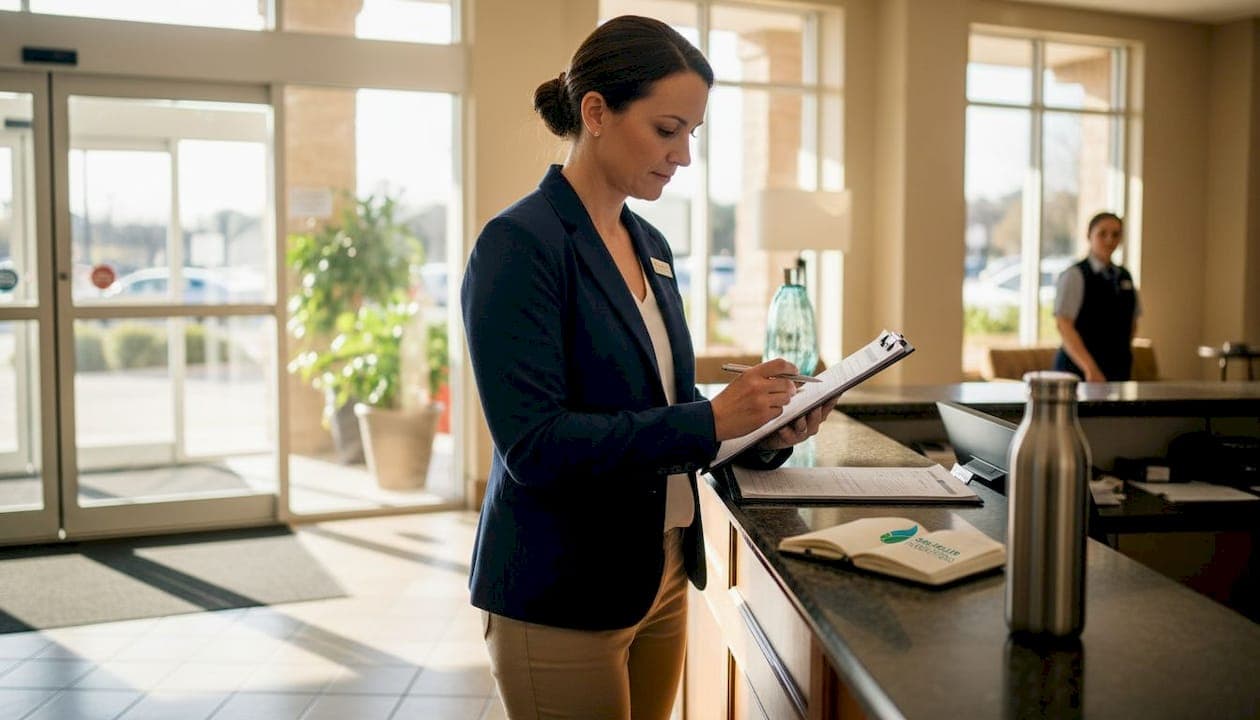
A structured water audit is your foundation. This means walking every department, reviewing utility bills by meter zone, and ideally installing submeters on high-use systems like laundry and kitchen. Submetering turns vague monthly totals into precise, actionable data. If your property uses a single master meter, you are essentially flying blind. A water savings guide can help you prioritize the audit process based on property size and climate.
Statistic callout: Properties that install submeters and conduct formal water audits consistently identify 15 to 25% in previously unknown waste within the first 90 days.
Beyond meters, regular walkthroughs matter. A running toilet in a guest room wastes up to 200 gallons per day and may go unreported for weeks. Train housekeeping staff to check for dripping faucets, running toilets, and wet spots near irrigation heads on every room turn. The best water monitoring benefits come when human observation and digital tracking reinforce each other.
Pro Tip: Create a simple leak-reporting card for housekeeping staff. A fast, low-friction reporting tool means problems surface in hours rather than weeks, and it builds a culture of shared responsibility for conservation goals.
One critical caveat: there is no universal "efficiency standard" for hotels. Benchmarking against industry averages is useful only when you normalize for climate, guest type, and outsourced services like laundry or spa. A good facility water management strategy accounts for these variables rather than chasing a generic gallon-per-occupied-room metric that may not reflect your operational reality.
Upgrade fixtures and guest programs for lasting results
Once priorities are clear, the next step is updating what guests and staff interact with most: fixtures and key programs. This is where investment pays off fastest, often within months rather than years.
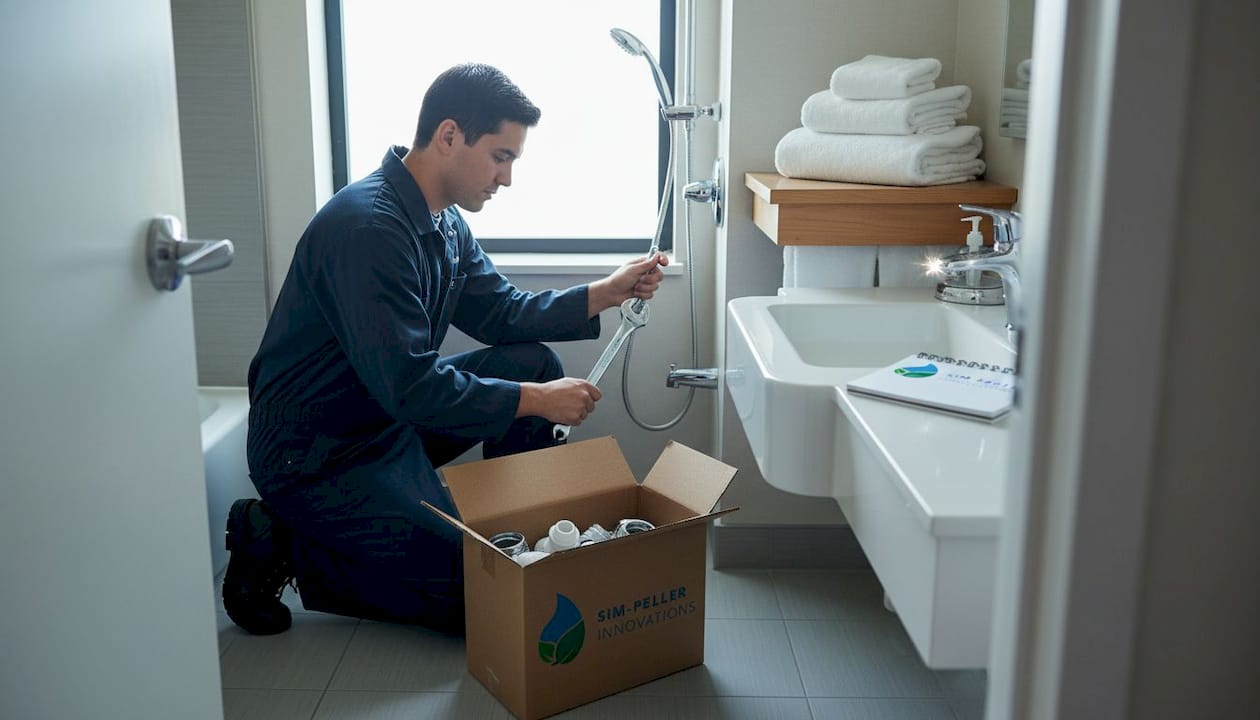
Core fixture and technology upgrades to prioritize:
Low-flow showerheads rated at 1.5 to 1.8 gallons per minute versus the standard 2.5 gallons per minute can save roughly 30,000 gallons per room annually in a high-occupancy hotel. Dual-flush toilets give guests a low-flush option at 0.8 gallons versus the older 1.6-gallon standard, cutting toilet water use nearly in half. Aerators on bathroom and kitchen faucets restrict flow without reducing perceived water pressure, making them one of the lowest-cost, highest-impact upgrades available.
Low-flow fixtures consistently cut guest-room water use by 20 to 30% without compromising the experience guests actually care about. Most travelers never notice the difference in flow when pressure is maintained. Combined with high-efficiency laundry machines, ozone systems, and structured linen and towel reuse programs, laundry water use drops by 25 to 40%. These are not marginal gains. They are foundational savings.
How to roll out a successful linen and towel reuse program:
- Audit current linen change frequency across all room categories and identify where daily changes are default rather than guest-requested.
- Design clear, visually appealing in-room signage that frames reuse as a guest choice, not an inconvenience. Language like "Help us protect local water supplies" outperforms guilt-based messaging.
- Brief front-desk and housekeeping teams together so the program is communicated consistently and staff feel ownership over the outcome.
- Set a baseline metric (e.g., average linen changes per occupied room per night) before launch so you can measure actual impact.
- Track results monthly and share wins with both staff and, where appropriate, guests through sustainability reports.
| Upgrade type | Water savings | Typical payback period |
|---|---|---|
| Low-flow showerheads | 20 to 30% per room | 2 to 6 months |
| Dual-flush toilets | 30 to 45% per toilet | 6 to 12 months |
| High-efficiency washers | 25 to 40% per cycle | 12 to 18 months |
| Ozone laundry system | 20 to 30% additional | 12 to 24 months |
| Linen/towel reuse program | 10 to 20% on laundry | Under 3 months |
The table above shows that many upgrades recoup their cost within 4 to 18 months, making them strong candidates for capital expenditure approval even in properties with conservative budgets. Explore water reuse benefits and onsite recycling tips to understand how these upgrades connect to a broader reuse strategy.
Pro Tip: Avoid signage that implies guests are doing something wrong by wanting fresh towels. Frame participation as a positive choice, and occupancy-adjusted opt-in rates will be significantly higher.
Implement smart irrigation and landscaping solutions
Indoor upgrades are only half the battle. Outdoor landscaping can be a hotel's top water consumer, especially in resort settings with pools, golf courses, decorative water features, and manicured grounds.
Smart irrigation systems combining drip lines, weather-based controllers, soil moisture sensors, and xeriscaping reduce outdoor water use by 50 to 70% in arid and semi-arid regions. Even in moderate climates, the savings are substantial.
| Outdoor strategy | Water reduction | Additional benefits |
|---|---|---|
| Drip irrigation (versus sprinklers) | 30 to 50% | Less runoff, fewer weeds |
| Weather-based smart controllers | 20 to 40% | Automated scheduling, lower labor |
| Soil moisture sensors | 15 to 25% additional | Prevents overwatering, improves plant health |
| Xeriscaping (drought-tolerant plants) | 50 to 70% total | Lower maintenance costs, year-round appearance |
Beyond water savings, smart landscaping delivers:
- Reduced groundskeeping labor because drought-tolerant plants require less frequent attention
- Improved curb appeal since many native and drought-adapted plants are visually distinctive
- Lower risk of water runoff, which reduces liability in some jurisdictions
- Positive guest perception, particularly from eco-conscious travelers who actively research sustainability credentials before booking
"In water-stressed markets, visible landscaping choices send a signal to guests and the broader community about a property's commitment to responsible operations. Properties that combine xeriscaping with smart controls achieve the strongest long-run position, both financially and socially."
For managers operating in rainy or temperate climates, the business case still holds. Weather-based controllers prevent the common problem of irrigation systems running during or immediately after rain, a waste that is invisible in standard meter reads but adds up to thousands of gallons monthly. A smart water management approach ensures controllers respond to actual conditions rather than fixed schedules.
Payback on landscaping improvements varies widely, but most smart irrigation retrofits return their investment within two to three seasons. Xeriscaping involves higher upfront replanting costs but delivers permanent reductions in both water and maintenance spending. In water scarcity solutions planning, outdoor use often represents the fastest path to visible impact.
Advance to water recycling and integrated monitoring
After covering the essentials, the most forward-thinking properties go one step further, closing the loop and tracking every drop with precision.
Greywater recycling systems treat wastewater from showers, sinks, and laundry for reuse in toilet flushing, irrigation, and cooling towers. This achieves 20 to 40% reductions in total water consumption, a significant gain that compounds the savings from fixture upgrades. Instead of treating shower water as waste, the property treats it as a resource with another application still ahead of it.
Steps to planning and implementing a greywater or water recycling system:
- Conduct a feasibility assessment covering local regulations, available space for treatment infrastructure, and existing plumbing layout.
- Identify which non-potable applications (irrigation, toilet flushing, cooling tower makeup) will receive recycled water first based on volume and access.
- Engage a licensed engineer to size the collection tank, treatment train (filtration, UV disinfection), and distribution lines.
- Install the system during a renovation cycle if possible to reduce disruption and amortize installation costs.
- Monitor system performance with inline sensors to ensure treatment quality and track water diverted from the mains supply.
- Document volumes recycled for use in ESG reports and water stewardship disclosures.
IoT monitoring adds a critical intelligence layer. Automated meters and real-time alerts catch leaks within minutes rather than months. When a guest-room toilet valve fails or a cooling tower bleed-off valve sticks open, a connected sensor flags the anomaly before the next utility bill arrives. Properties that integrate IoT into their water recycling guide and broader operations often report catching 10 to 15% of previously undetected waste in the first year alone.
ROI data from hotel portfolio studies shows savings of €6,600 annually for a 147-room property using guest reuse programs, and portfolio-wide savings reaching $4.8 million when monitoring, fixtures, and recycling are stacked together. Payback periods of 4 to 18 months are realistic for most monitoring and fixture combinations.
Pro Tip: Stack your strategies deliberately. Fixtures reduce demand. Recycling stretches supply. IoT monitoring catches waste in real time. Together, these three layers consistently deliver 30 to 40% total cuts across a property's water footprint, and each layer reinforces the others.
ESG reporting is a growing driver here. Investors, booking platforms, and corporate travel buyers increasingly require verified sustainability data. Integrated water monitoring turns conservation into documented performance, not just good intentions.
Our take: Why stacking strategies beats silver bullets
Looking across all the options, one lesson stands out more than any single technology or tactic: there is no magic solution that solves a hospitality property's water challenge on its own.
Research confirms that star rating and property size show no strong correlation with water efficiency. A boutique 80-room property can outperform a 400-room luxury resort when the smaller property stacks strategies intelligently and benchmarks against climate-normalized standards rather than generic averages.
The properties achieving 30 to 40% total reductions are not the ones with the biggest budgets. They are the ones that align fixture upgrades, guest engagement programs, landscape redesign, and real-time monitoring into a coordinated approach. Consider innovative water solutions that reflect your climate, guest profile, and operational model rather than copying a strategy designed for a different context.
One more critical insight: the collaboration between facility management, housekeeping, food and beverage, and grounds teams multiplies impact. When those departments share data and work toward a common water target, savings compound. When they operate in silos, even the best technology underperforms.
Ready to unlock big water savings?
You've seen the full picture from tracking and audits to fixtures, landscaping, and closed-loop recycling. The strategies are proven, the ROI is clear, and the tools to get started exist right now. The next step is implementation, and it doesn't require a complete overhaul to start saving immediately.
Simpeller's IoT-powered water savings solutions give hospitality managers the real-time visibility to track every gallon, catch invisible waste, and convert verified savings into measurable ESG value. Whether you're starting with a single department or planning a property-wide upgrade, our platform scales with your goals. Get the full water savings guide to map out your next move with clear benchmarks, step-by-step tactics, and portfolio-level performance data.
Frequently asked questions
What are the fastest water-saving upgrades for hotels?
Low-flow fixtures, linen and towel reuse programs, and high-efficiency laundry machines reduce water use by 20 to 40% with minimal disruption to daily operations and no measurable drop in guest satisfaction.
Is water recycling worth the investment for mid-size properties?
Yes. Greywater systems deliver 20 to 40% total reductions, and payback periods of 4 to 18 months are realistic depending on local water and sewer rates, making recycling financially sound even for properties with moderate budgets.
How can outdoor landscaping designs reduce hotel water bills?
Switching to smart irrigation and xeriscaping cuts outdoor water use by 50 to 70% for most hotels in dry climates, while weather-based controllers deliver meaningful savings in wetter regions by preventing over-irrigation.
Do larger or higher-star hotels achieve better water efficiency?
No. Star rating and size show no strong correlation with efficiency outcomes. Success depends on adopting multiple complementary strategies and accounting for local climate and operational factors rather than relying on property scale.