
TL;DR:
- Commercial buildings use 17% of public water supply, often with little visibility into actual consumption. Implementing water audits, meters, leak detection, and reuse systems can cut water use by up to 45%. Sustainable water management enhances cost savings, ESG performance, regulatory compliance, and operational resilience.
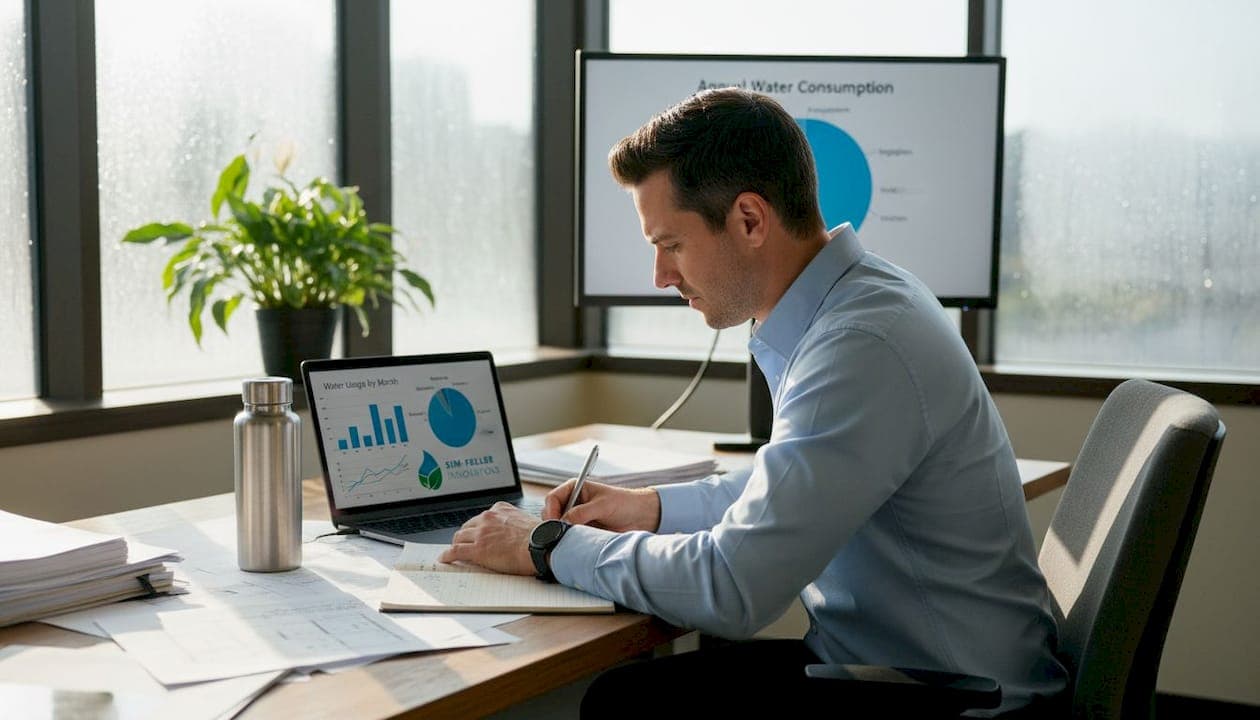
Commercial buildings account for 17% of public water supply consumption nationally, yet most facility managers have little visibility into where that water actually goes. Leaking pipes, inefficient cooling towers, outdated fixtures, and unchecked irrigation systems quietly drain both water and budget month after month. The gap between what businesses assume they use and what they actually consume is staggering. This guide walks sustainability leaders and facility managers through the core business case, proven strategies, critical benchmarks, and implementation steps needed to build a water management program that cuts costs, satisfies ESG obligations, and positions your operation for long-term resilience.
Table of Contents
- The business case for sustainable water management
- Core strategies and technologies for effective water management
- Benchmarks, metrics, and reporting for sustainability impact
- Overcoming implementation challenges and unlocking business value
- Why technology is not the full answer: The human factor in water stewardship
- Ready to transform your water strategy?
- Frequently asked questions
Key Takeaways
| Point | Details |
|---|---|
| Water efficiency equals business value | Cutting water use not only saves cost but improves compliance, ESG scores, and brand resilience. |
| Technology and strategy must align | Audits, metering, and reuse tech achieve most when integrated with a clear water stewardship strategy. |
| Benchmarks drive real progress | Track reductions and report using credible standards like WSI or CHSB for transparency and success. |
| Barriers can be overcome | Start small, show ROI, and get buy-in for long-term change in your water management journey. |
The business case for sustainable water management
Water is no longer just an operational afterthought. For commercial facilities, it sits at the intersection of financial performance, regulatory compliance, and reputational risk. Treating it as simply a utility bill is a costly mistake many organizations are still making in 2026.
"Water stewardship is no longer a corporate responsibility exercise — it is a business continuity requirement. Organizations that fail to account for water risk face operational disruption, regulatory penalties, and investor scrutiny."
The financial stakes are clear. Conservation plans can reduce water use by up to 45% in commercial facilities, yet the majority of buildings still operate without a structured management plan. That is money literally flowing down the drain. When you layer in sewer surcharges, rising municipal rates, and stormwater fees, the true cost of water is often two to four times the base utility charge.
Beyond direct costs, water mismanagement introduces significant operational risk. A single undetected leak in a mechanical room can waste thousands of gallons before it triggers an alert through traditional monitoring. Cooling towers operating outside optimal parameters consume 30 to 50% more water than necessary. Aging fixtures in restrooms and kitchens add up silently across shifts and weekends.
The ESG dimension is equally compelling. Sustainability leaders integrate water stewardship into infrastructure and reporting using recognized frameworks like the Water Stress Index and Corporate Water Stewardship Benchmark. Investors and institutional buyers increasingly screen for water risk in supply chains and facility portfolios. Failing to disclose or manage water consumption is becoming a liability, not just a gap.
Consider what effective water management actually delivers:
- Cost reduction through lower utility bills, reduced sewer charges, and fewer emergency repairs
- ESG alignment via measurable, reportable metrics that satisfy frameworks like GRI, CDP, and ESRS
- Regulatory readiness as water-related mandates tighten in drought-prone and water-stressed regions
- Resilience against supply disruptions, rate increases, and climate-driven scarcity
- Reputation gains with clients, investors, and municipal partners who value responsible resource use
If you manage commercial real estate, you already know that reuse in CRE water management is becoming a competitive differentiator. And for those navigating ESG disclosure requirements, understanding ESRS2 for ESG reporting is an essential first step before you can quantify progress.
Core strategies and technologies for effective water management
Now that we understand the "why," it is time to look at what a modern, effective water management system actually involves. The good news is that the toolkit is well established. The challenge is selecting and sequencing the right interventions for your specific facility type, budget, and goals.
Key methodologies include water audits, metering and sub-metering, cooling tower optimization, fixture upgrades, leak detection, water reuse and recycling, and rainwater and condensate recovery. Each of these plays a distinct role in a layered strategy.
Start with a water audit. Before you can fix what is broken, you need to see what is actually happening. A comprehensive audit maps every water end-use across your facility, identifies waste streams, and surfaces the highest-ROI opportunities. For most commercial buildings, audits reveal that irrigation, cooling, and restroom fixtures account for over 80% of total consumption.
Here is a practical sequence for rolling out a full program:
- Conduct a baseline audit to establish current usage by system, floor, or zone
- Install sub-metering at key points (cooling towers, irrigation, kitchens, restrooms) for granular visibility
- Optimize cooling tower operations by adjusting cycles of concentration, improving blowdown controls, and fixing drift eliminators
- Upgrade fixtures to WaterSense-certified models for faucets, toilets, and urinals
- Deploy leak detection technology using acoustic sensors or continuous flow monitoring
- Implement water reuse through greywater recycling systems, rainwater harvesting, or condensate recovery from HVAC systems
- Monitor and refine through ongoing smart meter data and regular performance reviews
Facility managers can target 20 to 50% reductions by starting with audits and best management practices, then leveraging smart meters for real-time detection of anomalies. That range is wide because the gains depend heavily on baseline inefficiency, facility age, and how aggressively reuse systems are deployed.
| Strategy | Typical savings | Implementation complexity | Payback period |
|---|---|---|---|
| Water audit | Identifies 5-40% waste | Low | Immediate |
| Fixture upgrades | 10-30% reduction | Low to medium | 1-3 years |
| Leak detection | 5-20% reduction | Medium | 1-2 years |
| Cooling tower optimization | 15-35% reduction | Medium | 1-3 years |
| Greywater reuse system | 20-40% reduction | High | 3-7 years |
| Rainwater harvesting | 10-25% reduction | High | 4-8 years |
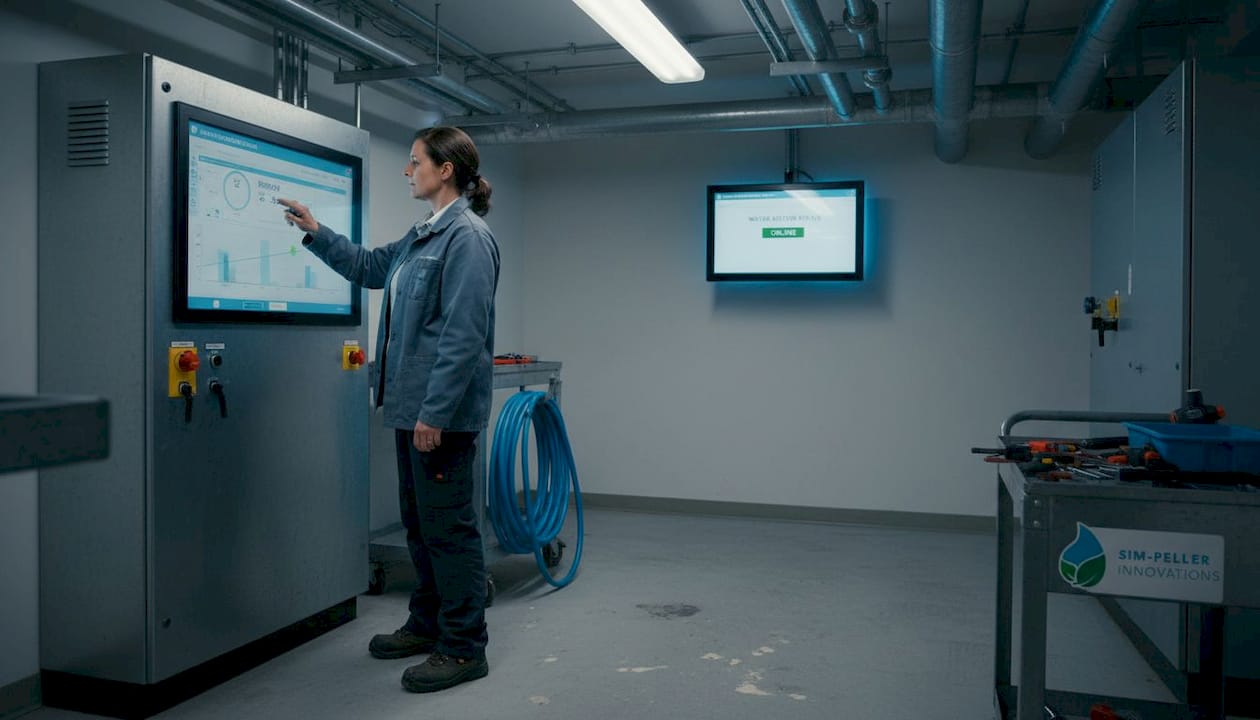
The role of technology here cannot be overstated. IoT and AI for water management have fundamentally changed what is possible in facility monitoring. Sensors can now detect a slow leak in real time, trigger alerts, and log the event for ESG reporting purposes, all without manual inspection. When integrated with an AI platform, these systems can predict failure points before they become crises, recommend scheduling adjustments for irrigation, and optimize cooling tower cycles automatically.
Pro Tip: If budget is tight, start with sub-metering rather than full automation. Knowing exactly where water goes is often more valuable than any single piece of efficiency hardware. You can identify and fix your highest-waste systems first, then fund further upgrades from the savings.
For a deeper look at specific approaches to cutting consumption, the water savings methods available to commercial operators have expanded significantly in recent years, particularly around condensate recovery and greywater reuse in office and mixed-use buildings.
Benchmarks, metrics, and reporting for sustainability impact
With strategies in place, the next critical step is measuring where you stand and communicating your impact clearly. Choosing the right benchmarks matters enormously, because the metric you track shapes the behavior you incentivize.
The three most recognized benchmarks in commercial water stewardship are:
- Water Stress Index (WSI): Measures facility consumption relative to local watershed availability, making it essential for operations in drought-prone regions
- Corporate Water Stewardship Benchmark (CHSB): A sector-level scoring system used to compare company performance against peers and identify improvement priorities
- Liters per liter (L/L): The standard production intensity metric for beverage and food processing facilities, tracking how much water is consumed per unit of product output
For the beverage industry specifically, 1.2 to 1.8 liters of water per liter of product is the industry benchmark, and facilities that optimize processes and close water loops can push this ratio well below 1.0. That improvement is not just good environmental practice. It directly lowers input costs and strengthens supplier relationships with retailers who track scope 3 water impacts.
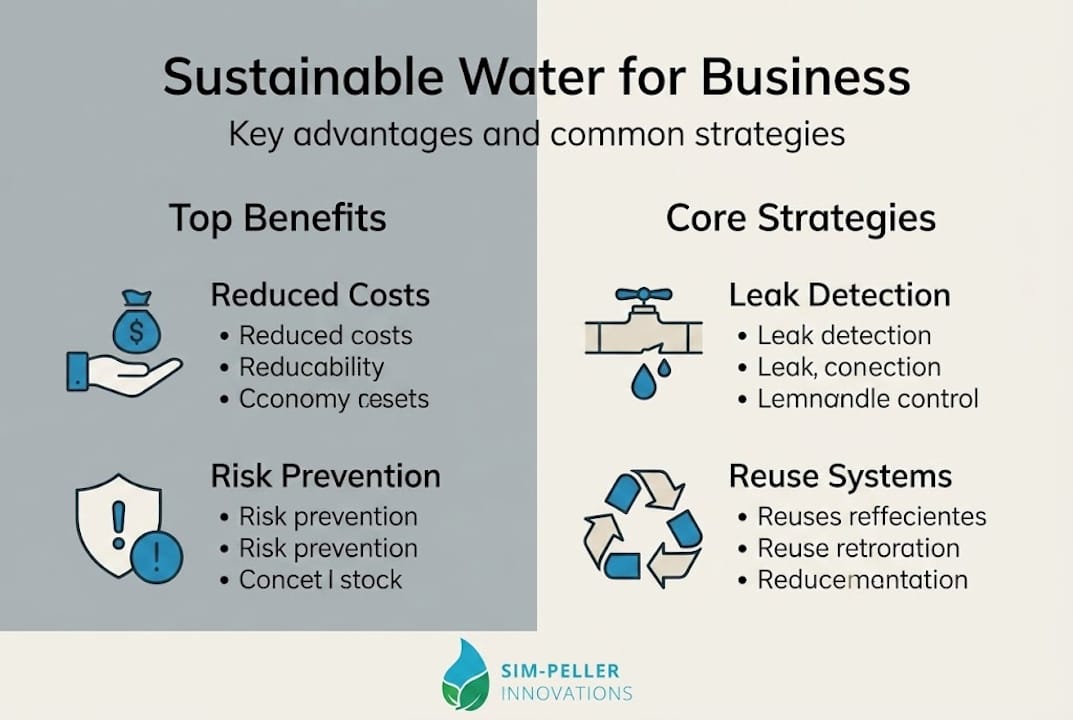
Use benchmarks like WSI and CHSB for ESG reporting and to drive continuous improvement across the value chain. Choosing the wrong metric, or tracking one that does not reflect local water stress, is a common error that undermines the credibility of sustainability reporting.
| Benchmark | Best for | Reporting use | Key limitation |
|---|---|---|---|
| WSI | All sectors, stressed regions | GRI, CDP, ESRS | Requires watershed-level data |
| CHSB | Corporate/sector comparison | Investor disclosure | Sector-specific scoring |
| L/L intensity | Beverage, food, manufacturing | Internal and supply chain | Does not capture absolute volume |
| Gallons per occupant | CRE, hospitality | LEED, ENERGY STAR | Occupancy data accuracy |
Common pitfalls in water reporting include:
- Underreporting cooling tower and irrigation volumes because they are not sub-metered
- Ignoring the efficiency rebound effect, where easy early gains lead teams to relax vigilance
- Treating reductions as permanent without ongoing monitoring, leading to performance drift over time
- Inconsistent boundaries across reporting periods that make year-on-year comparisons meaningless
Smart water monitoring benchmarks are increasingly integrated directly into building management systems, which means the data for ESG reporting can be automated rather than manually compiled. This shift dramatically reduces the administrative burden on facility teams and improves data accuracy for external disclosure.
Overcoming implementation challenges and unlocking business value
Even with the best frameworks and technologies available, real-world adoption comes with genuine friction. The path is often blocked not by technical limitations, but by organizational and financial barriers that require deliberate navigation.
The three most common hurdles are:
- Stakeholder buy-in: Decision-makers who do not see water as a strategic priority tend to deprioritize investment in management systems until a crisis forces the issue.
- Cost uncertainty: Capital expenditure on sensors, reuse systems, or fixture upgrades feels risky without a clear financial model showing return on investment.
- Technology adoption: Facility teams stretched thin on maintenance and compliance often lack the bandwidth to integrate and learn new monitoring platforms.
The most effective response to all three is to start small and build from demonstrated results. Facility managers should start with audits and best management practices from the EPA, then monitor via smart meters for real-time detection before committing to larger capital projects. A well-documented pilot showing 20% savings in one building wing is far more persuasive to leadership than a projected model.
Here is a phased approach that consistently delivers results across commercial portfolios:
- Phase 1 (months 1 to 3): Audit, baseline, and identify top three waste sources
- Phase 2 (months 4 to 6): Install sub-metering, fix leaks, upgrade highest-use fixtures
- Phase 3 (months 7 to 12): Deploy IoT monitoring, establish performance dashboards, begin ESG data collection
- Phase 4 (year 2 and beyond): Expand reuse systems, integrate savings into ESG reporting, reinvest efficiency gains into further upgrades
This phased rollout distributes capital expenditure over time, uses early ROI to fund subsequent phases, and builds internal expertise gradually rather than overwhelming teams with a full transformation at once.
Pro Tip: Link water savings directly to financial performance dashboards that leadership already monitors. When a facility manager can show that a leak detection upgrade avoided $18,000 in unplanned water costs last quarter, the conversation about the next phase of investment becomes much easier.
For facilities dealing with structural supply constraints, industrial water scarcity solutions offer proven strategies beyond conservation, including closed-loop processing and alternative supply development. And for operations ready to move beyond conservation into circular water use, onsite water recycling systems are delivering substantial long-term savings across manufacturing, hospitality, and mixed-use commercial properties.
The long-term value of sustained water management extends well beyond utility savings. Facilities with documented performance improvements carry stronger asset valuations, face fewer regulatory compliance issues, and demonstrate the kind of operational discipline that satisfies investor and lender ESG criteria. Water stewardship is, ultimately, risk management reframed as opportunity.
Why technology is not the full answer: The human factor in water stewardship
Here is the perspective that most water management guides skip over entirely: technology alone will not get you to your targets. We have seen facilities install state-of-the-art IoT monitoring systems only to watch consumption creep back up within 18 months because no one maintained the behavioral and cultural conditions that made the early savings possible.
The efficiency rebound effect is real and well-documented. When a system achieves easy gains, teams often relax the vigilance that produced those gains. Water that was once conserved consciously gets treated as newly available budget. Without strong policies, clear accountability, and ongoing engagement across the value chain, technology investments underdeliver.
The organizations that sustain long-term performance gains share one common trait: they treat water stewardship as a cultural commitment, not a project. This means regular communication with facility staff, supplier engagement on shared water goals, and leadership that treats water KPIs with the same seriousness as financial metrics.
Smart water solutions work best when they amplify a culture of stewardship, not substitute for it. The sensor can flag a leak. Only a trained, motivated team will respond quickly enough to prevent waste. Invest in both the technology and the people who operate within it.
Ready to transform your water strategy?
If this article has made one thing clear, it is that sustainable water management is a high-return priority for any commercial facility serious about cost control, ESG performance, and operational resilience. Knowing where to start and how to scale is where expert support makes a measurable difference. At Simpeller, we help businesses turn verified efficiency gains into trackable savings, transparent ESG data, and real financial value. From plug-and-play IoT monitoring to tokenized water reuse assets, our platform makes invisible waste visible and converts it into measurable impact. Explore Simpeller's water-saving solutions and find out how we can help accelerate your water strategy with technology that reports, rewards, and scales.
Frequently asked questions
What is sustainable water management in a commercial facility?
It is a strategic approach to tracking, conserving, reusing, and optimizing all onsite water flows to boost efficiency, reduce costs, and meet ESG responsibilities. Key methodologies include audits, reuse systems, metering, cooling optimization, and leak detection.
How much water can commercial buildings save with best practices?
Commercial sites can typically cut water use by 20 to 50% with audits, upgrades, and reuse systems in place. Conservation plans can reduce use by up to 45%, and EPA best management practices enable further reductions through metering and targeted interventions.
Which metrics matter most for ESG reporting of water use?
Top metrics include the Water Stress Index, the Corporate Water Stewardship Benchmark, and water intensity measures such as liters per liter for beverage facilities and gallons per occupant for commercial real estate. Benchmarks like WSI and CHSB are the most widely recognized in ESG disclosure frameworks.
What is the efficiency rebound effect in water management?
It refers to the tendency for total water use to increase after efficiency gains, as newly available capacity gets consumed rather than conserved. Efficiency rebound is best addressed through strong policies, clear accountability structures, and sustained value-chain engagement.
How do you start a sustainable water plan in an existing building?
Begin with a detailed water audit to map all usage and identify waste hotspots, then set measurable reduction goals and install sub-meters or smart monitoring devices. Start with audits and best management practices, then phase in reuse systems and fixture upgrades as early savings fund subsequent investments.