
TL;DR:
- Most water waste in facilities is visible, such as leaks and overflows, and is easy to detect.
- Fixing visible leaks can save 8 to 15% of water costs with minimal investment.
- Organizational culture often overlooks visible waste, missing opportunities for immediate savings.
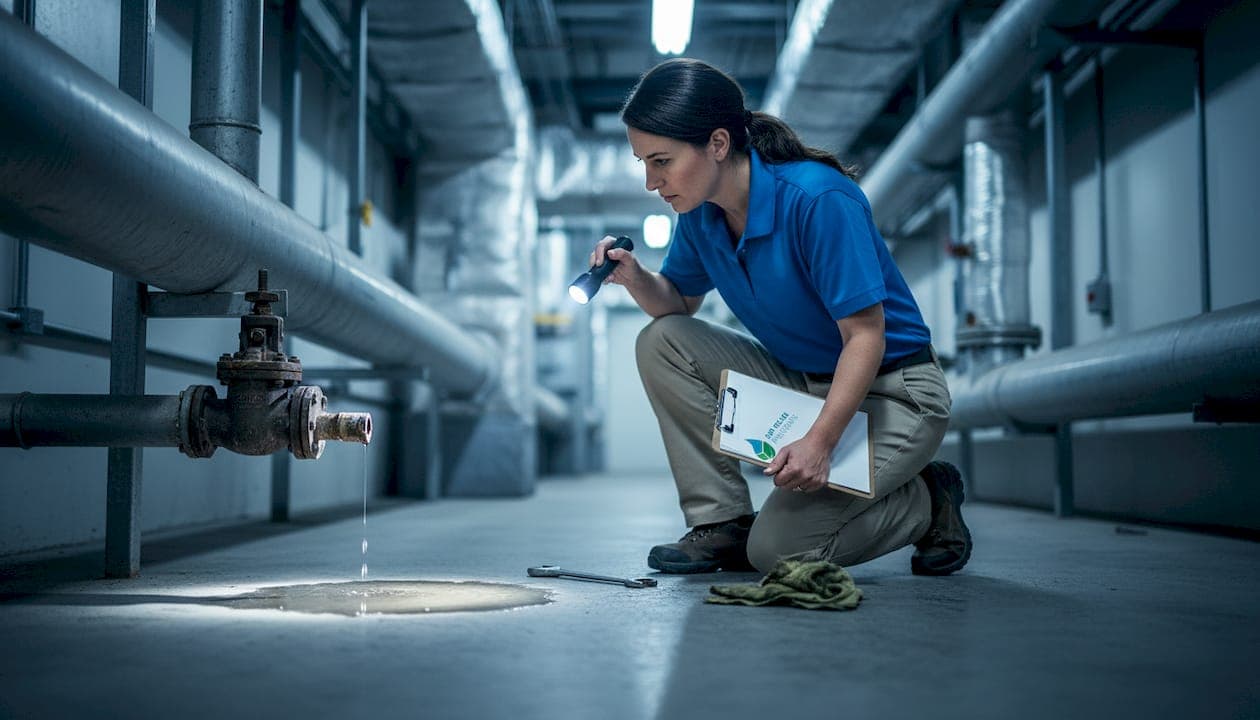
Faulty irrigation systems alone waste 1.5 billion gallons of water every single day across the United States. That number is staggering, but here's what makes it worse: most of that loss is entirely visible. It's the sprinkler misting the sidewalk, the pipe joint seeping onto the floor, the cooling tower overflowing during a shift change. These are not mysteries buried underground. They're losses hiding in plain sight, silently inflating your water bills and undermining your facility's sustainability targets. This guide helps you recognize those losses, build a system to catch them, and take fast action to eliminate them for measurable financial and environmental gain.
Table of Contents
- What is visible water waste?
- Why visible water waste matters for your facility
- How to identify and track visible water waste
- Strategies to reduce and prevent visible water waste
- What most facility managers overlook about visible water waste
- Ready to eliminate visible water waste in your facility?
- Frequently asked questions
Key Takeaways
| Point | Details |
|---|---|
| Fastest savings opportunity | Fixing visible water waste is the quickest way to reduce facility water costs without capital expense. |
| Big impact, easy fixes | Simple repairs to obvious leaks and overflows prevent massive water loss each year. |
| Practical inspection methods | Regular visual checks and smart monitoring help operators track and control visible waste. |
| Supports sustainability goals | Reducing visible water waste boosts compliance and strengthens a facility’s ESG profile. |
What is visible water waste?
Before you can fix a problem, you need to define it precisely. In commercial and industrial settings, water waste falls into two very different categories, and confusing them leads to misallocated resources and delayed results.
Visible water waste refers to the category of water loss that operators and maintenance teams can detect without specialized equipment. According to operational frameworks for manufacturing facilities, visible waste includes dripping faucets, running toilets, leaking pipes, faulty sprinklers, and overflows that are immediately noticeable during routine walkthroughs. These are the losses that anyone on your floor can see, hear, or feel if they know what to look for.
Invisible water waste works completely differently. Underground leaks and undetected system losses persist without any visual cues at all, meaning they require pressure monitoring, acoustic detection, or advanced metering to surface. They're serious, but they take time and capital to find. Visible water waste, by contrast, is actionable today.
This distinction is not academic. It's the foundation of a smart water management strategy. Addressing visible losses first delivers the fastest return on investment and builds the organizational momentum needed to tackle more complex, hidden inefficiencies later.
| Category | Detection method | Examples | Time to fix |
|---|---|---|---|
| Visible waste | Eyes, ears, walkthroughs | Dripping faucets, pipe leaks, runoff | Hours to days |
| Invisible waste | Meters, sensors, acoustic tools | Underground leaks, pressure drops | Weeks to months |
For operators managing large facilities, the implications are significant. Visible waste is often spread across multiple zones: landscaping, restrooms, cooling systems, process lines, and loading areas. Each zone has its own vulnerability profile, and each represents a discrete savings opportunity that doesn't require a capital project or engineering study to address. You just need a systematic approach to looking.
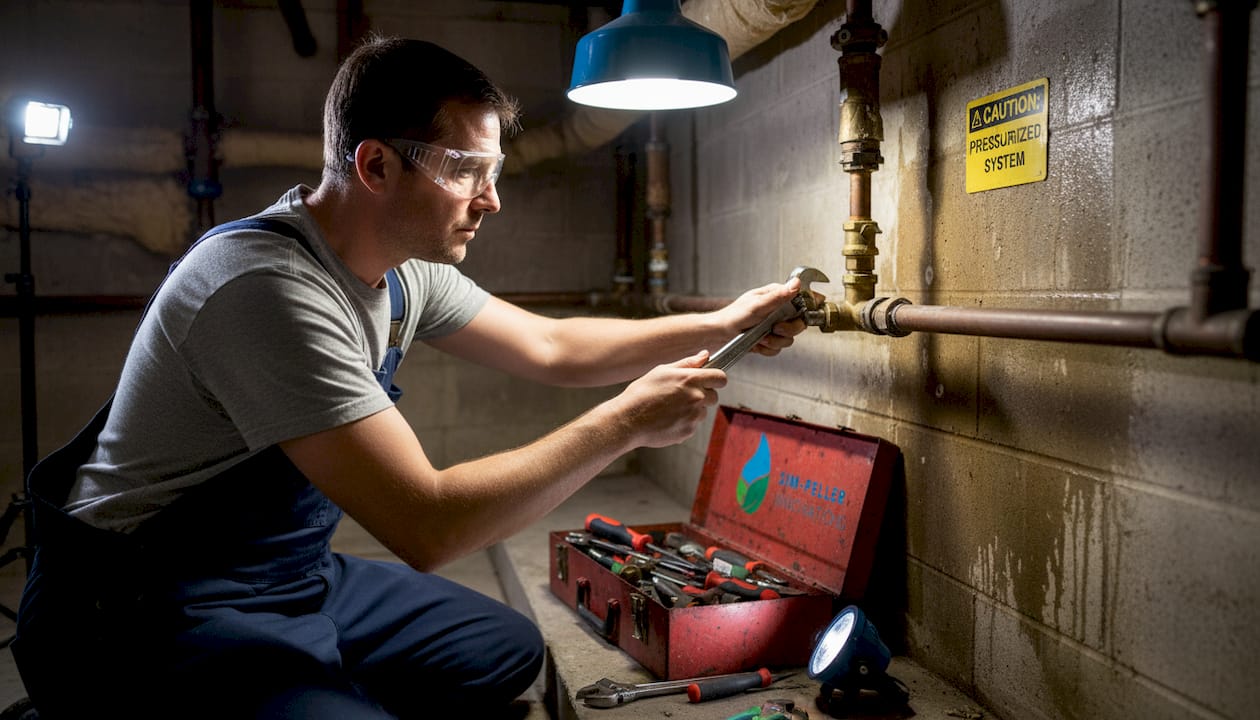
It's also worth noting that visible waste tends to compound. A slow drip from a pipe fitting gets ignored for a week, then a month, then it becomes part of the background noise of facility operations. That normalization is one of the most expensive habits any facility team can develop. Recognizing visible water waste for what it is, a measurable operational loss with a direct cost, is the first step toward controlling it.
Why visible water waste matters for your facility
Now that you know what qualifies as visible water waste, it's essential to understand just how expensive and significant this issue can be for your operation. The numbers are not abstract. They translate directly into your utility bills, your ESG reporting, and your bottom line.
Manufacturing plants are among the most water-intensive operations in any economy. Research shows that plants lose up to 40% of their water throughput to leaks and evaporation, and US utilities report non-revenue water rates of 19.5%, with real losses costing the sector $6.4 billion every year. When you correct visible leaks in your facility, you can realistically achieve 8 to 15% savings without major capital investment.
Consider this: A mid-size manufacturing plant consuming 50,000 gallons per day could save between 4,000 and 7,500 gallons daily just by fixing visible leaks. At average industrial water rates, that's a meaningful reduction in monthly costs with no equipment replacement required.
The financial impact is the most immediate reason to act, but it's not the only one. Regulatory pressure on water use is increasing across most US industrial sectors, particularly in water-stressed states like California, Texas, Arizona, and Nevada. Facilities that already manage visible waste effectively are better positioned for compliance and audit readiness. Those that don't face not only higher costs but potential fines and reputational exposure.
Here's a breakdown of why visible waste tends to persist despite its obvious costs:
- Normalization bias: Repeated exposure to a dripping pipe or puddling irrigation makes the problem feel routine rather than urgent
- Diffused responsibility: When no one clearly owns water efficiency, visible losses go unreported
- Competing priorities: Maintenance teams stretched thin tend to prioritize equipment failures over what looks like minor water loss
- Lack of baseline data: Without metering or tracking, there's no way to quantify the true cost of what's being lost
Understanding these dynamics helps you design a response that actually sticks. It's not enough to fix the leaks once. You need to change the systems, culture, and accountability structures that allowed them to develop in the first place.
| Facility type | Typical water loss from visible waste | Estimated annual cost impact |
|---|---|---|
| Manufacturing plant | Up to 40% | Hundreds of thousands annually |
| Commercial building | 10 to 20% | Tens of thousands annually |
| Industrial campus | 15 to 35% | Varies by water rates and usage |
The opportunity is real. Cutting water costs through visible waste elimination is not a long-term program. It's a near-term operational improvement with measurable payoff within weeks of implementation.
How to identify and track visible water waste
Understanding the scale and cost is only useful if you can consistently spot and record where visible water waste occurs. Identification is a skill, and like any skill, it improves with structure and practice.
The most effective identification approach combines routine visual inspections with basic monitoring technology. Here's a practical sequence for most commercial and industrial facilities:
-
Assign zone ownership. Divide your facility into manageable inspection zones, covering process areas, restrooms, mechanical rooms, outdoor irrigation, cooling towers, and loading docks. Assign a specific team member to each zone so accountability is clear.
-
Schedule walkthroughs at consistent intervals. Weekly walkthroughs are a minimum for most facilities. High-consumption areas like cooling towers, boiler rooms, and process lines should be checked daily. The goal is to catch developing leaks before they become established losses.
-
Use a standardized inspection checklist. Generic walkthroughs miss things. A structured checklist covering pipe joints, valve packing, fixtures, irrigation heads, and overflow indicators ensures nothing is overlooked. Document findings with photos and timestamps.
-
Install sub-metering at critical points. Sub-meters at zone level allow you to track consumption patterns over time, making sudden spikes immediately visible. When you implement sub-metering at key process points, you gain a baseline that makes anomalies impossible to miss.
-
Create a rapid response repair protocol. Identified waste must be logged, prioritized, and repaired on a defined schedule. A leak that gets logged but sits in a queue for six weeks costs you money every day. Set a maximum response time for different severity levels.
-
Review utility bills against meter data monthly. Unexpected consumption increases often signal visible waste that was missed during inspections. Cross-referencing billing data with meter readings closes gaps that walkthroughs alone can't catch.
Research supports this approach: regular visual inspections combined with immediate repair of every visible leak deliver 8 to 12% savings without any capital expenditure. That's a remarkable return for a process that costs little more than staff time.
Pro Tip: During your first inspection cycle, focus on the three most water-intensive zones in your facility. Fixing visible waste in those areas first maximizes your early savings and builds the business case for expanding the program facility-wide.
Common mistakes operators make during this phase include inspecting only during normal working hours (missing leaks that occur during off-shift operations or when equipment is running at full load), treating irrigation as a lower priority than interior systems (when in fact outdoor waste is often the largest single source), and failing to log minor drips because they seem insignificant individually. A dripping faucet wasting just 10 gallons per day adds up to 3,650 gallons annually. Multiply that across a facility with dozens of fixtures and the math becomes uncomfortable quickly.
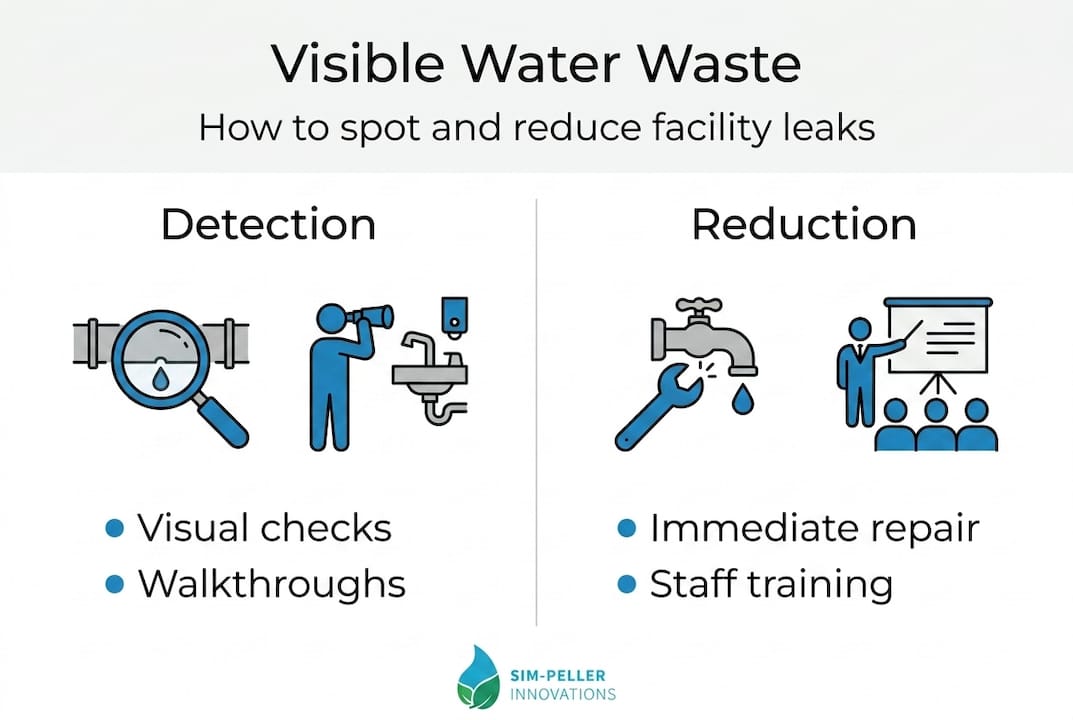
Technology can significantly improve your detection and tracking capability. Facility water management platforms that combine IoT sensors with AI-driven analytics can surface consumption anomalies in real time, giving your team the data to act fast rather than wait for a monthly bill surprise.
Strategies to reduce and prevent visible water waste
With identification processes in place, the focus shifts to what concrete steps you can take to slash visible losses and stay ahead of the curve. Strategy matters here. Fixing one leak at a time reactively is better than nothing, but a proactive, layered approach is what actually drives sustained reduction.
Research is clear on prioritization: visible waste reduction is the quickest ROI path for operators, providing the foundation that makes smart monitoring for invisible losses more effective and economical over time.
Here are the core strategies that consistently deliver results in commercial and industrial facilities:
-
Repair first, optimize second. Every visible leak, dripping fitting, and malfunctioning sprinkler head represents a pure loss. Fixing these before investing in efficiency upgrades means every improvement you make starts from a better baseline.
-
Establish a preventive maintenance schedule for water-bearing assets. Cooling towers, boilers, chillers, and process equipment all have known failure points. Scheduled maintenance before failure occurs prevents the kind of sudden visible waste events that are both expensive and disruptive.
-
Upgrade to low-flow fixtures and pressure-regulating valves. Where visible waste is chronic, the problem may be systemic rather than a one-time failure. Low-flow fixtures in restrooms and process areas reduce the volume of water at risk from any given failure point.
-
Integrate smart water monitoring across zones. Real-time alerts from IoT-connected meters mean your team knows about a developing leak within minutes rather than days. Smart water management platforms can flag anomalies automatically, drastically reducing the response window.
-
Implement water reuse where visible runoff is a recurring problem. In industrial processes where cooling water, rinse water, or condensate is visible waste, onsite water recycling systems can capture and recondition that water for reuse, eliminating the loss entirely and reducing intake costs simultaneously.
The sustainability gains extend beyond your utility bill. Reducing visible waste lowers operational costs, supports compliance, and opens the door to water reuse strategies that further extend your efficiency gains and ESG reporting credibility.
"The facilities that lead on water efficiency don't treat waste reduction as a project. They treat it as an operational standard."
Maintaining momentum requires building visible waste reduction into your operational culture. Celebrate wins. Share consumption data with your team. Make the savings visible on a dashboard that people can see. When staff understand that a fixed leak translates into real dollars and measurable environmental impact, engagement follows naturally.
What most facility managers overlook about visible water waste
Here's the uncomfortable truth that most water efficiency conversations avoid: visible water waste persists not because facilities lack the technology to fix it, but because the organizational culture treats it as a background condition rather than a performance failure.
Most operators prioritize capital projects, equipment upgrades, or complex smart systems, while the fastest savings are sitting right there on the factory floor, dripping quietly. The immediate ROI lies in visible loss elimination, and most facilities have not fully claimed it. The leaders in this space are not necessarily the ones with the most advanced monitoring infrastructure. They're the ones who make every leak a named, tracked, and resolved event.
Water rewards programs that recognize and incentivize visible waste elimination create a culture where efficiency is everyone's responsibility. When a maintenance technician who catches and fixes a leaking valve during a walkthrough sees that action reflected in measurable outcomes, behavioral change accelerates across the team. Visible water waste is not an unavoidable operating cost. It's a recoverable loss waiting for someone to claim it.
Ready to eliminate visible water waste in your facility?
Visible water waste is costing your facility real money every day, and the tools to recover those losses are available right now. Simpeller's IoT-powered platform makes water losses visible in real time, giving your operations team the data to act fast and track every improvement with precision. From achieving water savings through immediate leak response to converting efficiency gains into tokenized ESG credits, Simpeller turns your operational improvements into measurable, reportable value. Whether you're managing one facility or an entire portfolio, the path from waste identification to verified savings doesn't need to be long. Start with what you can see, and build from there.
Frequently asked questions
What are the most common sources of visible water waste in industrial facilities?
Dripping faucets, leaking pipes, running toilets, faulty sprinklers, and equipment overflows make up the majority of visible water losses in commercial and industrial settings.
How much can facilities save by addressing visible water waste?
Facilities can typically achieve 8 to 15% savings in water use and operational cost by fixing visible leaks before investing in capital improvements or advanced detection systems.
What is the first step operators should take to reduce visible water waste?
Start with regular visual inspections and an immediate repair protocol for all observed leaks and overflows, which alone can deliver 8 to 12% water savings without any capital expenditure.
Why is visible water waste often overlooked in multi-unit properties?
Normalization bias causes repeated leaks and overflows to feel routine to staff and managers, so they get accepted as a background condition instead of being treated as an active, fixable performance failure.