
TL;DR:
- Implement comprehensive water audits and monitor water use to identify and manage inefficiencies.
- Upgrading to dry or liquid cooling systems and integrating onsite water recycling significantly reduce water consumption.
- Optimizing server utilization and sourcing renewable energy lower both direct and indirect water impacts.
How to reduce data center water usage: proven strategies
Data centers are among the most water-intensive facilities on earth, and the pressure to shrink that footprint is mounting fast. Between regulatory scrutiny, community water stress, and corporate ESG commitments, facility managers can no longer treat water as an unlimited utility. The good news is that proven, measurable strategies exist today to slash water consumption without sacrificing cooling performance or uptime. This guide walks through the most effective interventions, from baselining your current usage to upgrading cooling infrastructure and optimizing the energy sources that drive hidden water demand.
Table of Contents
- Assessing your current water usage and site conditions
- Choosing the right cooling system: water-saving upgrades
- Onsite water reuse, recycling, and zero liquid discharge (ZLD)
- Optimizing server efficiency and integrating low-water energy sources
- Our perspective: Avoiding common trade-offs and pitfalls in data center water reduction
- Discover next steps for water-saving data center operations
- Frequently asked questions
Key Takeaways
| Point | Details |
|---|---|
| Benchmark your water use | Assess your current Water Usage Effectiveness (WUE) and compare it with industry standards to find top reduction opportunities. |
| Upgrade cooling systems | Switching to dry, liquid, or closed-loop cooling can drastically cut water demand while maintaining reliability. |
| Invest in onsite water recycling | Implementing systems like ZLD allows for 99% water recovery, reducing operational dependence on freshwater. |
| Optimize server and energy choices | Boosting server utilization and choosing low-water energy sources shrinks total water consumption, direct and indirect. |
| Balance water and energy | Tailor your strategy to site-specific climate, water stress, and grid mix to avoid shifting problems from water to energy. |
Assessing your current water usage and site conditions
After outlining the urgency of reducing water use, the first actionable step is knowing where you stand. You cannot reduce what you cannot measure. Before committing capital to cooling upgrades or water reuse infrastructure, every data center operator needs a clear picture of current water consumption, waste patterns, and risk exposure.
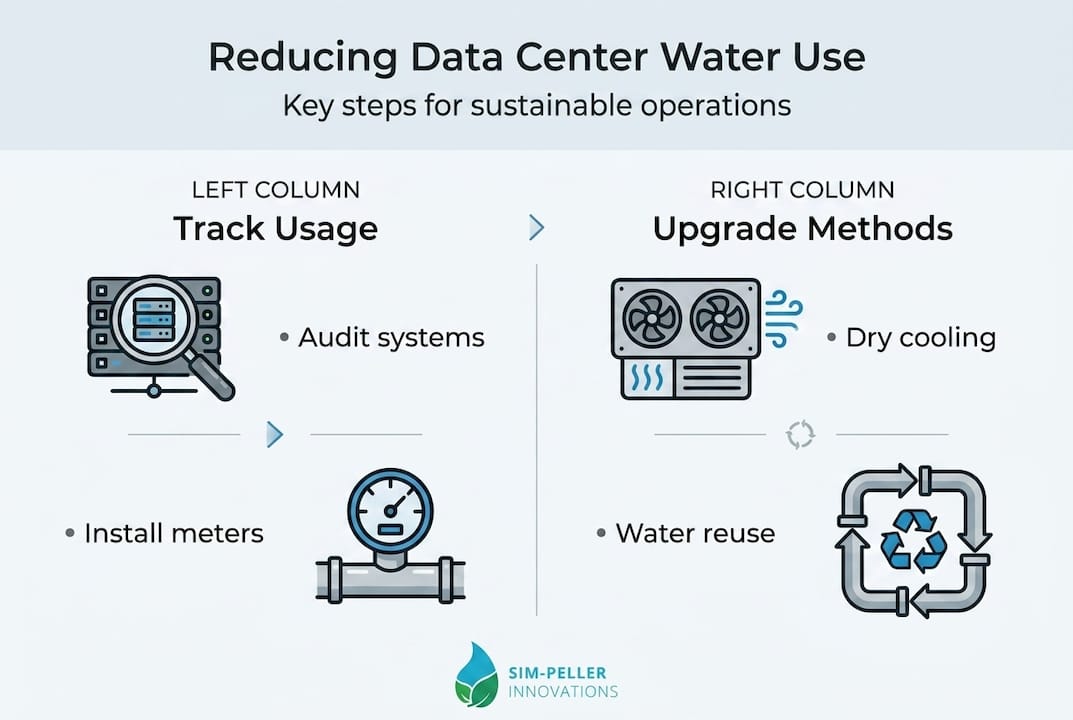
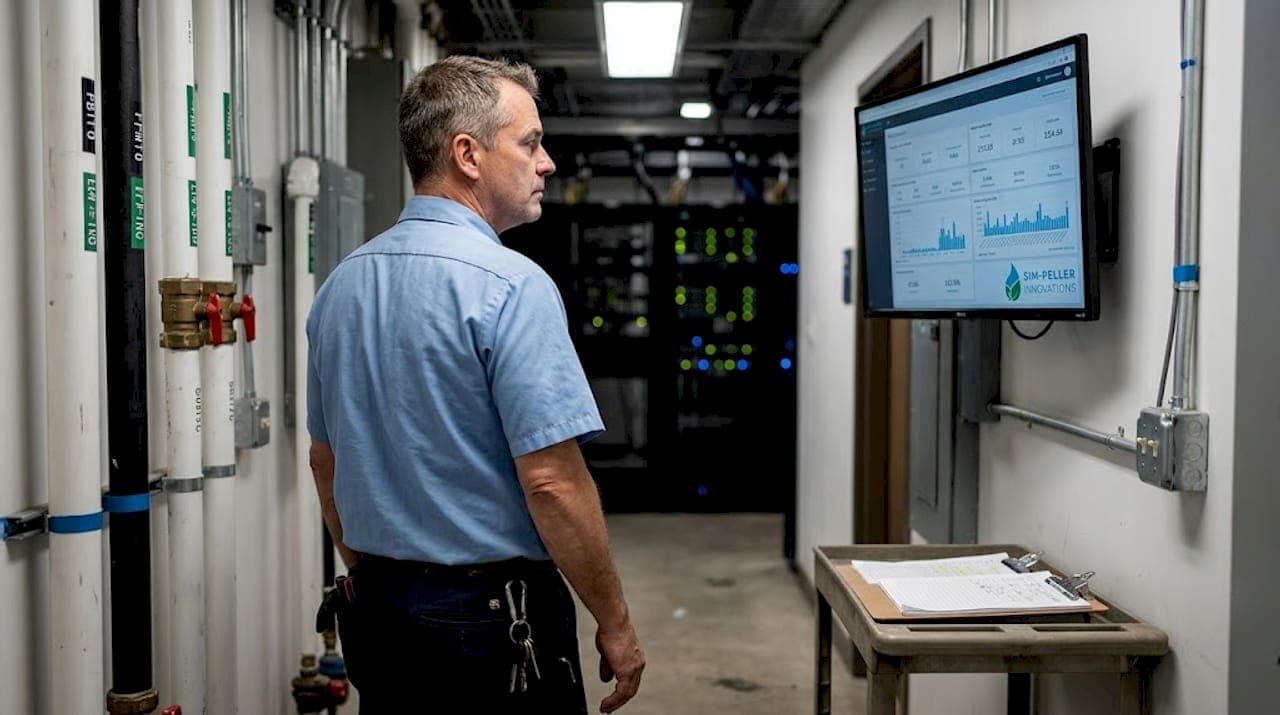
Start with a full water audit. Install sub-metering on every major water-consuming system: cooling towers, humidifiers, domestic systems, and any onsite fire suppression testing circuits. Sub-metering turns invisible losses into line items you can actually manage. According to a solid water savings guide, facilities that implement granular metering typically identify 15 to 25 percent of water use that was previously unaccounted for.
Once you have your consumption data, calculate your facility's Water Usage Effectiveness (WUE). WUE is the ratio of total water consumed (in liters) to total IT energy consumed (in kilowatt-hours). Lower is better. Industry benchmarks set by leading standards bodies show that target WUE below 0.4 L/kWh in water-stressed regions, with water-free designs achieving a WUE of zero.
Here is a quick benchmark table to orient your facility:
| WUE range (L/kWh) | Performance tier | Typical cooling method |
|---|---|---|
| 0.0 | Best in class | Dry or liquid cooling |
| 0.1 to 0.4 | High efficiency | Closed-loop with optimization |
| 0.4 to 1.0 | Average | Evaporative towers |
| Above 1.0 | Underperforming | Open-loop evaporative |
Beyond WUE, factor in your local context. Operating in Phoenix or Bangalore is fundamentally different from running a facility in Oslo. Water-stressed regions require more aggressive targets, while cooler climates offer free cooling opportunities that dramatically reduce both water and energy use. Mapping your site against regional water stress data using tools like the World Resources Institute Aqueduct platform should be standard practice before any capital decision.
Server utilization also belongs in this audit. Research shows that workload-level water use varies by more than 10,000-fold across workloads, with server efficiency being the top determinant. A poorly utilized server running at 15 percent capacity consumes nearly as much power and water as one running at 80 percent, while delivering a fraction of the compute output.
Key audit checklist items to cover:
- Cooling tower cycles of concentration: Are you maximizing water reuse before blowdown?
- Humidification system type: Adiabatic and evaporative humidifiers consume far more water than steam-based systems.
- Leak detection: Even small, persistent leaks in piping or heat exchangers add up to significant annual volume.
- Grid water intensity: What is the water withdrawal rate per megawatt-hour for your local electricity supply?
Pro Tip: Use smart water management platforms with real-time sensor data to automate the detection of anomalous consumption spikes. Catching a valve fault within hours rather than weeks can prevent millions of liters of unnecessary waste per quarter.
Choosing the right cooling system: water-saving upgrades
With a clear sense of your baseline, the next step is addressing the biggest water draws: cooling systems. Cooling accounts for the vast majority of a data center's water consumption, often exceeding 90 percent of total facility water use. Choosing and upgrading your cooling approach is therefore the highest-leverage decision you will make.
Here is how the major cooling methods compare:
| Cooling method | Estimated WUE | Water intensity | Energy overhead | Best climate fit | |---|---|---|---| | Open evaporative towers | 1.0 to 2.0 L/kWh | Very high | Low | Humid, mild | | Closed-loop evaporative | 0.4 to 0.8 L/kWh | Medium | Low to medium | Moderate | | Dry/air cooling | Near 0 L/kWh | Near zero | Medium to high | Cool/cold climates | | Direct-to-chip liquid | Near 0 L/kWh | Near zero | Low | Any climate | | Immersion cooling | 0 L/kWh | Zero | Low | Any climate |
Switching to dry cooling or air cooling systems can eliminate or drastically reduce water usage in evaporative cooling towers, with one California case study showing savings of 4.34 million gallons per month at a total cost of ownership increase of just 0.7 percent. That is a compelling economics story for any facility in a water-stressed region.
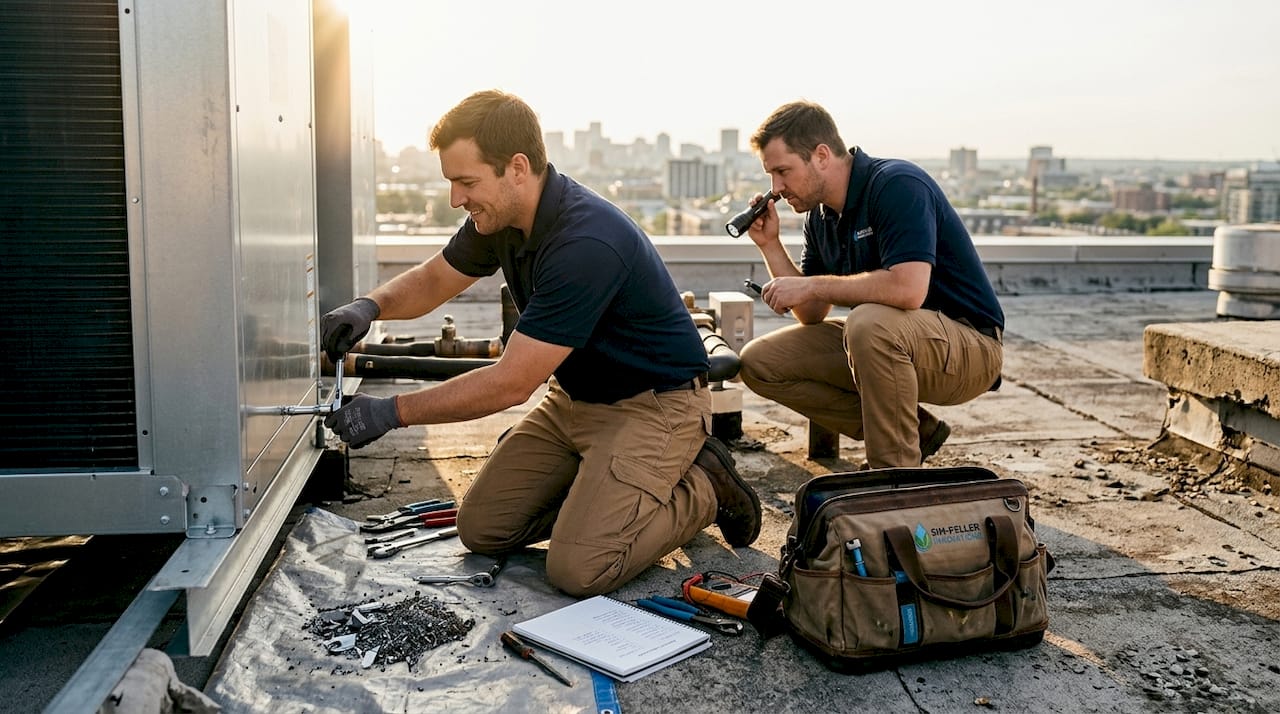
For facilities not ready for a full dry cooling overhaul, closed-loop cooling systems that recycle water multiple times before discharge can reduce freshwater use by up to 70 percent compared to open-loop evaporative towers. Closed-loop designs keep water circulating within a sealed system, dramatically reducing evaporation and blowdown losses.
For high-density server environments, liquid cooling technologies like direct-to-chip cooling and immersion cooling minimize or eliminate water at the server level entirely. Direct-to-chip delivers coolant directly to processors, removing heat more efficiently than air, while immersion submerges servers in dielectric fluid that absorbs heat without any evaporation.
A step-by-step selection and upgrade process:
- Map your heat density. Low-density racks (below 10 kW) can often be served by air-side economizers. High-density AI clusters above 30 kW almost always benefit from direct liquid cooling.
- Assess local water risk and energy grid. In fossil-heavy grids with low water stress, evaporative cooling may still be the net-better environmental choice.
- Model lifecycle costs, not just capital costs. A dry cooling system with a 0.7 percent TCO premium pays back in water cost savings within two to four years in most US water markets.
- Pilot before full deployment. Retrofit one cooling zone with closed-loop or liquid cooling, measure WUE improvement over 90 days, then scale.
- Integrate with energy-saving devices and sensor networks to maintain real-time oversight of cooling performance.
"The most effective cooling upgrades align technology choice with local water scarcity risk, not just capital cost. A system that saves water in California may not be the right fit for a facility in the Pacific Northwest with abundant, low-cost hydroelectric power."
Pro Tip: When evaluating dry cooling vendors, request site-specific modeling for your climate zone and peak summer temperatures. Dry cooling performance degrades in heat waves, so ensure your design includes adequate thermal buffer capacity for extreme weather events, which are becoming more frequent.
Onsite water reuse, recycling, and zero liquid discharge (ZLD)
Upgrading cooling brings major savings, but combining it with water reuse solutions maximizes your impact. Onsite water recycling closes the loop on water that would otherwise be discharged to the sewer or lost to evaporation, turning a liability into a reusable asset.
Zero liquid discharge (ZLD) is the gold standard. ZLD systems treat and recover up to 99 percent of process water onsite, leaving only a small volume of solid waste for disposal. For large hyperscale facilities, that recovery rate translates to tens of millions of gallons saved annually, with corresponding reductions in municipal water costs and wastewater discharge fees.
How ZLD works in a data center context: cooling tower blowdown water, which is normally discharged to avoid mineral buildup, is instead sent through a treatment train. This train typically includes filtration, softening, and evaporation or membrane technologies like reverse osmosis and electrodialysis reversal. The treated water is returned to the cooling tower, and the concentrated brine is processed into dry solids.
Implementing ZLD or partial ZLD systems follows a practical sequence:
- Conduct a site water balance. Identify all discharge streams, their volume, quality, and seasonal variation. This determines the sizing and complexity of your treatment system.
- Assess local discharge regulations. In many US states, tightening wastewater standards are making ZLD not just financially attractive but legally necessary for new builds and major renovations.
- Evaluate partial ZLD as a stepping stone. Full ZLD carries significant capital cost. Recovering 80 to 90 percent of blowdown water through a simpler reverse osmosis system may deliver 70 to 80 percent of the benefit at 40 to 50 percent of the cost.
- Retrofit cooling tower chemistry management. Increasing cycles of concentration from 3 to 6 or more through better chemical treatment and blowdown timing can cut tower water consumption by 30 to 40 percent without any major infrastructure change.
- Monitor continuously. Real-time water quality sensors feeding into your building management system prevent scaling, biological growth, and equipment damage that would otherwise undo your savings.
Pro Tip: Consult our detailed onsite water recycling guide before sizing any ZLD or recycling system. Getting the water balance calculation wrong at the design stage can lead to undersized treatment capacity and costly retrofits within two to three years of commissioning.
The lifecycle benefits extend far beyond water costs. ZLD adoption strengthens your ESG reporting with verifiable, auditable water recovery metrics, supports compliance with increasingly strict environmental permits, and provides real water security in regions where utility supply is uncertain. The water reuse guide for commercial real estate also highlights how water independence can become a material differentiator in asset valuation and tenant attraction.
Optimizing server efficiency and integrating low-water energy sources
Beyond direct water use, hidden water consumption and savings opportunities lie in your IT and energy sourcing decisions. This is the dimension most facility managers underestimate, and it is often the one with the largest absolute impact.
Thermoelectric power generation, which includes coal, natural gas, and nuclear plants, withdraws enormous quantities of water for cooling. When your data center draws power from a fossil-fuel-heavy grid, every megawatt-hour consumed carries a water withdrawal footprint measured in hundreds of gallons, even before a single liter enters your cooling tower. Improving server efficiency therefore reduces indirect water use at both the facility and the grid level.
Key actions to optimize IT-level water efficiency:
- Increase server utilization rates. Industry average server utilization hovers around 15 to 20 percent. Moving from 15 percent to 60 percent utilization through virtualization and workload consolidation can cut your server count and associated power and water footprint by 50 to 70 percent.
- Upgrade to energy-efficient hardware. Modern server generations deliver 2 to 4 times the compute performance per watt compared to equipment that is five years old. Refreshing aging infrastructure is one of the fastest paths to reducing both power demand and water intensity.
- Schedule energy-intensive workloads strategically. Running AI training jobs and batch processing during nighttime hours, when grid electricity is often generated by lower-carbon, lower-water sources, reduces the embedded water cost of your compute.
- Procure low-water electricity. Solar PV and wind generation consume near-zero water in operation. Signing long-term power purchase agreements (PPAs) with renewable energy providers directly reduces your facility's full water footprint, including the indirect component.
- Track resource management trends. Following resource management trends for facility managers keeps your strategy aligned with where regulation and technology are heading.
Statistic callout: A single hyperscale data center running 100 MW of IT load from a coal-heavy grid may withdraw more than 500 million gallons of water annually through its energy supply chain alone, dwarfing the direct water use of even an inefficient cooling tower system.
The path to holistic water reduction therefore runs through your procurement team as much as your facilities team. Renewable energy procurement, server refresh cycles, and virtualization programs are not just IT and finance decisions. They are water reduction decisions, and tracking them within your sustainability reporting gives you a far more accurate picture of your true environmental impact.
Our perspective: Avoiding common trade-offs and pitfalls in data center water reduction
Even the most advanced strategies require careful consideration of your context, and experience has a way of surfacing complications that benchmarks and white papers miss. One of the most common pitfalls we see is treating water reduction as an isolated metric, divorced from energy use and carbon impact.
The reality is that low-water cooling systems increase energy use by 5 to 10 percent, which raises carbon emissions in fossil-heavy grid regions. Evaporative cooling, by contrast, is energy-efficient but water-intensive. Neither approach is universally superior. Choosing the wrong strategy for your local context can shift the problem rather than solve it.
The decision framework we recommend starts with local water stress and grid carbon intensity as co-equal inputs, not afterthoughts. Facilities in water-stressed, renewable-heavy grids should prioritize aggressive water reduction even at a modest energy cost. Facilities in water-abundant, fossil-heavy grids should prioritize energy efficiency first, then water. And in all cases, the cut costs and boost efficiency approach of continuous measurement and iteration outperforms any single technology bet. Progress requires a map, not just a destination.
Discover next steps for water-saving data center operations
With the right strategy and trusted partners, lasting water savings are within reach. Simpeller's IoT sensor platform and AI-driven analytics make the invisible visible, giving facility managers real-time data on water and energy flows, automated leak detection, and verified performance metrics that feed directly into ESG and carbon reporting. Our tokenized efficiency model converts verified water savings into measurable value, whether that means renewable energy credits, cost offsets, or investments in water access for underserved communities. Explore water-saving solutions tailored for data centers, or connect with our team to map out a water reduction roadmap specific to your facility's climate, infrastructure, and sustainability targets.
Frequently asked questions
What is the most water-efficient cooling method for data centers?
Dry cooling and air-side economizers can achieve WUE close to zero by relying on ambient air rather than evaporative water, making them the most water-efficient options available today.
How much water can zero liquid discharge (ZLD) systems recover onsite?
ZLD systems recover up to 99 percent of process water onsite, drastically cutting freshwater withdrawals and wastewater discharge volumes.
Does reducing water use in cooling increase energy consumption?
Yes, dry and air cooling systems typically increase energy use by 5 to 10 percent, but this trade-off can be managed through renewable energy procurement and site-specific design choices.
Can server efficiency impact water usage even if cooling is optimized?
Absolutely. Improving server utilization reduces indirect water use by cutting energy demand at both the facility and grid level, making IT efficiency a direct lever for water reduction.