
TL;DR:
- Sustainable water management requires smart technology, data-driven strategies, and continuous monitoring.
- Implementing metering, leak detection, fixture retrofits, and irrigation controls yields significant savings and rapid ROI.
- Culture change and accountability are essential to maintain water efficiency and leverage ESG reporting opportunities.
Most facilities managers assume that upgrading to low-flow fixtures and patching visible leaks is enough to call their building "water efficient." It is not. Real sustainable water management requires a combination of smart technology, data-driven strategy, and context-specific planning that goes far beyond better plumbing. When facilities treat water purely as a utility bill line item rather than a strategic resource, they leave significant savings, climate benefits, and ESG reporting opportunities on the table. This guide breaks down what genuinely works, why it works, and how to build a water strategy your facility can sustain for years.
Table of Contents
- Why sustainable water management matters for facilities
- Core strategies and best management practices explained
- Implementation frameworks: from audit to action
- Nuances, paradoxes, and global innovations in water sustainability
- What most facility managers miss about true water sustainability
- Explore facility-wide water savings with proven solutions
- Frequently asked questions
Key Takeaways
| Point | Details |
|---|---|
| Strategy beats technology alone | Facilities save the most when they pair smart technology with careful tracking and targeted management. |
| Quick wins deliver fast ROI | Meters, leak fixes, and efficient fixtures offer 1–2 year returns on investment. |
| Efficiency needs accountability | Setting usage caps and monitoring prevents rebound effects that can erase savings. |
| Context drives best results | Custom solutions and ongoing adjustments outperform one-size-fits-all water practices. |
Why sustainable water management matters for facilities
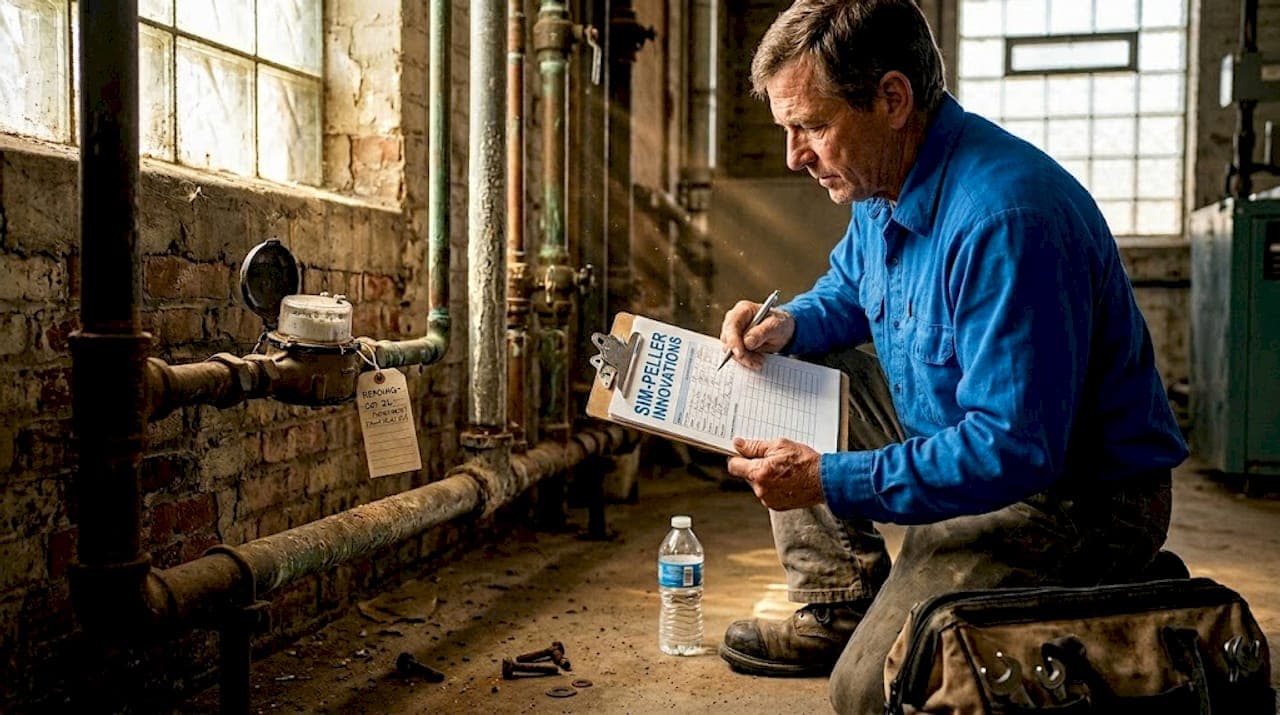
Water costs are rising faster than most operational budgets can absorb. Beyond the direct water bill, facilities carry hidden costs from undetected leaks, energy used to heat wasted water, and the regulatory exposure that comes with poor water performance reporting. A slow-dripping pipe or a malfunctioning cooling tower bleed valve might not trigger an alarm, but over a fiscal year, these silent drains add up to thousands of dollars in losses. Worse, many managers only discover the problem when the quarterly bill arrives with a shock figure they cannot easily explain.
The environmental stakes are equally pressing. Water scarcity now affects every continent, and businesses are increasingly expected to demonstrate measurable progress on resource stewardship through formal ESG reporting. Investors, tenants, and regulators want verified data, not vague sustainability pledges. This pressure is not going away.
Here is what makes the business case genuinely compelling:
- Cost savings are substantial and fast. Facilities managers and business owners can achieve 50 to 60% savings through data-driven retrofits with a return on investment in one to two years.
- Non-potable water reuse directly reduces dependency on municipal supply, which is a critical climate adaptation strategy as drought conditions worsen.
- Energy and water are linked. Heating, cooling, and treating water consumes significant energy. Cutting water waste shrinks your carbon footprint simultaneously.
- Reputation and compliance risk from poor water performance is growing, particularly for businesses in regulated industries or those pursuing green building certifications.
Statistic callout: Data-driven retrofits can slash facility water costs by 50 to 60% with ROI achieved in one to two years, according to EPA water management benchmarks.
The key insight here is that efficiency alone is insufficient without accountability. Facilities that invest in hardware upgrades but skip continuous monitoring and clear performance targets often see initial gains erode within two years as systems drift out of calibration and behavioral habits revert. Learning about cutting costs with water savings is straightforward. Sustaining those cuts requires strategy.
Pro Tip: Before investing in any upgrade, benchmark your current consumption by building type, season, and operational hours. You cannot manage what you cannot measure, and you cannot measure what you have never tracked.
Core strategies and best management practices explained
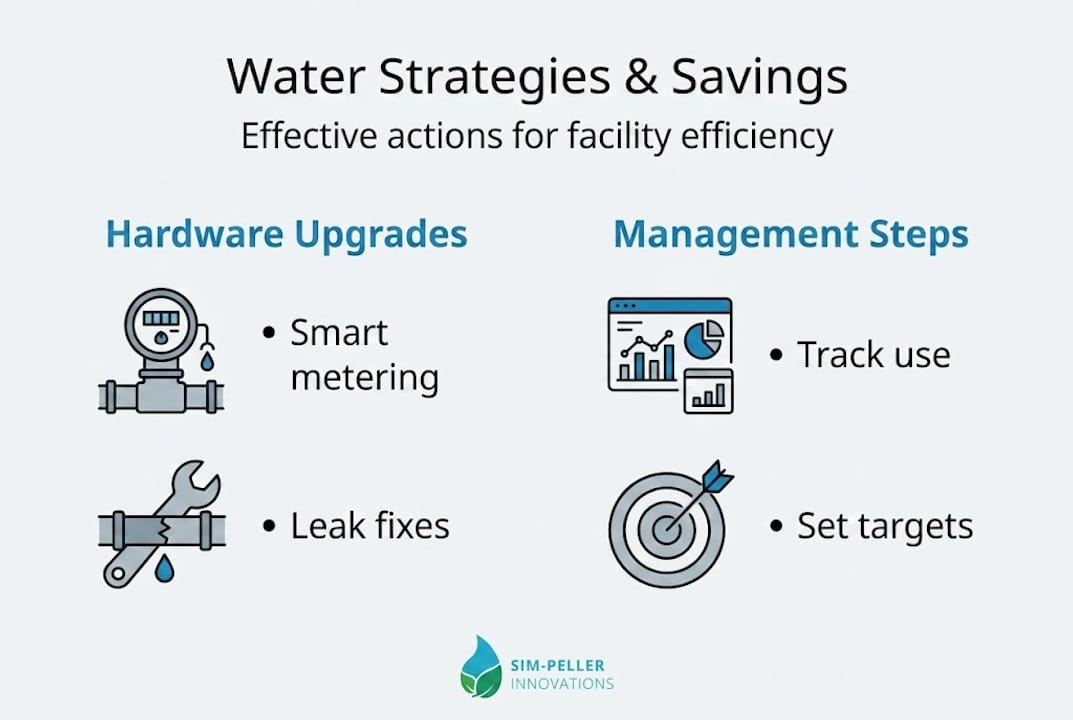
Now that we know the stakes, it is time to examine the proven methods driving sustainable water management. The EPA has identified ten water best management practices for facilities, and while the full list can feel overwhelming, the good news is that even implementing four or five of them consistently delivers measurable results.
Here is how the most impactful practices break down, and what each one actually requires in practice:
-
Metering and sub-metering. Installing meters at the building level tells you total consumption. Sub-meters at individual systems (cooling towers, restrooms, irrigation, kitchens) tell you exactly where water goes. This granularity is what separates guesswork from genuine management. Using IoT for water efficiency makes this step faster, cheaper, and far more actionable than legacy metering approaches.
-
Cooling tower optimization. Cooling towers are typically the single largest water consumer in commercial and industrial buildings. Increasing cycles of concentration, installing conductivity controllers, and eliminating single-pass cooling systems can reduce cooling water use by 30 to 50% alone.
-
WaterSense-labeled fixture retrofits. Replacing standard restroom fixtures with EPA WaterSense-labeled toilets, faucets, and urinals requires minimal capital and delivers consistent savings. An average office building with 100 employees can save tens of thousands of gallons annually from this single step.
-
Native landscaping and smart irrigation. Outdoor water use is one of the most overlooked facility costs. Replacing turf with native plants and pairing smart irrigation controllers with weather-based sensors can cut landscape water use by 20 to 50%, depending on climate.
-
Rainwater recovery and condensate reclaim. Capturing roof rainwater and HVAC condensate for toilet flushing, irrigation, and cooling tower makeup water reduces potable demand significantly. In humid climates, HVAC condensate alone can supply a meaningful portion of non-potable needs.
-
Steam sterilizer and deionized water system improvements. In healthcare and food production facilities, these systems consume enormous volumes of water. Once-through cooling and inefficient deionization regeneration are common culprits that are well worth auditing.
The EPA's top 10 water best management practices for facilities also include boiler efficiency, kitchen equipment upgrades, and laundry optimization for applicable industries.
| Strategy | Typical savings potential | Payback period |
|---|---|---|
| Sub-metering and leak detection | 10 to 30% | Under 1 year |
| Cooling tower optimization | 30 to 50% | 1 to 2 years |
| WaterSense fixture retrofits | 20 to 30% | 1 to 3 years |
| Smart irrigation systems | 20 to 50% | 2 to 4 years |
| Rainwater/condensate recovery | 15 to 40% | 2 to 5 years |
Pro Tip: Target cooling towers first. For most commercial facilities, this is the highest-volume, fastest-payback water system to optimize, and the upgrades are well-documented and replicable.
Implementation frameworks: from audit to action
Understanding best practices is the start, but making them reality calls for a smart, staged approach. Many facilities start with the wrong question: "What should we install?" The right question is: "Where is our water actually going, and why?"
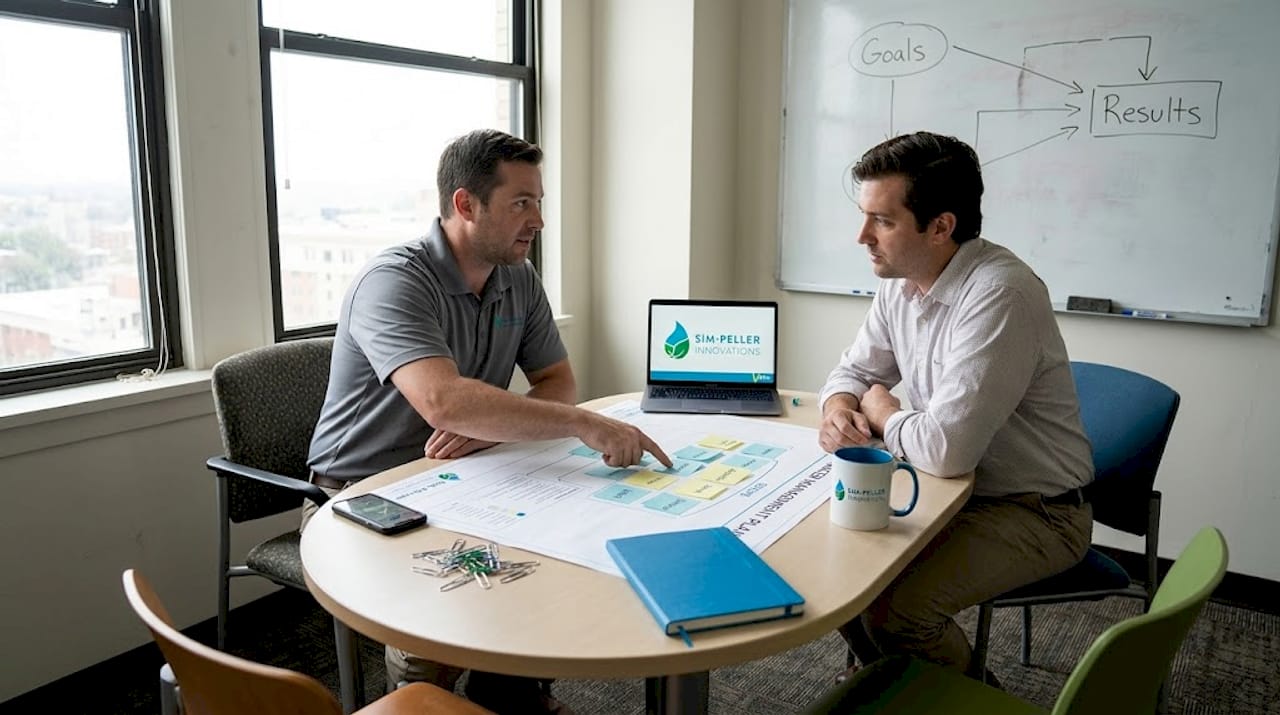
A proven water management strategy for commercial buildings follows five sequential steps. Each step builds on the last, reducing the risk of investing in the wrong solution.
Step 1: Assess with meters. Deploy temporary or permanent metering to establish actual consumption across all major end uses. Do not rely on utility bills alone. They show totals, not patterns.
Step 2: Identify risks and waste. A single running toilet can waste 200 gallons per day, and a malfunctioning float valve in a cooling tower can do far more damage without triggering any visible alarm. Walk the facility systematically and correlate meter data with operational logs to spot anomalies.
Step 3: Set targets with clear accountability. Targets without owners fail. Assign specific water use reduction goals to individual system managers or department heads, and tie those targets to regular operational reviews. When water performance is someone's responsibility, behavior changes.
Step 4: Fix and upgrade. Prioritize repairs with the fastest ROI first, such as leaks and fixture upgrades, and then layer in larger capital projects like rainwater recovery systems or cooling tower controls.
Step 5: Monitor and adjust continuously. This step is where most facilities drop the ball. Deploying a solution and moving on is not water management. Ongoing monitoring reveals system drift, seasonal demand changes, and new inefficiencies before they become expensive.
Here is how different facility types compare on key benchmarks, drawing from real-world examples like PepsiCo water reduction upgrades:
| Facility type | Key benchmark target | Realistic outcome |
|---|---|---|
| Food and beverage production | 1.2 gallons water per gallon product | 15 to 30% process savings |
| Commercial office buildings | 10 to 20% landscape savings | Achievable in year one |
| Multifamily residential | Up to 60% reduction | With fixture and behavioral change |
| Healthcare and labs | Steam and deionized water optimization | 20 to 40% process water cut |
The connection between audit findings and measurable outcomes is what transforms a water plan from a document into a living management tool. Review your smart water management results regularly and adjust targets as you go. For buildings pursuing onsite treatment, the onsite water recycling guide offers a clear starting framework for greywater and rainwater system design.
- Common pitfalls to avoid:
- Setting targets without baseline data
- Treating the audit as a one-time event
- Ignoring behavioral drivers of water waste
- Overlooking seasonal variation in consumption
- Failing to report results to leadership and stakeholders
Nuances, paradoxes, and global innovations in water sustainability
Let's go deeper: not all "improvements" are simple wins, and here is what advanced cases teach us about the complexity behind sustainable water management.
One of the most counterintuitive findings in water management research is the rebound effect. When facilities improve irrigation efficiency, for example, through drip systems or soil moisture sensors, the reduction in water per unit of output can actually encourage managers to expand irrigated areas or increase crop frequency. The result? Total water use rises even though efficiency improved. A Nature Water commentary on water paradoxes confirmed that improving irrigation efficiency can increase total use when demand controls and usage targets are not set alongside the technology investment.
This is not a reason to avoid efficiency upgrades. It is a reason to pair them with hard consumption limits and accountability structures that prevent demand from expanding to fill the new capacity.
"Supply augmentation can induce demand. Efficiency gains without behavioral and policy guardrails risk becoming a treadmill rather than a destination." — Nature Water, 2026
Global innovations offer powerful proof of what is possible when technology and policy align. Barcelona's approach to water security is a standout case. The city deployed renewable-powered desalination at scale, achieving a 55% reduction in carbon emissions from desalination, a cost of just 0.68 EUR per cubic meter, and 94% supply reliability. This is not cheap technology made affordable through compromise. It is expensive infrastructure made viable through smart energy integration and long-term planning.
What does this mean for facility managers operating at a smaller scale? Several things:
- Tailor every solution to your specific facility context. A water strategy that works brilliantly for a manufacturing plant in a water-rich region may backfire in a water-stressed desert city.
- Supply augmentation alone is not the answer. Adding rainwater tanks or connecting to reclaimed water supplies must be paired with demand-side controls or you risk the rebound effect.
- Participatory management beats top-down mandates. Facilities that engage their operations teams, building occupants, and supply chain partners in water goals outperform those that issue directives without consultation.
- Valuation of water matters. When water is priced below its true cost, the incentive to conserve is structurally weak. Advocating for better water pricing policies supports your facility's sustainability goals at the systemic level.
The innovative water scarcity solutions being developed for industry and commerce reflect this growing sophistication. The shift is away from single-intervention thinking and toward integrated, adaptive management where technology, behavior, and policy work together.
What most facility managers miss about true water sustainability
Here is the uncomfortable truth most sustainability consultants will not say plainly: technology adoption without culture change is expensive theater.
Facilities invest in smart meters, leak sensors, and automated irrigation systems, and then see their water bills plateau or creep back up within 18 months. The hardware works. The people around it have not changed how they think about water. No one is checking the data. No one is accountable for the numbers. The system runs, but the organization is not managing it.
Real water sustainability requires metrics that people care about, targets that are tied to someone's performance review, and visible recognition when teams hit their goals. It requires leaders who talk about water the way they talk about safety or quality. When water stewardship is embedded in operational culture, the efficiency gains compound over time instead of eroding.
The other thing many managers miss is the ESG reporting opportunity. Verified water savings are not just a cost reduction story. They are a credibility asset that supports carbon accounting, investor reporting, and tenant attraction. Connecting your facility's water reuse and ESG reporting strategy creates a narrative that finance, operations, and sustainability teams can all get behind.
What you measure, you can manage. What you manage, you can improve. And what you improve, you can prove.
Explore facility-wide water savings with proven solutions
Turning knowledge into real results starts with the right partners. At Simpeller, we help facilities managers move from guesswork to verified, measurable water performance using plug-and-play IoT sensors and an AI-driven platform that makes waste visible in real time. Our proven facility water savings approach tracks every efficiency gain and converts it into measurable value, whether that means lower operational costs, renewable energy credits, or ESG reporting data your stakeholders can trust. If your facility is ready to build a water strategy that pays back fast and scales over time, we can help you design and deploy it from audit through ongoing optimization.
Frequently asked questions
What are the top three actions facilities should start with for water sustainability?
Install metering to establish baselines, audit for leaks and malfunctions, and retrofit restrooms with WaterSense-labeled fixtures for the fastest combined ROI in year one.
How much can smart water management cut facility costs?
Data-driven retrofits and ongoing smart management can reduce water use and associated costs by 50 to 60% within one to two years, depending on facility type and starting baseline.
What is the rebound effect in water efficiency?
The rebound effect occurs when improving water efficiency, such as through better irrigation, leads to expanded use rather than net savings, because demand controls and hard consumption targets were not set alongside the technology upgrade.
Is rainwater recovery a good investment for commercial buildings?
Yes. EPA-recommended rainwater recovery systems reduce potable demand, lower costs, and support sustainability credentials, with the strongest ROI in water-stressed or high-cost supply regions.
What benchmarks should facilities use for water performance?
Real-world facility benchmarks include 1.2 gallons of water per gallon of production for food and beverage, 10 to 20% landscape savings, and up to 60% reduction in multifamily residential properties with comprehensive retrofits.