
TL;DR:
- Success in sustainable construction depends on site-specific data and measurable outcomes.
- Mass timber offers lower embodied carbon and faster construction but benefits vary by source.
- Zero-carbon buildings integrate passive design, renewables, and smart tech for verified high performance.
Sustainable construction professionals face a problem that doesn't get talked about enough: the market is flooded with green building claims, but the evidence that separates genuine climate wins from expensive greenwashing is hard to find fast. Every product pitch promises carbon savings, every certification sounds compelling, and yet many projects still miss their targets on both cost and environmental performance. This article cuts through the noise by breaking down the most innovative, evidence-backed building practices for 2026, with real project results, clear comparisons, and honest guidance on where each approach delivers and where it falls short.
Table of Contents
- Evaluating sustainable building practices: What matters most?
- 1. Mass timber framing: Lower embodied carbon, faster construction
- 2. Zero-carbon buildings: Integrating design, renewables, and smart tech
- 3. Fabric First and Technology First: Reducing demand before adding tech
- 4. Green materials, water systems, and case studies from leading projects
- Why "one-size-fits-all" green building doesn't work: Hard-won lessons
- Advance your projects with proven sustainable systems
- Frequently asked questions
Key Takeaways
| Point | Details |
|---|---|
| Prioritize proven practices | Select building strategies with real-world data for climate and cost impact rather than trendy or untested solutions. |
| Design for context | Success depends on matching materials and systems to local conditions, resources, and regulations. |
| Holistic integration wins | The best results combine robust envelopes, renewable energy, and smart water and tech solutions. |
| Continuous learning required | Professionals should stay updated, question assumptions, and adapt practices for ongoing improvement. |
Evaluating sustainable building practices: What matters most?
Before we dive into individual practices, it's crucial to clarify what "success" actually means for your building project. Too many teams rush to adopt a trendy material or system without anchoring the decision to measurable outcomes. That leads to wasted budgets and, worse, wasted potential.
Every project should define its own sustainability hierarchy. A data center in the American Southwest has a very different priority list than a residential retrofit in the Pacific Northwest. Water footprint, operational energy intensity, embodied carbon, lifecycle durability, and resilience to climate extremes are all legitimate metrics. The question is which ones matter most on your site and for your stakeholders.
Key evaluation metrics to lock in before selecting any practice:
- Embodied carbon (kg CO2-eq per m²): the emissions locked into materials before the building even opens
- Operational energy use intensity (kWh/m²/yr): ongoing demand driven by HVAC, lighting, and equipment
- Water footprint (liters per occupant per day): both potable and recycled water consumed
- Lifecycle cost: upfront capital versus long-term savings over a 20 to 50-year horizon
- Regional material availability: transport distances dramatically shift embodied carbon calculations
"Selecting a green technology without accounting for regional context is like prescribing medication without checking the patient's history. The tool might be excellent in isolation and still cause harm at the wrong site."
Research confirms that green building components reduce energy, CO2, and water waste but show regionally variable effectiveness. Understanding that variability is the starting point for every decision. For a deeper grounding in building performance strategies, reviewing how top operators benchmark their assets is a smart first move.
The bottom line: success equals the right technology for the setting, not simply the trendiest tool available.
1. Mass timber framing: Lower embodied carbon, faster construction
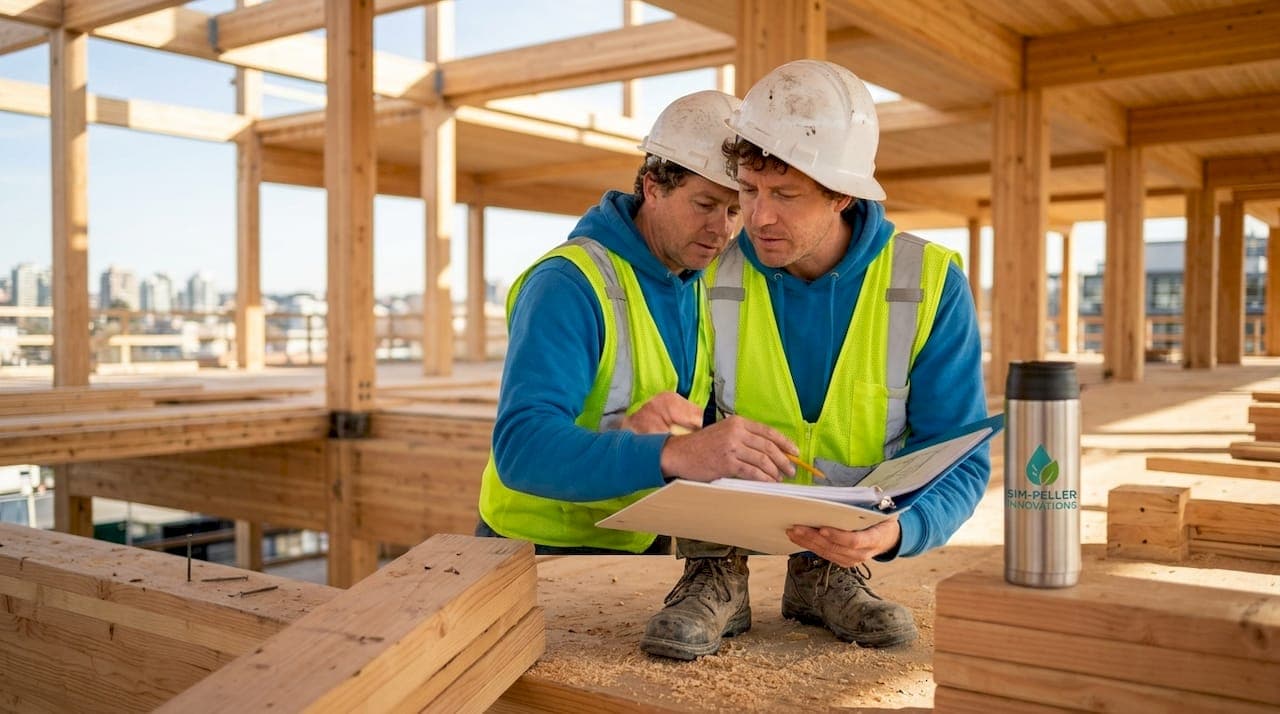
With clear criteria in hand, let's start with one of the most headline-grabbing structural innovations: mass timber framing. Cross-laminated timber (CLT) and glulam systems have gone from niche experiment to mainstream contender in commercial and mid-rise residential construction, and for good reason.
Mass timber replaces steel and poured concrete with engineered wood panels and beams. The carbon math is compelling on its face. Wood sequesters carbon during tree growth, and manufacturing CLT requires far less energy than producing structural steel or portland cement concrete. A rigorous whole-building life cycle assessment found that mass timber reduces GWP by approximately 16% compared to concrete in high-rise buildings.
The Bakers Place Building in Portland is a practical benchmark. The project achieved roughly 30% lower embodied carbon versus a comparable concrete structure, driven by CLT floor panels, glulam columns, and locally sourced Douglas fir. Construction time also dropped because prefabricated panels arrived on-site ready to install, shrinking the schedule and reducing site waste.
Key advantages when mass timber is the right call:
- Faster erection schedule compared to cast-in-place concrete
- Lower embodied carbon with certified, locally sourced supply chains
- Exposed wood finishes reduce finishing materials and improve occupant wellbeing
- Biophilic design benefits that support WELL certification goals
But the honest caveat matters here. Analysis shows that mass timber benefits are modest, sitting in the 10 to 16% GWP reduction range, and heavily dependent on project-specific sourcing decisions. An optimized concrete mix using supplementary cementitious materials can close much of that gap. If your regional timber supply chain is weak or involves long-haul transport, the climate advantage shrinks fast.
Pro Tip: Run a comparative life cycle assessment using both mass timber and optimized concrete as structural options before committing. The answer often surprises design teams who assumed timber wins automatically.
Use mass timber when fast construction, carbon priorities, and a strong local timber supply align. Pair it with embodied carbon reduction tips to maximize the structural choice's full potential.
2. Zero-carbon buildings: Integrating design, renewables, and smart tech
While structure matters, next-level results come from holistic approaches like zero-carbon buildings. A zero-carbon building (ZCB) is not just a structure with solar panels bolted on. It is a tightly integrated system where passive envelope performance, on-site renewable generation, and data-driven controls work together from day one of design.
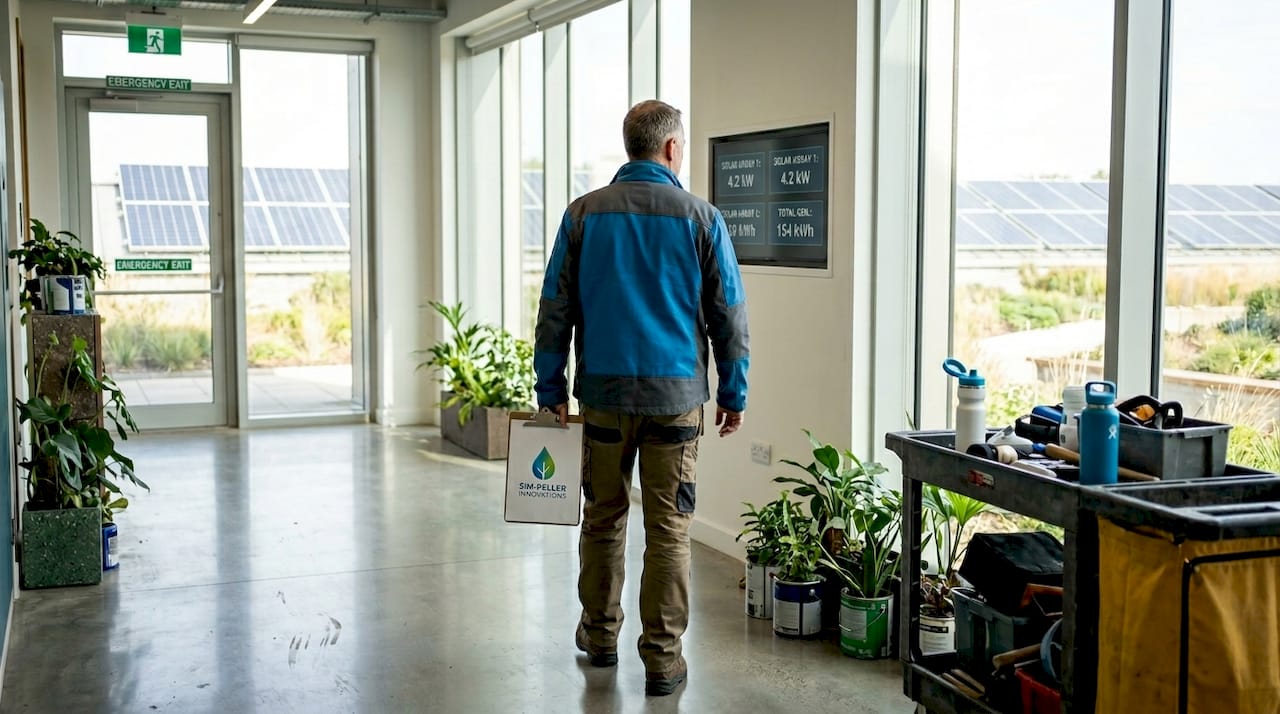
Research on performance benchmarks for ZCBs shows these buildings can generate up to 200% more energy than they consume and achieve an 87% reduction in operational carbon. Those numbers are not theoretical. They come from documented case studies where the design team treated energy as a closed loop rather than a utility bill.
The Kendeda Building for Innovative Sustainable Design at Georgia Tech is the standout North American example. It produces more power than it uses annually through a rooftop photovoltaic-thermal (PV-T) array, handles all its wastewater on-site through constructed wetlands, and infiltrates 15 times its operating water needs back into the local groundwater table. These are not aspirational targets. They are verified annual performance figures.
Blueprint for a zero-carbon building:
- Super envelope first (continuous insulation, triple-glazed windows, airtightness testing at every phase)
- Passive solar orientation (south-facing glazing, external shading, thermal mass calibrated to climate zone)
- On-site renewable generation (PV, PV-T, or building-integrated photovoltaics sized for net-positive output)
- Demand-side management (smart controls, occupancy sensors, load-shifting algorithms)
- Real-time monitoring (IoT sensors that flag anomalies before they become waste)
| Design layer | Primary tool | Performance target |
|---|---|---|
| Envelope | Super-insulation + airtightness | Less than 1.0 ACH50 |
| Energy generation | Rooftop PV or PV-T | 110%+ of annual demand |
| Water management | On-site reuse + harvesting | Net-positive water balance |
| Controls | IoT sensors + AI analytics | Less than 15 kWh/m²/yr |
Pro Tip: Smart systems are the multiplier. Installing energy-saving systems without a data feedback loop is like running a car without a dashboard. You need real-time visibility to capture the efficiency gains that passive design makes possible.
For inspiration on what verified net-positive energy case studies look like in practice, the literature is growing quickly. The pattern is consistent: buildings that treat energy and water as measurable resources, not fixed costs, consistently outperform those that don't.
3. Fabric First and Technology First: Reducing demand before adding tech
Once whole-building design is on the table, how you prioritize design and tech makes all the difference. There are two competing philosophies driving sustainable building decisions right now, and understanding where each one works is essential.
Fabric First means you eliminate demand before you try to meet it. The Passivhaus standard is the most rigorous expression of this approach. Continuous insulation, thermal-bridge-free construction details, triple-glazed windows, and mechanical ventilation with heat recovery (MVHR) combine to achieve airtightness below 0.6 air changes per hour at 50 Pascals pressure. The result is a building that requires almost no active heating or cooling system because the envelope does the work. Data confirms that Passivhaus super-insulation cuts heating demand by 75 to 90%, with operational energy use below 15 kWh/m²/yr.
Technology First means adding high-performance equipment, heat pumps, smart meters, solar panels, and building management systems, to an existing or standard building. This approach is often necessary in retrofits. But it has a ceiling. Smart tech applied to a leaky, poorly insulated envelope is permanently fighting physics.
Comparing the two approaches:
| Criteria | Fabric First (Passivhaus) | Technology First |
|---|---|---|
| Best application | New builds | Retrofits and upgrades |
| Upfront cost | Higher | Moderate |
| Operational complexity | Low (fewer mechanical systems) | Higher (more maintenance) |
| Long-term resilience | Very high | Dependent on tech lifecycle |
| Carbon reduction potential | 75 to 90% heating demand reduction | 30 to 60% typical range |
The optimal strategy for most new construction projects is a hybrid: build a robust, airtight envelope first, then layer in smart technology to manage the remaining demand. In retrofit projects, you may not be able to achieve Passivhaus airtightness, so a Technology First approach fills the gap while you address building efficiency frameworks incrementally.
Steps to implement a hybrid approach:
- Audit the existing or planned envelope for thermal bridging and air leakage
- Specify continuous insulation and MVHR systems in the base design
- Size mechanical systems after the envelope is defined, not before
- Install metering and IoT monitoring from handover day one
The payoff is compounding. A tighter envelope means smaller HVAC equipment, which costs less to buy, less to run, and less to replace over the building's life.
4. Green materials, water systems, and case studies from leading projects
Beyond structural and holistic whole-building strategies, material selection and water systems deliver major, but often under-discussed, sustainability wins. These choices operate at the intersection of embodied carbon, operational water costs, and long-term resilience.
On the materials side, green concrete formulations using fly ash and slag as supplementary cementitious materials (SCMs) are now well established. These industrial byproducts replace a significant portion of portland cement, which is responsible for roughly 8% of global CO2 emissions. The Edge, Amsterdam's most recognized smart building, uses SCM-based concrete and smart sensors across its 28,000-sensor building management system to achieve a 98.36% BREEAM Outstanding score.
Water system innovations are equally powerful and frequently underinvested. Key approaches include:
- Green roofs: manage stormwater, reduce urban heat island effect, and extend roof membrane lifespan
- Rainwater harvesting: capture and treat precipitation for toilet flushing, irrigation, and cooling tower makeup
- Greywater recycling: reuse sink and shower water for non-potable applications, cutting municipal demand significantly
- On-site wastewater treatment: constructed wetlands and membrane bioreactors treat blackwater without connection to municipal sewers
Research confirms that green roofs and rainwater harvesting are cost-effective in many regions, but their value shifts considerably with local climate, water pricing, and utility regulations. A green roof in Seattle delivers different stormwater benefits than one in Phoenix.
The Kendeda Building remains the gold standard for integrated water performance. It treats wastewater on-site and achieves a net-positive water balance by infiltrating 15 times its operating water needs into the local aquifer. Composting toilets eliminate blackwater entirely, and all cleaning products must meet Living Building Challenge standards to protect the on-site treatment ecosystem.
For teams planning water-saving architecture, the monitoring layer is what separates good intentions from verified results. Tracking consumption at sub-meter resolution reveals where losses occur and validates the ROI of each water system investment. Professionals exploring water reuse strategies at scale are finding that verified savings translate directly into ESG reporting value and reduced operating costs across portfolios.
Why "one-size-fits-all" green building doesn't work: Hard-won lessons
Here is the uncomfortable truth that the sustainable building industry needs to say more plainly: no single technology, material, or certification pathway is a cure-all. The project context is always king, and the professionals who get the best results treat every build as a fresh analysis problem rather than a checklist to satisfy.
The biggest wins consistently come from customized combinations of approaches, grounded in real site data, local supply chain realities, and honest lifecycle math. A mass timber building with a weak envelope and no monitoring will underperform a well-optimized concrete structure with a Passivhaus-grade air barrier and smart metering. The material headline matters far less than the integration quality.
What consistently blocks progress is not a lack of technology. It is knowledge gaps and cultural inertia inside project teams and supply chains. Research on barriers to sustainable building adoption confirms that training gaps, cultural resistance, and the absence of financial incentives remain the primary reasons why proven practices stall between pilot projects and mainstream deployment. The technical solutions exist. The organizational infrastructure to deliver them at scale is still catching up.
Sustainable construction professionals carry a specific responsibility here: champion nuance over novelty. Ask suppliers for verified lifecycle data, not marketing sheets. Push design teams to run comparative assessments rather than defaulting to familiar solutions. Validate claims with on-site metering after occupancy. The field rewards those who stay curious and skeptical in equal measure.
Policy environments and local sourcing also turn the tide in ways that no amount of design sophistication can replace. Incentive programs, local material availability, and regional climate data are not background noise. They are decisive variables. There is no shortcut for doing the groundwork early. For professionals who want a structured view of how top operators approach these decisions, exploring sustainable management insight from high-performing portfolios is time well spent.
Advance your projects with proven sustainable systems
If you're seeking resources and real-world tools to make these strategies work for your portfolio, here's where to go next. At Simpeller, we specialize in making the invisible visible. Our smartsink IoT sensors and AI-driven platform track water and energy performance at the granular level that green building strategies demand. Whether your team is implementing on-site water reuse, benchmarking operational energy intensity, or generating verified ESG data for stakeholders, our sustainable water and energy solutions give you the monitoring infrastructure to back every claim with numbers. Explore our energy-saving devices guide to see how leading facility managers are turning efficiency gains into measurable value and verified carbon accounting today.
Frequently asked questions
What is the most impactful sustainable building practice for reducing carbon?
Zero-carbon buildings that integrate passive design, on-site renewables, and smart technology deliver the highest verified results, with up to 87% carbon reduction documented in real case studies.
Are green roofs and rainwater systems cost-effective everywhere?
Green roofs and rainwater harvesting are cost-effective in many regions, but their financial and environmental value depends heavily on local climate, utility costs, and regulatory conditions.
Does using mass timber always guarantee lower carbon than concrete?
Not always. Mass timber often reduces embodied carbon, but optimized concrete can be comparable depending on mix design and sourcing, so project-specific life cycle analysis is essential before choosing.
How can I improve water sustainability in my building?
Combining green roofs, rainwater harvesting, and on-site water reuse systems delivers the strongest results, as demonstrated by the Kendeda Building's net-positive water performance verified annually.