
TL;DR:
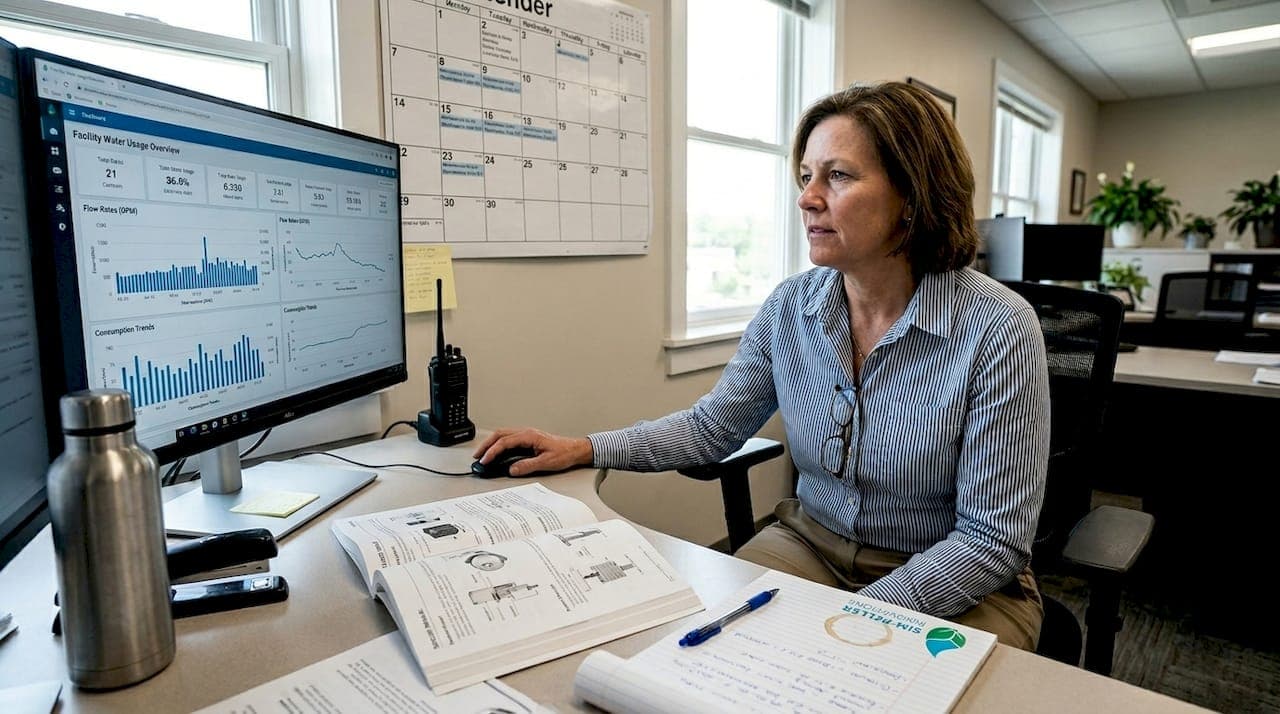
- AI-driven water analytics proactively detects leaks, saving millions of gallons and reducing costs.
- Combining sensors, machine learning, and real-time data transforms water management from reactive to predictive.
- Successful implementation relies on operational buy-in, proper system integration, and targeted pilot projects.
Hidden leaks and silent inefficiencies cost commercial facilities far more than most managers realize. AI-enabled leak detection has already saved millions of gallons and driven substantial annual cost reductions across U.S. cities, yet the majority of commercial real estate portfolios still rely on manual checks and reactive maintenance. The gap between what facilities spend on water and what they could save is significant. This guide explains how AI-driven water analytics works, what realistic ROI looks like, and how to apply these tools across your portfolio starting today.
Table of Contents
- What is AI-driven water analytics and why does it matter?
- Core features: how AI-powered water monitoring works
- Comparing AI vs. traditional methods: ROI, limits, and best use cases
- How to implement an AI-driven water analytics solution in commercial real estate
- A facility manager's reality: what most guides miss about AI water analytics
- Discover AI-powered water savings for your facility
- Frequently asked questions
Key Takeaways
| Point | Details |
|---|---|
| AI goes beyond detection | AI-driven analytics not only finds leaks but predicts maintenance and optimizes use. |
| Real ROI proven | Facilities have saved millions of gallons and hundreds of thousands of dollars annually using AI water analytics. |
| Start with high-impact areas | Pilot AI solutions with cooling or HVAC systems for the fastest return and clear cost justification. |
| Edge cases are solvable | AI addresses hidden leaks and connectivity challenges, outperforming legacy systems in complex environments. |
What is AI-driven water analytics and why does it matter?
AI-driven water analytics is the practice of combining sensor networks, machine learning, and real-time data processing to monitor, predict, and optimize water use across a facility or portfolio. It moves water management from reactive to proactive, giving property and facility managers visibility they have never had before.
Traditional water management depends on monthly meter reads, manual inspections, and reactive repairs. By the time a leak surfaces on a utility bill, thousands of gallons are already gone. AI-driven analytics changes that equation entirely. Sensors embedded in pipes, fixtures, and mechanical systems stream continuous data to a central platform. Algorithms analyze that data to detect anomalies, forecast demand, and flag risks before they escalate.
The core components of a modern AI water analytics stack include:
- IoT sensors: Devices installed at meters, fixtures, cooling towers, and irrigation points that capture flow rate, pressure, and temperature in real time.
- Edge computing: Local processing that filters and analyzes data on-site, reducing latency and bandwidth demands before sending signals to the cloud.
- Machine learning algorithms: Models trained on historical consumption patterns to identify anomalies, predict failures, and recommend actions.
- Big data analytics (BDA): Aggregated analysis across systems and time periods that surfaces trends invisible to manual review.
Next-generation water analytics integrates IoT, edge computing, and ML for real-time sensing, anomaly detection, and demand forecasting across complex infrastructure. This integration is what separates modern platforms from simple metering upgrades.
For facility managers, the practical upside is clear. You get alerts before a burst pipe floods a tenant space. You see which floors or systems are consuming above baseline. You generate the verified data needed for ESG reporting and sustainability benchmarks. Exploring facility management with IoT and AI shows how these capabilities translate directly into operational savings and compliance readiness.
"The shift from reactive to predictive water management is not just a technology upgrade. It is a fundamental change in how facilities create and protect value."
For commercial real estate portfolios managing dozens of buildings, that shift compounds quickly. Every percentage point of water waste eliminated reduces utility spend, lowers carbon footprint, and strengthens asset performance metrics.
Core features: how AI-powered water monitoring works
Understanding the technology is one thing. Knowing exactly what it does for you day to day is what drives adoption decisions. Here is a practical breakdown of how AI water monitoring operates in a live facility environment.
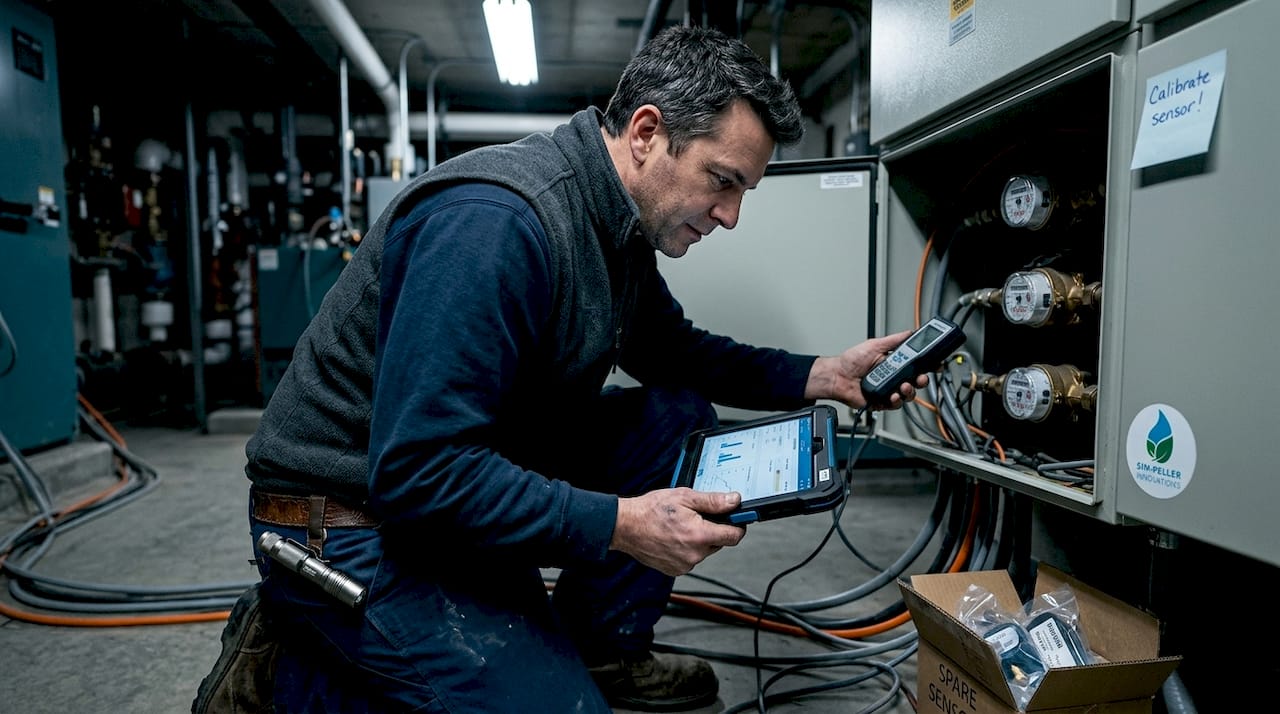
- Data collection: IoT sensors installed at key points across plumbing, HVAC, and irrigation systems capture flow, pressure, and temperature continuously. Data streams to an edge device or cloud platform in near real time.
- Anomaly monitoring: The platform establishes a consumption baseline for each system and zone. Any deviation, whether a slow drip or a sudden pressure drop, triggers an alert ranked by severity and location.
- Predictive alerts: Machine learning models identify patterns that precede failures, such as gradual pressure decline in aging pipes, and notify maintenance teams before damage occurs.
- System integration: AI platforms connect with building management systems (BMS), CMMS (computerized maintenance management systems), and utility billing software to centralize data and automate work orders.
The results are measurable. Scottsdale saved 9.46 million gallons per year using AI leak detection, while a Midwest utility documented $213,000 in annual savings from the same approach. These are not outliers. They reflect what happens when detection speed and accuracy replace manual guesswork.
Optimizing your IoT water monitoring workflow is the fastest path to replicating these outcomes in your own portfolio.
Pro Tip: Validate sensor calibration every 90 days. Sensor drift is one of the most common causes of false alerts and missed anomalies. A simple calibration schedule protects data quality and keeps your analytics reliable.
Anomaly detection is where AI earns its keep. A fixture running 15% above baseline at 2 a.m. is invisible to a monthly meter read but obvious to a trained algorithm. Catching that pattern early prevents the kind of water damage that costs tens of thousands in repairs and disrupts tenants.
Comparing AI vs. traditional methods: ROI, limits, and best use cases
With a clear picture of AI's capabilities, the next question is how it stacks up against the methods already in use. Both approaches have genuine strengths, and the best choice depends on your facility's scale, age, and operational priorities.
| Factor | Traditional acoustic detection | AI-driven analytics |
|---|---|---|
| Upfront cost | Lower | Moderate to high |
| Short-term ROI | High (faster payback on acute leaks) | Moderate (builds over time) |
| Detection speed | Hours to days (manual survey) | Minutes to real time |
| Accuracy | High for large, active leaks | High across all leak sizes |
| Scalability | Limited (labor intensive) | High (scales across portfolios) |
| Predictive capability | None | Strong |
| Best use case | Acute leak response, smaller sites | Complex, large, or aging infrastructure |
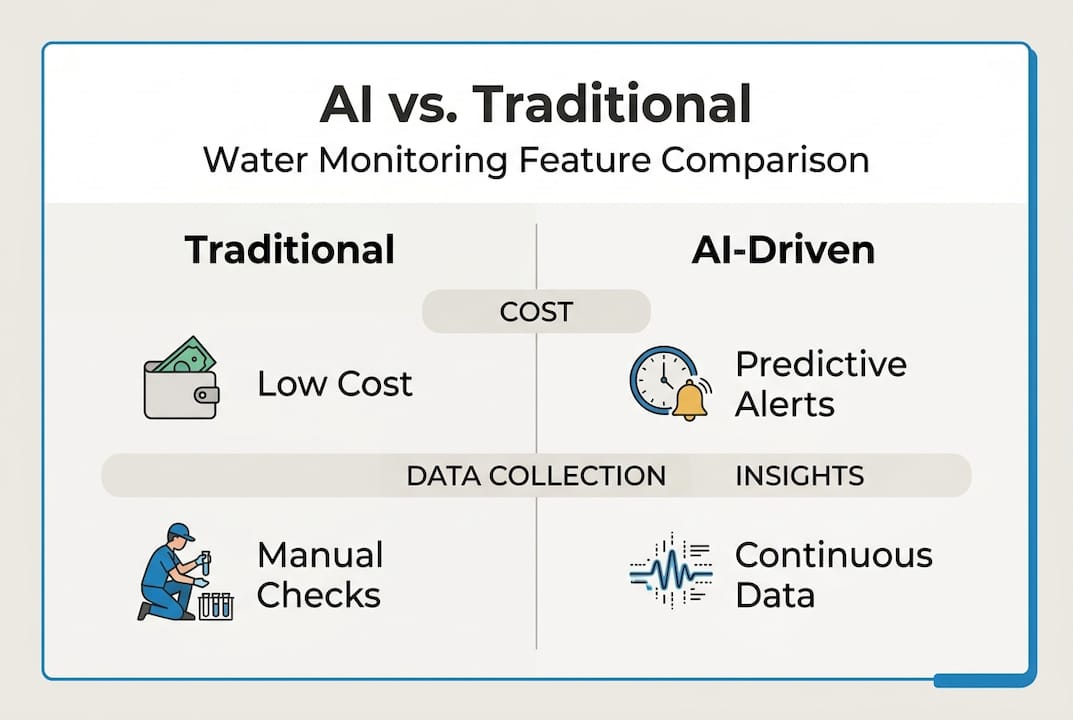
Traditional acoustic detection delivers higher short-term ROI, with documented net benefits reaching $2.4 million in targeted deployments. However, AI's cumulative value scales with data volume and offers insights that acoustic surveys simply cannot provide, particularly in aging or complex systems.
Where traditional methods still lead:
- Rapid response to a known, acute leak in a single building
- Smaller properties where sensor installation costs outweigh savings
- Situations requiring physical confirmation before repair crews mobilize
Where AI pulls ahead:
- Portfolios of 10 or more buildings where manual surveys are impractical
- Facilities with aging infrastructure where slow leaks accumulate undetected
- Properties with sustainability reporting requirements that need verified consumption data
"The smartest approach is not choosing one over the other. It is knowing when each tool fits the problem."
For most commercial real estate managers, a hybrid strategy makes sense. AI handles continuous monitoring and trend analysis while acoustic teams respond to specific alerts. Understanding smart water management savings helps you build a business case that accounts for both short-term wins and long-term portfolio value.
How to implement an AI-driven water analytics solution in commercial real estate
Once you have decided to move forward, the implementation process matters as much as the technology itself. A poorly planned rollout creates data gaps, integration headaches, and skeptical stakeholders. A structured approach delivers results faster and builds internal confidence.
- Assess your current systems: Map water flow across the facility, identify high-consumption zones (cooling towers, HVAC, restrooms, irrigation), and document existing metering infrastructure.
- Set clear objectives: Define what success looks like. Is it a 15% reduction in water spend? Faster leak response times? Verified ESG data? Specific goals drive better sensor placement and platform selection.
- Pilot in high-consumption areas: Deploy sensors in your top two or three water-consuming systems first. Cooling and HVAC typically offer the fastest ROI and the clearest baseline for comparison.
- Validate data quality: Run the pilot for 60 to 90 days before drawing conclusions. Compare sensor data against utility bills and manual readings to confirm accuracy.
- Integrate with operations: Connect the analytics platform to your BMS and CMMS. Automate work orders for flagged anomalies so alerts translate directly into action.
| Common pain point | AI solution |
|---|---|
| Undetected slow leaks | Continuous flow monitoring with anomaly alerts |
| Manual meter reading errors | Automated real-time data capture |
| Reactive maintenance cycles | Predictive failure alerts based on trend analysis |
| Disconnected utility data | BMS and CMMS integration for unified reporting |
| ESG reporting gaps | Verified consumption data with audit trails |
Data fidelity and sensor drift are the primary implementation challenges, but edge AI and regular validation layers address these risks effectively. Connectivity in older buildings can also complicate sensor deployment. Wireless mesh networks and battery-powered devices reduce the need for hardwired infrastructure.
Pro Tip: Start your pilot with cooling towers. They consume more water than almost any other commercial system and are prone to drift and evaporation losses that AI catches quickly. A successful cooling tower pilot builds the internal case for broader rollout.
Reviewing a detailed water savings guide and exploring onsite water recycling tips alongside your analytics deployment can compound savings further by addressing both detection and reuse simultaneously.
A facility manager's reality: what most guides miss about AI water analytics
Most articles focus on the technology stack and stop there. The harder conversation is about what actually determines whether an AI water analytics project succeeds or stalls.
The biggest variable is not the sensor or the algorithm. It is operational culture. Facilities where maintenance teams trust the data and act on alerts consistently outperform those where the platform becomes background noise. Getting buy-in from engineering, operations, and finance before deployment is not optional. It is the work that makes the technology pay off.
Integration timelines are routinely underestimated. Connecting a new analytics platform to a legacy BMS or a decade-old CMMS takes longer than vendors typically project. Budget for it. Plan for it. Hidden costs and integration complexity are consistently underestimated, but pilot projects targeting high-loss sites can secure quick wins that justify broader investment.
The fastest path to ROI is a targeted pilot in your highest-consuming system. Not a portfolio-wide rollout. Not a phased multi-year program. One system, clear metrics, measurable results. That is what builds momentum. Exploring water monitoring for sustainability shows how that momentum translates into long-term asset value and sustainability credentials.
Discover AI-powered water savings for your facility
If the case for AI-driven water analytics is clear but the starting point feels uncertain, that is exactly where Simpeller comes in. Our plug-and-play IoT sensors and AI platform make invisible water waste visible across commercial facilities, giving you the real-time data you need to act fast and report confidently. Whether you are managing a single building or a large portfolio, AI-powered water savings are within reach without a complex or disruptive rollout. Pair our platform with proven facility management with IoT and AI strategies to reduce operational costs, strengthen ESG reporting, and turn every verified saving into measurable value.
Frequently asked questions
How quickly can AI-driven water analytics deliver cost savings?
Chicago detected 19 leaks and Scottsdale saved 9.46 million gallons within the first application window, with some facilities documenting ROI in as little as two months after deployment.
What makes AI better than traditional water monitoring?
AI's edge is in automation and proactive risk reduction, enabling cumulative data integration and predictive maintenance that manual or acoustic methods cannot replicate at scale.
What are the biggest challenges when deploying AI water analytics?
Data quality and sensor drift are the prime challenges, but edge computing and regular validation protocols address these effectively, especially in older commercial buildings.
Which CRE systems benefit most from AI water analytics?
Cooling and HVAC subsystems offer the highest ROI due to their high water consumption, frequent leak exposure, and the measurable impact of predictive maintenance on operational costs.